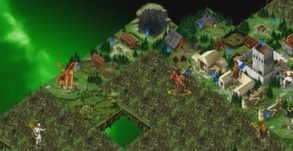
How do you balance -- and indeed encourage -- a war between factions without letting either side obliterate the other? How do you rule over gods, creatures, and men who refuse to obey you? How do you build a landscape of villages when bandits and mythology are conspiring to tear it down?
Modeled estimate, not a reported figure. How we estimate →
Discounts
Every price cut of more than 20% we have observed, in each market that quoted one, with this game's chart position on either side of it. These are episodes, not a model: a sale is one event, and one event cannot tell you what the next one will do.
Reviews, worldwide (the counter carries no country): 0/day in the week to Aug 31 → 0/day in the week after.
Reviews, worldwide (the counter carries no country): 0/day in the week to Jul 21 → 0/day in the week after.
For scale, across Steam · Top Sellers · Brazil over the last 30 days: the 26 chart moves that followed a price cut of more than 20% went a median of 7 places towards #1, and the 2,400 moves with no price cut behind them went 2 away. One store, one chart, one country — it is the only place we have enough observations to say even that.
Prices outside the United States have been collected since 6 August 2026 and chart positions since 19 July 2026, so a cut older than that has no market to compare and a market that joined later has no history yet. Nothing here is converted between currencies.
About
Engagement
Reviews
Themes across 50 recent reviews and how positive each mention is. A keyword signal, not full sentiment analysis.
Reviews
Skyward Collapse is a unique game, even amongst the multitude of God games out there. It is less a power fantasy and more like babysitting civilisations and stopping them from killing each other. The basic gimmick is you're in charge of managing the buildings and world of two rival factions who want nothing more than to wipe each other out. Of course, they need some military to defend themselves from bandits. Which they inevitably use to try to kill each other. So you have a multitude of summons and supernatural abilities to turn the tide. The game turns into an interesting tug of war between keeping factions alive and generating enough points to meet each age's quota. More destructive events like buildings or even whole towns being destroyed generate more points, but also weaken the losing faction potentially leading to a snowball effect of destroying them. I feel this mostly works: the higher risk, the more points are on offer. The game can suffer a bit in late game, where there's too many towns to keep track of and you're just waiting out the clock but the game does have speed modifiers and even lets you skip watching units move to accommodate for this. It can also be difficult to keep track of military buildings, and if they even have the right buildings to continue producing units. Overall I recommend this game, and especially at a five euro price tag.
Media

Related
Related
Price dynamics, follower growth, revenue and sales trajectories with interactive tooltips
This and every other Pro feature is free until October 20, 2026. A free account is all it takes.
Genres
Stats
All-time low is the lowest price we've recorded for this game since we started tracking it.
Languages: English**languages with full audio support
Hours played at review time, across 50 reviews with recorded playtime.
positive critical· bar length = how often the theme comes up
양 진영을 밸런스 있게 발전시켜(?)야 하는 게임인데.. 좀 난해하고 지루한 편입니다.
Skyward Collapse, developed and published by Arcen Games, is a strategy title that subverts nearly every expectation players bring to the genre. Instead of taking control of one side in a conflict and pushing for victory, you are placed in the unusual position of maintaining balance between two warring civilizations. The premise is both godlike and paradoxical—you are an omnipotent overseer whose success depends on chaos remaining in check, not on domination or conquest. It is a concept that instantly distinguishes Skyward Collapse from traditional empire-builders, and it gives the game a cerebral, almost philosophical quality. You are less a ruler than a cosmic mediator, struggling to maintain equilibrium in a world that constantly threatens to spiral into destruction. The structure of Skyward Collapse revolves around alternating turns between two factions, the Greeks and the Norse, each of which grows, fights, and suffers under your watchful eye. Every round, you use a limited number of action points to build structures, produce units, or summon mythological beings that can alter the course of battle. Once your turn is over, the world comes alive: the AI takes over both civilizations, directing armies to fight, towns to grow, and calamities to unfold. It is a game about managing a system that functions beyond your direct control, where you are constantly reacting to outcomes rather than dictating them. Your ultimate goal is not to help one side prevail, but to maintain a balance of power long enough to reach the required score thresholds that mark the end of each era. In this way, Skyward Collapse transforms what could have been a typical strategy game into a tense juggling act, where your greatest enemy is not any one faction, but the instability of the world itself. The concept may sound abstract, but Arcen Games grounds it in tangible mechanics that keep every decision meaningful. The map begins as a modest grid, and as you populate it with towns, farms, barracks, and temples, the world slowly takes shape. Every building and unit contributes to a delicate economy of strength and vulnerability. If one side becomes too powerful, it will devastate the other, ending the game prematurely. If one grows too weak, it can collapse before you reach the next milestone. The result is a constant struggle for equilibrium, where you are perpetually forced to empower the losing side just enough to survive, all while limiting the dominant faction’s destructive potential. This delicate balancing act evokes an almost moral tension—success is found not through victory, but through restraint and foresight. Mythology adds another layer of intrigue and unpredictability to the mix. Each civilization can call upon gods, monsters, and legendary heroes drawn from their respective mythos. These divine entities bring both blessings and havoc, altering the landscape with catastrophic effects that can just as easily destroy as they can save. Summoning a Norse god or a Greek demigod may give temporary relief or protection, but it might also unleash new threats that throw your careful planning into turmoil. The inclusion of these mythic elements injects moments of wild, theatrical spectacle into an otherwise strategic and methodical experience. It also underscores the game’s theme of limited control—no matter how divine your perspective, the world below remains unpredictable. Skyward Collapse’s art style and presentation reflect the same understated intelligence that characterizes its design. The visuals are modest, with a painterly, board game-like aesthetic that emphasizes clarity over realism. Each building, unit, and terrain type is easily distinguishable, ensuring that the focus remains on strategic decision-making rather than on graphical grandeur. The interface, while dense at first glance, is generally functional once you learn the rhythm of the game’s systems. The music and sound effects, while sparse, lend a contemplative atmosphere, making the world feel alive without overwhelming the player. It’s a restrained presentation that mirrors the slow, deliberate pacing of the gameplay. The game’s pacing and structure, however, are a double-edged sword. The first few hours are filled with discovery and experimentation, as you learn how each faction interacts, how resources flow, and how quickly fortunes can change. But once the mechanics are mastered, some of the tension fades, and later sessions can settle into a predictable rhythm of maintaining balance rather than improvising new strategies. The AI-driven simulation ensures constant activity, but the player’s role often feels more reactive than proactive. This can make parts of the midgame feel passive, especially for those who crave direct engagement or conflict resolution. Additionally, the random events known as “Woes” can occasionally disrupt well-laid plans in ways that feel arbitrary rather than dramatic, introducing frustration rather than excitement. Despite its occasional monotony, Skyward Collapse remains intellectually compelling because of its central paradox: it asks you to create and destroy with equal care. The satisfaction of playing comes from learning the rhythm of the world, predicting the consequences of your actions several turns ahead, and finding beauty in balance rather than victory. It’s a deeply reflective experience, one that challenges the instinct to dominate—a rare trait in a genre built on conquest. When things go wrong, as they often do, it’s almost poetic; watching one faction obliterate the other due to your miscalculations feels less like failure and more like witnessing the collapse of an ecosystem you couldn’t quite keep stable. Arcen Games has always been known for its unconventional design philosophy, and Skyward Collapse embodies that approach perfectly. It refuses to cater to mainstream expectations, offering instead a slow, systemic, and meditative kind of strategy game. It is not flashy or fast-paced, but thoughtful and self-aware, rewarding players who enjoy systems management and cause-and-effect gameplay. For those willing to embrace its unconventional structure, it delivers an experience unlike any other—a world that thrives on chaos, where your greatest triumph is simply keeping the pieces from falling apart. Skyward Collapse may not be for everyone, but for players drawn to its unique blend of creation, destruction, and balance, it offers a quietly brilliant meditation on the very nature of control. Rating: 5/10
Ejemplo de manual de que las ideas por sí solas no sirven para nada y que una idea genial con una ejecución nefasta da lugar a un resultado nefasto. La idea de un juego de equilibrio de fuerzas es genial, de verdad. Entro por el tutorial. Vale, veo un mapa, no hay animaciones espectaculares, pero es un tablero en el que puede desarrollarse un buen juego, eso está bien. No es necesario más, los ingredientes son buenos. En el primer turno del tutorial me estás diciendo que construya todo esto pero no aquello. Todavía no tengo claro ni para qué he de construir todo eso ni de la importancia de los recursos (por cierto, cuáles son?), ni de cómo funciona el sistema de combate, ni de nada. Me has dado mil opciones y me has dicho "construye esto, y no preguntes". El primer problema es que me das una lista de la compra con lo que he de construir para un equipo y luego "haz lo mismo para el otro equipo, ah, pero no pongas al Cerbero, que al elfo no le gusta y tal", todo esto explicado en dos parrafones. Entiendo que el "Show, don't explain" no se entienda a la perfección, ni se aplique siempre, pero aquí has optado por el contrario al extremo: "Explain, don't show", y esto en un TUTORIAL de un juego es una decisión de diseño nefasta. En un tutorial, el jugador ha de aprender las mecánicas de forma gradual. Ha de poder ver en qué consiste el juego y cómo administrar sus recursos a nivel básico. Puede estar en forma de primer nivel, de modo tutorial, o implícito en el mismo juego. El formato escogido no es el problema, los tres bien utilizados funcionan, utilizados cuando son necesarios funcionan. Y un tutorial bien diseñado ya deja entrever cómo va a ser el juego y cómo va a estar diseñado. El tutorial aquí está tan mal diseñado que deja entrever lo mal diseñado que está el juego. Satura más que enseñar a jugar. No necesito ver el resto del juego para saber que la mejor forma de mantener el equilibrio entre los dos bandos es no jugarlo.
♥♥♥♥♥♥♥♥
Very interesting concept. Something like a Crusader Kings style, but much smaller, and yet still entertaining. The idea of having to keep both sides of a conflict in-tact is intriguing. Very cool.
THis game is pretty fun i have been making videos on it i love its concept it is very unique my playlist of it is here https://www.youtube.com/playlist?list=PLuXA_WtzHh1RKvgDz2XYq-n2Qe-zDW2NT
The premise of balancing two sides and ensuring both of their survival is well-executed! I'll be playing more of this.
It has a cool concept but suffers from tedious gameplay, poor execution, and repetition.
Very fun toy of a game.
Selling now
See how fast this game is selling right now — estimated copies and revenue per day from recent review growth.
Players by region
Where this game's players are, estimated from review languages.
Players also reviewed
The games this title's players most often review too — audience affinity.
Related
| Game | Estimated lifetime revenue | Reviews | Review score | Price |
|---|---|---|---|---|
| $30.5K | 123 | 93% | $9.99 | |
| — | 0 | — | — | |
| $684.5K | 2.5K | 79% | $12.99 | |
| $367.9K | 581 | 80% | $19.99 | |
| $25.5K | 233 | 71% | $3.74 | |
| $81.8K | 188 | 81% | $14.99 |
Related
| Game | Estimated lifetime revenue | Reviews | Review score | Price |
|---|---|---|---|---|
| $58.5K | 132 | 55% | $13.99 | |
| $58.5K | 217 | 98% | $6.99 | |
| $58.5K | 572 | 79% | $4.99 | |
| $58.5K | 548 | 85% | $4.99 | |
| $58.5K | 148 | 92% | $9.99 | |
| $58.5K | 308 | 78% | $7.99 |