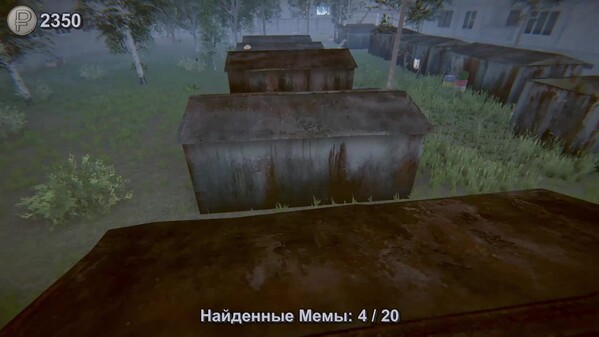
A simulator of jumping on garages and scurrying around abandoned buildings.
Modeled estimate, not a reported figure. How we estimate →
Prices
The United States storefront in every case, so this compares stores and not countries.
Discounts
Every price cut of more than 20% we have observed, in each market that quoted one, with this game's chart position on either side of it. These are episodes, not a model: a sale is one event, and one event cannot tell you what the next one will do.
Reviews, worldwide (the counter carries no country): 0/day in the week to Aug 26 → 0.14/day in the week after.
For scale, across Steam · Top Sellers · Brazil over the last 30 days: the 26 chart moves that followed a price cut of more than 20% went a median of 7 places towards #1, and the 2,400 moves with no price cut behind them went 2 away. One store, one chart, one country — it is the only place we have enough observations to say even that.
Prices outside the United States have been collected since 6 August 2026 and chart positions since 19 July 2026, so a cut older than that has no market to compare and a market that joined later has no history yet. Nothing here is converted between currencies.
About

Explore the roofs of panel houses, jump on garages, unscrew light bulbs in a shabby entrance. Or just wander aimlessly around a small courtyard, past old panel five-story buildings. There are no goals in this game other than those you set for yourself. In terms of gameplay, this is a classic walking simulator in recognizable scenery for people from the CIS. Just relax and spend time wandering around this place filled with post-Soviet atmosphere.

- Beat nettles with a stick
- Unscrew light bulbs in the entrance
- Jump on roofs and garages
- Find and collect memes

Thanks to the advanced graphics of the 2005 Unity engine, you can fully enjoy the atmosphere of a quiet residential area.
Genres
Sums Steam only; Epic publishes no volume signal, so the true total is higher by an unknown amount.
| Store | Price | Audience | Score | Chart | Est. revenue |
|---|---|---|---|---|---|
SteamYou are here | $0.99 | 58reviews | 88% | — | $1.4K |
| $0.99 | — | — | — | not modelled |
Matched by title — a reused name can pair the wrong games. * is a critic aggregate. Prices and positions are each store's United States storefront; Epic charts worldwide. Audience and Score too, except Steam's, which is worldwide.
Engagement
Reviews
Themes across 46 recent reviews and how positive each mention is. A keyword signal, not full sentiment analysis.
Reviews
Amazing game. I played the first thingy in level 1, then i got 11 lamps. But i had to stop after that because I threw up in my mouth. First player games aren't good for my stomach, especially when the movements make me want to vomit. If you have a strong stomach, I recommend this cheap and fun game
I mean yes, I get the idea, but no. Not the big deal.
игра просто ... очень класная! есть очень много механик помыть пол выкрутить лампочки или найти мемасики также есть отсылка на припять колесо обозрение
Media

Related
Related
Price dynamics, follower growth, revenue and sales trajectories with interactive tooltips
This and every other Pro feature is free until October 20, 2026. A free account is all it takes.
Stats
All-time low is the lowest price we've recorded for this game since we started tracking it.
Languages: English, Russian
Hours played at review time, across 46 reviews with recorded playtime.
positive critical· bar length = how often the theme comes up
АХАХАХАХАХАХ ТАКОЙ СМИШНЯВЫЙ МЭМЧИГИ СИДЕЛ РЖООООЛ ОЛОЛОЛОЛОЛОЛО НИЧСОСИ ПРРАХ БАБКЕ И СМЕНО И СМЕШНО ХАХАХАХАХААХАХАХАХ ВЕСЕЛО!
Очень понравилась игра своей атмосферой, рекомендую
тупо вайб
Vittu mitä nollakontsa lantaa
Russian Parkour Simulator is a small-scale indie title developed and published by Pine Games that embraces absurdity, atmosphere, and cultural specificity over mechanical depth. Despite its name, it is less a competitive parkour simulator and more an open-ended first-person sandbox built around exploring a stylized post-Soviet residential environment. The game invites players to roam freely through courtyards, rooftops, garages, and stairwells of aging apartment blocks, using basic jumping and climbing mechanics to navigate the urban landscape. At its core, the experience revolves around movement. Players traverse a compact but detailed neighborhood filled with recognizable architectural elements—concrete panel buildings, rusted metal structures, cluttered courtyards, and dim entryways. The movement system is intentionally simple: walk, run, jump, and climb. There is no stamina management, advanced trick system, or precision-based scoring model typically found in dedicated parkour games. Instead, mobility functions as a tool for exploration and playful experimentation. The focus is on discovering vantage points, hopping between rooftops, and navigating the environment in creative ways rather than executing technical maneuvers. What gives the game its distinctive identity is its atmosphere. The environment captures a specific aesthetic inspired by post-Soviet residential districts. The muted color palette, utilitarian architecture, and everyday urban clutter contribute to a sense of authenticity and cultural texture. For players familiar with similar real-world settings, this creates a nostalgic or humorous resonance. For others, it offers a glimpse into a stylized urban environment rarely represented in mainstream games. The setting itself becomes the primary draw, functioning almost like a digital diorama to wander through. Interactivity within the world is light but deliberately quirky. Players can interact with various small environmental elements—removing objects, swatting at obstacles, or collecting scattered items that reference internet humor. These interactions do not form part of a structured progression system but instead add personality to the sandbox. The game avoids imposing goals or missions, leaving players to determine their own objectives, whether that means reaching the highest rooftop or simply exploring every corner of the map. The pacing is intentionally relaxed. There are no timers, no competitive leaderboards, and no escalating difficulty curve. Sessions can last a few minutes or extend longer depending on player curiosity. Because there is no pressure to perform or complete specific challenges, the experience feels casual and low-stakes. This design makes it accessible to players looking for a brief diversion rather than an intensive gameplay commitment. Visually, the game uses modest Unity-based graphics that prioritize environmental clarity over realism. Textures are straightforward, and lighting is functional rather than dramatic. The simplicity works in the game’s favor, keeping performance smooth while maintaining the intended atmosphere. Sound design is understated, reinforcing the sense of quiet urban exploration without overwhelming the player with elaborate audio cues. Reception among players reflects appreciation for its niche charm. Those who approach it expecting a traditional, technically advanced parkour simulator may find it lacking in depth. However, players drawn to offbeat indie experiences often praise its humor, atmosphere, and cultural flavor. The game’s low price point and compact scope align well with its experimental nature, positioning it more as a playful digital vignette than a full-featured simulation. Ultimately, Russian Parkour Simulator stands as a quirky and self-aware indie experiment. It does not attempt to redefine movement mechanics or deliver a competitive athletic experience. Instead, it offers a relaxed, culturally distinctive sandbox that emphasizes exploration, atmosphere, and lighthearted interaction. For players willing to embrace its simplicity and enjoy wandering through an unusual urban playground, it delivers a uniquely flavored and memorable short-form experience. Rating: 7/10
En kort avslappende meditasjon om bylivet som en beboer av en boligblokk, musikken var veldig rolig og passende, det var nydelig å se de fine omgivelsene mens man går rundt og samler på memene :)
Атмосферная игрулька
Players by region
Where this game's players are, estimated from review languages.
Related
| Game | Estimated lifetime revenue | Reviews | Review score | Price |
|---|---|---|---|---|
| $1.1M | 1.7K | 81% | $29.99 | |
| $12.2K | 376 | 65% | $1.99 | |
| $887 | 35 | 49% | $0.99 | |
| $616 | 27 | 85% | $0.99 | |
| — | 0 | — | — | |
| — | 0 | — | — |
Related
| Game | Estimated lifetime revenue | Reviews | Review score | Price |
|---|---|---|---|---|
| $1.4K | 59 | 98% | $0.99 | |
| $1.4K | 112 | 92% | $0.99 | |
| $1.4K | 72 | 54% | $0.99 | |
| $1.4K | 122 | 60% | $0.74 | |
| $1.4K | 56 | 77% | $0.99 | |
| $1.4K | 77 | 68% | $0.99 |