RUN: The World In-Between is a new “Die and Retry” platformer game with a procedurally-generated path. Be fast, jump, and run to unlock new content.
Modeled estimate, not a reported figure. How we estimate →
Discounts
Every price cut of more than 20% we have observed, in each market that quoted one, with this game's chart position on either side of it. These are episodes, not a model: a sale is one event, and one event cannot tell you what the next one will do.
For scale, across Steam · Top Sellers · Brazil over the last 30 days: the 26 chart moves that followed a price cut of more than 20% went a median of 7 places towards #1, and the 2,400 moves with no price cut behind them went 2 away. One store, one chart, one country — it is the only place we have enough observations to say even that.
Prices outside the United States have been collected since 6 August 2026 and chart positions since 19 July 2026, so a cut older than that has no market to compare and a market that joined later has no history yet. Nothing here is converted between currencies.
About
Genres
Sums Steam only; GOG, Nintendo publish no volume signal, so the true total is higher by an unknown amount.
Engagement
Reviews
Themes across 40 recent reviews and how positive each mention is. A keyword signal, not full sentiment analysis.
Reviews
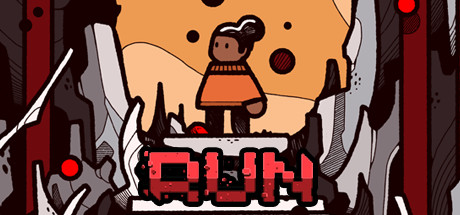
RUN: The world in-between, developed by Team RUN and published by Team RUN alongside PID Games and Flying Oak Games, is a fast-paced platformer that builds its entire identity around speed, repetition, and mastery. It places players in a surreal, fragmented world where movement is constant and hesitation is punished, creating an experience that feels less like a traditional level-based platformer and more like a continuous test of reflexes and adaptability. From the very beginning, the game makes its intentions clear: this is a challenge-driven experience that expects failure, rewards persistence, and gradually teaches players how to move with precision under pressure. At the center of the gameplay is a tight and responsive movement system designed to encourage fluid motion. Jumping, dashing, and quick directional adjustments form the backbone of traversal, and the game constantly pushes players to string these actions together without breaking momentum. Unlike platformers that allow for cautious progression, RUN: The world in-between thrives on forward motion. Players are often pursued by an encroaching force that eliminates any temptation to slow down, reinforcing the idea that survival depends on maintaining rhythm and committing to each action. This design creates a strong sense of urgency, turning even simple sequences into high-stakes moments where timing is everything. One of the game’s defining features is its use of procedural generation. Rather than presenting fixed levels to memorize, each run introduces new configurations of obstacles and layouts, ensuring that players must rely on skill and adaptability rather than repetition alone. This approach keeps the experience fresh and unpredictable, particularly for those who enjoy replaying runs to improve their performance. However, it also introduces some inconsistency. While many sequences feel carefully balanced and satisfying to navigate, others can feel uneven or less intuitive, occasionally disrupting the otherwise smooth flow of movement. Progression is tied to collecting resources during runs, which can be used to unlock upgrades, abilities, and fragments of narrative. The story itself is deliberately abstract, offering glimpses of meaning through visual symbolism and brief pieces of lore rather than a structured narrative. These elements suggest themes of struggle, perseverance, and personal conflict, but they remain intentionally vague. For some players, this ambiguity adds depth and encourages interpretation; for others, it may feel too distant to provide a strong emotional connection. Visually, the game stands out with its vibrant pixel art and fluid animation. The environments are colorful and dynamic, yet they maintain clarity, which is essential in a game where players must react quickly to hazards. Contrasting tones—bright foregrounds against darker, more ominous elements—reinforce the sense of tension and constant movement. The soundtrack complements this design with a steady, driving rhythm that matches the pace of gameplay, helping to maintain focus and immersion even during repeated attempts. Difficulty is a core pillar of the experience, and it is handled in a way that will appeal strongly to fans of high-challenge platformers. The game expects players to fail frequently, but it also ensures that restarts are quick, minimizing downtime and keeping the focus on improvement. Over time, players develop a better understanding of movement and timing, leading to a satisfying sense of progression that comes from personal skill rather than traditional leveling systems. That said, the difficulty can be intimidating, especially for those unfamiliar with this style of game, and certain sections may feel punishing before they feel fair. Replayability is one of the game’s strongest qualities. The procedural nature of each run, combined with the emphasis on refining performance, creates a loop that encourages repeated play. Whether aiming to complete runs more efficiently or simply survive longer, players are given constant incentives to return. This structure makes the game particularly appealing to those who enjoy mastering mechanics and pushing their limits, though it may be less engaging for players seeking a more varied or narrative-driven experience. Despite its strengths, the game is not entirely without flaws. The reliance on procedural design can occasionally result in awkward or less polished sequences, and while movement is generally precise, there are moments where it can feel slightly inconsistent in tight situations. These issues are not constant, but they stand out in a game where precision is so critical. Ultimately, RUN: The world in-between is a focused and demanding platformer that excels at delivering a fast, skill-based experience built around repetition and mastery. It does not try to appeal to everyone, instead committing fully to its design philosophy and trusting players to meet its challenge. For those who enjoy high-speed platforming and the satisfaction of gradual improvement, it offers a rewarding and engaging experience that remains compelling over multiple sessions. Rating: 8/10
Media

Related
Related
Price dynamics, follower growth, revenue and sales trajectories with interactive tooltips
This and every other Pro feature is free until October 20, 2026. A free account is all it takes.
Stats
All-time low is the lowest price we've recorded for this game since we started tracking it.
Languages: English, French, Italian, Spanish - Spain, Japanese, Simplified Chinese, Dutch, Turkish, German, Portuguese - Brazil, Russian
| $1.99−80% |
| — |
| — |
| — |
| not modelled |
Matched by title — a reused name can pair the wrong games. * is a critic aggregate. Prices and positions are each store's United States storefront; Epic charts worldwide. Audience and Score too, except Steam's, which is worldwide.
Hours played at review time, across 40 reviews with recorded playtime.
positive critical· bar length = how often the theme comes up
I loved it so much that I started speedrunning it, and it's perfect for this.
Un jeu original, qui se joue partout, tout le temps, quand on est content, triste, ça fait toujours du bien une ptite partie de run <3 De la plateforme, de l'essai erreur, de l'apprentissage, du tryhard, du perfectionnement. Merci
[h1]A Small but really unique platformer[/h1] [h2]Gameplay[/h2] RUN: the world in-between (wich i'm just gonna call RUN from now on) is a pretty standard platformer, the movement feels really good, jumping and dashing around the different levels is really fun in and of itself. The thing that makes run stand out though is it's level structure. Basically the levels are "procedurally generated", that means that every time you die you'll have to go through a different level wich is basically just pieces of levels thrown together. This makes the game pretty hard, every time you complete a level you unlock new level pieces that are harder and harder, but you can't just learn the level to finish it because it changes every time. And while I personally really liked that about the game, I think a lot of people wouldn't like that very much. The game's main mechanic is basically the Super Mario 3D Land cosmic clone / Celeste chapter 2 badeline ghost, basically you're always followed by something that mimics your movement and tries to kill you forceing you to go fast (you can disable it in the option if that makes the game too stressfull though wich is always nice to have). [h2]Presentation and Aesthetics[/h2] I really like RUN's pixel art, the animation of the character are very fluid and the backgrounds are really beautiful. The music is also really good. [h1]Conclusion[/h1] RUN is a really challenging but fun platformer. The game forces you to get better at the game overall and not learn a single level through the procedurally generated levels. THe movement feels slick and it's honestly a great deal for a pretty low price. Just keep in mind that the game can be frustrating because of that procedural generation to some people.
Ce jeu est génial ! Un die and retry dans lequel j'ai ressenti très peu de frustration. Le jeu pousse à aller toujours plus loin, à apprendre de nos erreurs et de nos réflexes (dont les mauvais ne s'effacent pas toujours ^^"). A chaque réussite, ce sont des petites victoires vraiment appréciables. La récupération de souvenirs aide à plus de défi et c'est cool. En somme un super jeu que je recommande +++ !
I never thought a procedural generated precision platformer could work, but this is great
super le jeu
Celeste si c'était bien
o jogo é muito bem polido só acho q a diferença de dificuldade da área de gelo pra área de grama/pedra é muito alta, poderia ter uma área intermediaria entre essas duas ou deixar a grama aparecer depois
шла 50 минута, я эту игру уже ненавижу. очень напомнила CELESTE
Selling now
See how fast this game is selling right now — estimated copies and revenue per day from recent review growth.
Players by region
Where this game's players are, estimated from review languages.
Related
| Game | Estimated lifetime revenue | Reviews | Review score | Price |
|---|---|---|---|---|
| $5.7K | 32 | 100% | $9.99 | |
| $5K | 70 | 94% | $4.99 | |
| $3.5K | 16 | 75% | $7.99 | |
| — | 0 | — | — | |
| $0 | 0 | 96% | Free | |
| — | 0 | — | — |
Related
| Game | Estimated lifetime revenue | Reviews | Review score | Price |
|---|---|---|---|---|
| $42K | 364 | 93% | $4.99 | |
| $42K | 90 | 71% | $12.99 | |
| $42K | 152 | 80% | $9.99 | |
| $42K | 394 | 80% | $4.99 | |
| $42.1K | 397 | 89% | $3.99 | |
| $42K | 657 | 65% | $3.99 |