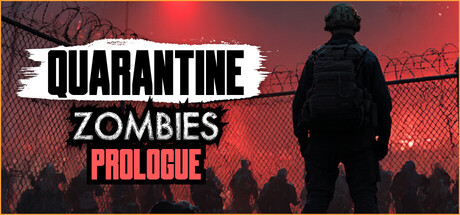
Experience the first four days of the Prologue, where FPS action meets quarantine inspection in post-apocalyptic Chicago. You’ve got 30 days until the army arrives. Hold out, fix your car, and fight your way to the main checkpoint to save your younger brother.
Revenue comes from in-game items and microtransactions, which our price-based model doesn't estimate. The player count below is how many people own it, not what they spent.
About
28 days ago, you got the call - your brother’s checkpoint had fallen. Now it’s surrounded by the dead.
He’s not like you. He’s a scientist, chasing a cure.
You’ve spent your life as a cop - fighting, surviving.
Now, to save him, you’ll need a reinforced ride and a plan to hand your own checkpoint over to the U.S. Army.
You’re the last surviving soldier at the only checkpoint still standing in the north of the city.
Your mission: save as many uninfected civilians as you can. If you let the infected slip out of Chicago, the entire world could fall. Hold the line. Buy more weapons and upgrade your defenses. The Army promises to arrive in 30 days - then comes the raid. You’ll fight your way through the ruins of Chicago to reach your brother… and try to save him at any cost.
Every survivor has a story - and they’ll tell it to you. But don’t believe everything you hear. Inspect each one carefully and decide their fate.
Will you let them pass? Hold them for a second screening? Or are they too far gone - and need to be eliminated?
The choice is yours.
First-person gameplay that blends inspection sim and zombie action.
Screen refugees with a full-body scanner and other tools to detect signs of infection.
Decide each refugee’s fate: clear them to leave Chicago, hold them in a quarantine room for observation, or eliminate them.
Head out from the base to clear infested zones.
Earn cash to buy weapons and repair your car for the toughest raid across a ruined Chicago.
Use special gear to find out if a survivor is infected or smuggling contraband. Personal inspections, scanners, and a range of devices will help you.
So will a good shotgun.
Zombie waves grow stronger by the day. Crawlers, Spitters, Aggressors, Marine Zombies… A good shotgun helps. But not always.
Repair your car and get it ready for the brutal run through Chicago to your brother’s checkpoint.
Save him—no matter the cost.
Genres
Stats
Languages: English**languages with full audio support
Engagement
Reviews
Themes across 88 recent reviews and how positive each mention is. A keyword signal, not full sentiment analysis.
Reviews
Wirkt bisher wie das andere Spiel bei dem man Überlebende Kontrollieren musste nur das man jetzt auch außerhalb rumlaufen kann und rumballern kann. Wirkt noch nicht so überzeugend. Sehr laggy und optisch auch nix besonderes. Zombies sind auch einfach super schlechte npcs die keine Gefahr sind. Es hat Potential, aber aktuell ist es noch nichts besonderes.
10min waiting for compiling shader at 100% this is bad for me 10min waiting loading 9min gameplay and i want to delete game oh i remember this game run really lag on my pc low - epic setting has no different
Media

Related
Related
Price dynamics, follower growth, revenue and sales trajectories with interactive tooltips
This and every other Pro feature is free until October 20, 2026. A free account is all it takes.
Hours played at review time, across 88 reviews with recorded playtime.
positive critical· bar length = how often the theme comes up
Quarantine Zombies - Prologue takes the familiar concept of a city overwhelmed by the undead and attempts to give it a different identity by combining first-person combat with checkpoint management, survivor inspections, resource gathering, and preparation for a larger rescue mission. Developed and published by Stones Games, this free prologue introduces the opening four days of a much longer survival scenario. Instead of concentrating exclusively on shooting zombies, the game places the player in charge of one of the last functioning checkpoints in northern Chicago, where keeping infected individuals contained can be just as important as surviving encounters with the undead. The story establishes a personal reason for enduring the catastrophe. The protagonist's younger brother is a scientist who had been working on a possible cure before his checkpoint was overrun. Twenty-eight days have passed since contact was effectively lost, and the player must eventually cross the devastated city to find him. There is also a broader deadline hanging over the situation, with military assistance expected after thirty days. This gives the larger concept a clear destination rather than making survival an endless objective. The protagonist must keep the checkpoint operational, gather equipment, earn money, improve his chances against increasingly dangerous enemies, and prepare a reinforced vehicle for the eventual journey through Chicago. The checkpoint system is the feature that most clearly separates Quarantine Zombies - Prologue from an ordinary zombie shooter. Survivors arrive hoping to pass through, but allowing everyone to proceed without examination could spread the infection beyond the containment zone. Players therefore have to inspect individuals and determine whether they appear healthy, suspicious, infected, or potentially dangerous for other reasons. Examination tools include personal inspection procedures and scanning equipment, giving the player several methods for identifying problems that might not immediately be visible. What makes this concept interesting is that the people arriving at the checkpoint cannot necessarily be trusted. Survivors have stories to tell, but those accounts may not always represent the truth. The player is expected to compare what people say with the evidence uncovered during an inspection. Someone who appears safe can be allowed to continue, while uncertain cases can be placed into quarantine for further observation. Confirmed infected individuals represent a much more immediate problem and may need to be eliminated. These decisions introduce a layer of uncertainty that complements the straightforward violence of the zombie encounters. This responsibility also gives the protagonist an unusual position within the apocalypse. Rather than playing a survivor concerned exclusively with personal safety, the player acts as a barrier between the infected city and the outside world. A careless decision can theoretically undermine the entire purpose of the checkpoint, while excessive suspicion can result in innocent survivors being treated as threats. The game therefore creates tension through judgment as much as through combat. Determining whether someone should be trusted has the potential to be more memorable than simply defeating another group of zombies, especially when information is incomplete. Outside the inspection process, Quarantine Zombies - Prologue becomes a more conventional first-person survival action game. The player can leave the relative protection of the checkpoint and enter dangerous areas filled with undead enemies. These excursions provide opportunities to earn money, obtain equipment, and continue preparing for the larger mission. Firearms are an important part of survival, with the shotgun receiving particular emphasis, but the player cannot assume that every infected opponent behaves identically. Several zombie types are presented as threats, including Crawlers, Spitters, Aggressors, and Marine Zombies. Having enemies with different characteristics is important because repeated waves of identical undead would quickly undermine the game's combat component. Faster or more aggressive enemies can force players to react quickly, while specialized threats can make positioning and target selection more important. The danger is also intended to increase as time progresses, creating an escalating survival challenge rather than allowing the player to become completely comfortable behind upgraded equipment. Money and progression connect these combat encounters to the broader survival structure. Clearing dangerous areas is not simply an optional excuse to shoot zombies because the resources gained from those activities contribute to preparation. Better weapons can improve immediate survivability, while other spending can support the checkpoint or the protagonist's eventual journey. This creates the possibility of meaningful choices about where limited resources should be invested. Spending heavily on weapons may make current battles easier, but preparing the vehicle is essential to accomplishing the protagonist's larger objective. The vehicle itself is an effective progression device because it turns preparation into something tangible. The ultimate goal is not merely to accumulate currency or unlock increasingly powerful equipment. The protagonist needs transportation capable of crossing a city that has effectively collapsed under the outbreak. Repairing and preparing the car therefore represents gradual progress toward reaching the scientist brother. Every successful day at the checkpoint and every dangerous expedition can feel like another small step toward that eventual journey. One of the most appealing qualities of Quarantine Zombies - Prologue is the way its different systems potentially support each other. Survivor inspection creates slower moments built around observation and decision-making. Combat provides immediate action and danger. Resource management gives successful excursions a practical purpose, while vehicle preparation establishes a long-term objective. The checkpoint serves as the central location tying these activities together. When these elements work in harmony, the experience can offer substantially more variety than a traditional zombie FPS. At the same time, combining so many different ideas creates challenges. Inspection mechanics need enough variety to prevent survivors from becoming predictable puzzles. Combat needs responsive weapons and sufficiently diverse enemy behavior to remain entertaining. Resource management must create meaningful choices rather than functioning as a simple progression checklist. The narrative also needs consequences and developments capable of making the thirty-day survival structure feel significant. The prologue demonstrates the foundation of these ideas, but its four-day scope naturally prevents it from showing how well every mechanic can sustain a complete campaign. Quarantine Zombies - Prologue offers a promising blend of checkpoint inspection, first-person zombie combat, resource management, and survival preparation. Its short prologue format means the larger thirty-day concept remains largely unexplored, but the interaction between identifying infected survivors, protecting containment, fighting increasingly dangerous undead, upgrading equipment, and preparing for a rescue mission gives the game a solid foundation with considerable room for expansion. Rating: 6/10
cant change touch to w for qwerty player
I love zombie games, this however isnt.....yeah there is zombies but the whole quarantine job day after day gets very boring quickly.
I think its a fun idea. I just wish the eyes were a little more clear, 2 shades of red and they both look super similar. I'd give it a 8/10.
Jeu bugué impossible de jouer, la touche assignée de changement d'arme ne fonctionne pas donc on ne peut pas utiliser l'arme si on a le scanner par exemple. Il vaut mieux parfois ne rien sortir que de sortir un jeu qui ne peut pas êre joué.
injouable, impossible de changer les touches... reste basé sur clavier qwerty. bref ... je delete
A copy of the ''Quarantine Zone: The Last Check'', just more action oriented.
can't fully remaping key so you stuck on a tutoriel
Selling now
See how fast this game is selling right now — estimated copies and revenue per day from recent review growth.
Players by region
Where this game's players are, estimated from review languages.
Players also reviewed
The games this title's players most often review too — audience affinity.
Related
| Game | Estimated lifetime revenue | Reviews | Review score | Price |
|---|---|---|---|---|
| $6.7K | 27 | 59% | $6.99 | |
| — | 0 | — | — | |
| — | 0 | — | — | |
| $0 | 16 | 88% | Free | |
| — | 0 | — | — | |
| $149.1M | 140.6K | 80% | $59.99 |