
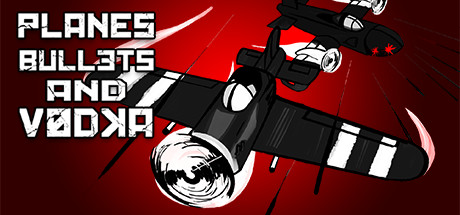
Fly through danger filled procedurally generated tunnels, avoiding thousands of enemies, on this throwback to the golden age of arcade games.
Modeled estimate, not a reported figure. How we estimate →
Discounts
Every price cut of more than 20% we have observed, in each market that quoted one, with this game's chart position on either side of it. These are episodes, not a model: a sale is one event, and one event cannot tell you what the next one will do.
For scale, across Steam · Top Sellers · Brazil over the last 30 days: the 26 chart moves that followed a price cut of more than 20% went a median of 7 places towards #1, and the 2,402 moves with no price cut behind them went 2 away. One store, one chart, one country — it is the only place we have enough observations to say even that.
Prices outside the United States have been collected since 6 August 2026 and chart positions since 19 July 2026, so a cut older than that has no market to compare and a market that joined later has no history yet. Nothing here is converted between currencies.
About
Genres
Stats
All-time low is the lowest price we've recorded for this game since we started tracking it.
Engagement
Reviews
Themes across 105 recent reviews and how positive each mention is. A keyword signal, not full sentiment analysis.
Reviews
Очень интересная игра советаю для тех у кого нет инета наслождайтесь игрой. Сначало игра казалось мне сложной но когда подучился было трудно но яполучил все досжение
very nice
Eh basit,
Media

Related
Related
Price dynamics, follower growth, revenue and sales trajectories with interactive tooltips
This and every other Pro feature is free until October 20, 2026. A free account is all it takes.
Languages: English*, Portuguese - Brazil*, German*, Russian*, Simplified Chinese*, French*, Italian*, Spanish - Spain*, Czech*, Dutch*, Hungarian*, Japanese* +9 more
Hours played at review time, across 105 reviews with recorded playtime.
positive critical· bar length = how often the theme comes up
[h1]PLANES, BULLETS AND VODKA — THE TITLE IS THE ENTIRE MISSION BRIEF[/h1] [b]Recommended — 7.5/10[/b] Planes, Bullets and Vodka does not waste time pretending to be something larger than it is. You get a plane, several thousand bullets, an endless supply of enemies and enough vodka to make the pilot question every decision that brought him into this procedurally generated red nightmare. I have played for 5.6 hours, which is considerably longer than the game’s simple concept would suggest, and that is because it understands the old arcade formula: one run ends, the score looks beatable and suddenly you are launching again. It delivers exactly what the title promises. There are planes. There are bullets. There is vodka. Mission accomplished. [hr][/hr] [h2]A Traditional Arcade Shooter with No Interest in Slowing Down[/h2] The basic design is easy to understand. You control a small aircraft flying through an automatically scrolling tunnel while enemy planes attack from the front. You need to destroy as many enemies as possible, avoid their bullets, stay away from the tunnel walls and survive while the difficulty continues to increase. Movement is simple and responsive, while firing can be held continuously. This allows most of your attention to remain on positioning, enemy patterns and the growing amount of deadly material filling the screen. The opening stages are manageable, but the tunnels become narrower, the enemies become more aggressive and the number of projectiles quickly turns the game into a compact bullet-hell endurance test. There is no campaign structure, complicated tutorial or long introduction. The game places you inside the aircraft and expects you to learn by flying, shooting, crashing and trying again. [hr][/hr] [h2]Score, Multipliers and the Need to Kill Everything[/h2] Planes, Bullets and Vodka is built around score chasing. Destroying enemies without allowing one to escape increases your multiplier, but letting even a single aircraft leave the screen resets that progress. This creates a good conflict between survival and greed. You can move into a safer position and allow an enemy to pass, but doing so destroys the multiplier you spent the last several minutes building. The difficulty rises continuously, so destroying enemies early is important. If your weapon falls behind, later aircraft take longer to kill, more of them escape and your multiplier collapses. A strong run can therefore become much easier when the game provides useful upgrades at the correct time, while an unlucky run can leave you underpowered and struggling to clear even ordinary enemies. This makes the leaderboard chase partly about skill and partly about reacting to whatever the procedural generation and item drops decide to give you. It is not perfectly balanced, but it creates the classic arcade feeling where every attempt develops differently enough to justify another run. [hr][/hr] [h2]Power, Gun, Ratio and the Holy Vodka Upgrade[/h2] Destroyed enemies can drop several useful items. The lower interface tracks upgrades for [b]Power[/b], [b]Gun[/b] and [b]Ratio[/b], allowing the aircraft to become considerably more dangerous as the run continues. Your weak starting weapon slowly develops into a spread of bullets capable of covering a large part of the tunnel. Health and shield pickups help you survive mistakes, although taking several hits quickly can still destroy the run before you completely understand what happened. The game can sometimes become stingy with the upgrade you actually need, and useful items occasionally appear in dangerous positions or drift into walls before you can collect them. Then there is the vodka. The title tells you what must be done, and the game naturally includes vodka pickups. Collecting one makes the screen stagger and distort for a moment, as though the aircraft itself has decided that sober aviation was never part of the plan. I cannot promise that vodka improves your flying, but it unquestionably makes the entire situation more authentic. The virtual vodka already provides the intended effect. Real vodka is not required to make the game chaotic, although the name certainly tries its best to make the suggestion. [hr][/hr] [h2]Visual Style and the Endless Red Tunnel[/h2] The presentation is extremely simple but immediately recognizable. Most of the screen consists of deep red terrain, black enemies, white projectiles and a dark interface filled with glowing red numbers. It resembles a forgotten Soviet arcade machine discovered inside a military bunker and forced to run for another forty years. The limited colour palette works well for the atmosphere, but staring at the same intense red background for long sessions can become tiring. Once the screen fills with enemies, bullets, upgrades and narrow walls, it can also become difficult to read everything quickly enough. The game includes visual adjustment options such as saturation control, and reducing the intensity may be useful for players who find the default presentation uncomfortable. The graphics are basic and deliberately retro. They are functional rather than technically impressive, and the simple aircraft sprites are easy to understand until the screen becomes completely flooded with movement. It is not a beautiful game in the traditional sense, but it has a distinct identity that fits the cheap, aggressive arcade design. [hr][/hr] [h2]Soundtrack and Atmosphere[/h2] The soundtrack is one of the strongest parts of the experience. The music has a strange industrial and military character, with radio samples and a relentless rhythm that fits the endless forward movement. It feels unusual enough to separate the game from the countless other inexpensive retro shooters on Steam. Gunfire remains constant during most runs, and the audio becomes part of the hypnotic loop. Fly, fire, collect upgrades, avoid the walls, hear the weapon grow stronger and continue until the screen becomes too crowded to survive. After a while the repetition can become strangely relaxing despite the bullets. The game exists somewhere between an arcade shooter and an extremely hostile screensaver. [hr][/hr] [h2]Difficulty, Randomness and Frustration[/h2] The rising difficulty is generally fair during the early stages, but randomness has a major influence on longer attempts. Some runs provide early weapon improvements, health and shields, while others seem determined to offer everything except the upgrade you need. Procedural tunnels can also produce awkward turns, narrow passages and split routes that make maintaining the multiplier difficult. In the worst situations, you are forced into a small space while enemies fire directly down the only available path. Colliding with the tunnel walls causes damage, so avoiding the bullets is not always enough. The hit feedback could also be clearer. During intense sections, it is possible to lose health without immediately noticing, especially when watching enemies and projectiles rather than the numbers at the bottom of the screen. A small mistake can become several rapid hits, and suddenly the run is over. That frustration is part of the arcade structure, but it also limits how long I want to play in one session. [hr][/hr] [h2]Content and Replay Value[/h2] This is a score-attack game rather than a traditional campaign. The main objectives are to survive longer, beat your previous score, climb the leaderboards and complete the achievements. There are no story missions, major bosses, large aircraft collections or complicated progression systems. The enemy selection and upgrade system provide enough variety for short sessions, but the game eventually reaches a point where the basic loop stops changing. Players who enjoy repeating the same mechanics while chasing a higher score can get several hours from it. Players who need new levels, weapons and objectives may lose interest much sooner. Most achievements are reasonably a
[h1]PLANES, BULLETS AND VODKA — THE TITLE IS THE ENTIRE MISSION BRIEF[/h1] [b]Recommended — 7.5/10[/b] Planes, Bullets and Vodka does not waste time pretending to be something larger than it is. You get a plane, several thousand bullets, an endless supply of enemies and enough vodka to make the pilot question every decision that brought him into this procedurally generated red nightmare. I have played for 5.6 hours, which is considerably longer than the game’s simple concept would suggest, and that is because it understands the old arcade formula: one run ends, the score looks beatable and suddenly you are launching again. It delivers exactly what the title promises. There are planes. There are bullets. There is vodka. Mission accomplished. [hr][/hr] [h2]A Traditional Arcade Shooter with No Interest in Slowing Down[/h2] The basic design is easy to understand. You control a small aircraft flying through an automatically scrolling tunnel while enemy planes attack from the front. You need to destroy as many enemies as possible, avoid their bullets, stay away from the tunnel walls and survive while the difficulty continues to increase. Movement is simple and responsive, while firing can be held continuously. This allows most of your attention to remain on positioning, enemy patterns and the growing amount of deadly material filling the screen. The opening stages are manageable, but the tunnels become narrower, the enemies become more aggressive and the number of projectiles quickly turns the game into a compact bullet-hell endurance test. There is no campaign structure, complicated tutorial or long introduction. The game places you inside the aircraft and expects you to learn by flying, shooting, crashing and trying again. [hr][/hr] [h2]Score, Multipliers and the Need to Kill Everything[/h2] Planes, Bullets and Vodka is built around score chasing. Destroying enemies without allowing one to escape increases your multiplier, but letting even a single aircraft leave the screen resets that progress. This creates a good conflict between survival and greed. You can move into a safer position and allow an enemy to pass, but doing so destroys the multiplier you spent the last several minutes building. The difficulty rises continuously, so destroying enemies early is important. If your weapon falls behind, later aircraft take longer to kill, more of them escape and your multiplier collapses. A strong run can therefore become much easier when the game provides useful upgrades at the correct time, while an unlucky run can leave you underpowered and struggling to clear even ordinary enemies. This makes the leaderboard chase partly about skill and partly about reacting to whatever the procedural generation and item drops decide to give you. It is not perfectly balanced, but it creates the classic arcade feeling where every attempt develops differently enough to justify another run. [hr][/hr] [h2]Power, Gun, Ratio and the Holy Vodka Upgrade[/h2] Destroyed enemies can drop several useful items. The lower interface tracks upgrades for [b]Power[/b], [b]Gun[/b] and [b]Ratio[/b], allowing the aircraft to become considerably more dangerous as the run continues. Your weak starting weapon slowly develops into a spread of bullets capable of covering a large part of the tunnel. Health and shield pickups help you survive mistakes, although taking several hits quickly can still destroy the run before you completely understand what happened. The game can sometimes become stingy with the upgrade you actually need, and useful items occasionally appear in dangerous positions or drift into walls before you can collect them. Then there is the vodka. The title tells you what must be done, and the game naturally includes vodka pickups. Collecting one makes the screen stagger and distort for a moment, as though the aircraft itself has decided that sober aviation was never part of the plan. I cannot promise that vodka improves your flying, but it unquestionably makes the entire situation more authentic. The virtual vodka already provides the intended effect. Real vodka is not required to make the game chaotic, although the name certainly tries its best to make the suggestion. [hr][/hr] [h2]Visual Style and the Endless Red Tunnel[/h2] The presentation is extremely simple but immediately recognizable. Most of the screen consists of deep red terrain, black enemies, white projectiles and a dark interface filled with glowing red numbers. It resembles a forgotten Soviet arcade machine discovered inside a military bunker and forced to run for another forty years. The limited colour palette works well for the atmosphere, but staring at the same intense red background for long sessions can become tiring. Once the screen fills with enemies, bullets, upgrades and narrow walls, it can also become difficult to read everything quickly enough. The game includes visual adjustment options such as saturation control, and reducing the intensity may be useful for players who find the default presentation uncomfortable. The graphics are basic and deliberately retro. They are functional rather than technically impressive, and the simple aircraft sprites are easy to understand until the screen becomes completely flooded with movement. It is not a beautiful game in the traditional sense, but it has a distinct identity that fits the cheap, aggressive arcade design. [hr][/hr] [h2]Soundtrack and Atmosphere[/h2] The soundtrack is one of the strongest parts of the experience. The music has a strange industrial and military character, with radio samples and a relentless rhythm that fits the endless forward movement. It feels unusual enough to separate the game from the countless other inexpensive retro shooters on Steam. Gunfire remains constant during most runs, and the audio becomes part of the hypnotic loop. Fly, fire, collect upgrades, avoid the walls, hear the weapon grow stronger and continue until the screen becomes too crowded to survive. After a while the repetition can become strangely relaxing despite the bullets. The game exists somewhere between an arcade shooter and an extremely hostile screensaver. [hr][/hr] [h2]Difficulty, Randomness and Frustration[/h2] The rising difficulty is generally fair during the early stages, but randomness has a major influence on longer attempts. Some runs provide early weapon improvements, health and shields, while others seem determined to offer everything except the upgrade you need. Procedural tunnels can also produce awkward turns, narrow passages and split routes that make maintaining the multiplier difficult. In the worst situations, you are forced into a small space while enemies fire directly down the only available path. Colliding with the tunnel walls causes damage, so avoiding the bullets is not always enough. The hit feedback could also be clearer. During intense sections, it is possible to lose health without immediately noticing, especially when watching enemies and projectiles rather than the numbers at the bottom of the screen. A small mistake can become several rapid hits, and suddenly the run is over. That frustration is part of the arcade structure, but it also limits how long I want to play in one session. [hr][/hr] [h2]Content and Replay Value[/h2] This is a score-attack game rather than a traditional campaign. The main objectives are to survive longer, beat your previous score, climb the leaderboards and complete the achievements. There are no story missions, major bosses, large aircraft collections or complicated progression systems. The enemy selection and upgrade system provide enough variety for short sessions, but the game eventually reaches a point where the basic loop stops changing. Players who enjoy repeating the same mechanics while chasing a higher score can get several hours from it. Players who need new levels, weapons and objectives may lose interest much sooner. Most achievements are reasonably a
такие игры делают только для патриотов
Um jogo divertido e bom para passar o tempo.
Not the best when compared to other bullet hell games, but to me as a time killer and neat arcade game, really worth the money.
good
Ana karakterimiz uçak sürerken alkol alıyor. Bu oyunu Steam'den derhal kaldırın!
Selling now
See how fast this game is selling right now — estimated copies and revenue per day from recent review growth.
Active players
Estimated daily and monthly active players (DAU/MAU) modeled from peak concurrency.
Players by region
Where this game's players are, estimated from review languages.
Players also reviewed
The games this title's players most often review too — audience affinity.
Related
| Game | Estimated lifetime revenue | Reviews | Review score | Price |
|---|---|---|---|---|
| $34K | 584 | 78% | $2.99 | |
| $166 | 4 | 75% | $1.99 | |
| $11.1K | 108 | 88% | $5.99 | |
| $8.9K | 29 | 76% | $14.99 | |
| $6.4K | 75 | 91% | $3.99 | |
| $1.6K | 14 | 100% | $5.99 |
Related
| Game | Estimated lifetime revenue | Reviews | Review score | Price |
|---|---|---|---|---|
| $306.1K | 1.5K | 97% | $9.99 | |
| $305.9K | 1.1K | 77% | $9.99 | |
| $306.1K | 729 | 73% | $16.99 | |
| $305.9K | 859 | 77% | $14.99 | |
| $305.9K | 1.2K | 89% | $9.99 | |
| $306.4K | 996 | 75% | $9.99 |