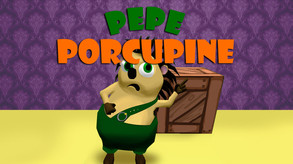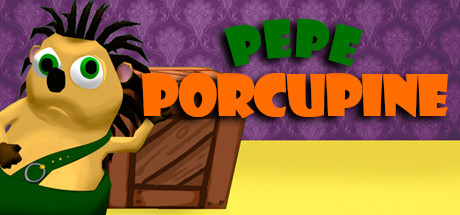
Pepe Porcupine works the nightshift in a warehouse and needs your help! Each night his job is to move crates into position in a confined area with the least amount of work.
Modeled estimate, not a reported figure. How we estimate →
About
Stats
All-time low is the lowest price we've recorded for this game since we started tracking it.
Languages: English
Engagement
Reviews
Goofy sound effects, Weird level design, Ugly characters. If u want some cheap puzzle game then this is for you I guess
This is a game you've seen before - push the crates into the right spot to solve the puzzle. However, this game is basically unplayable because there's a delay between pushing a direction and pepe actually moving. So you could press "up left up left", but pepe isn't going to execute 4 moves because the game is too slow. Hard pass.
нет
Media

Related
Related
Price dynamics, follower growth, revenue and sales trajectories with interactive tooltips
This and every other Pro feature is free until October 20, 2026. A free account is all it takes.
Related
| Game | Estimated lifetime revenue | Reviews | Review score | Price |
|---|---|---|---|---|
| $2.4K | 143 | 93% | $0.99 | |
| $2.4K | 118 | 81% | $0.99 | |
| $2.4K | 60 | 73% | $1.99 | |
| $2.4K | 60 | 95% | $1.99 | |
| $2.4K | 77 | 65% | $0.99 | |
| $2.4K | 50 | 90% | $2.99 |
Related
| Game | Estimated lifetime revenue | Reviews | Review score | Price |
|---|---|---|---|---|
| $7.5M | 27K | 91% | $9.99 | |
| $3.4M | 14K | 95% | $14.99 | |
| $2.3M | 5.8K | 99% | $19.99 | |
| $448K | 5.6K | 89% | $4.99 | |
| $265K | 8.3K | 94% | $1.99 | |
| $229.5K | 921 | 95% | $8.99 |
Hours played at review time, across 40 reviews with recorded playtime.
I worship Pepe
It's pretty good.
Very slow reaction time even with I7 and NVIDIA
Pepe Porcupine is a puzzle-focused experience developed and published by EnsenaSoft that builds its gameplay around careful planning, logical thinking, and increasingly demanding environmental challenges. Taking inspiration from classic tile-based puzzle design, the game emphasizes problem-solving rather than speed, encouraging players to think several steps ahead before making decisions. Instead of overwhelming players with complex systems or fast reactions, it creates an experience centered entirely on strategy and efficient movement. Players guide Pepe, a determined porcupine navigating puzzle-filled environments where success depends on understanding space, movement patterns, and how every action influences the larger layout. The objective sounds simple initially, but the game gradually introduces more complicated scenarios that force players to approach situations with patience and precision. Progress often comes from experimentation and learning through mistakes, creating satisfying moments when difficult solutions finally come together. The core gameplay loop revolves around environmental manipulation and logical puzzle progression. Every stage presents a new challenge requiring players to carefully evaluate positioning and movement choices. One incorrect decision can create obstacles that force restarting or reconsidering an approach entirely. This design creates a rewarding balance where success feels earned through observation and planning rather than luck. One of the game's stronger qualities comes from how it steadily increases difficulty. Early stages serve as introductions to core mechanics, giving players time to understand movement rules and puzzle behavior. As progression continues, layouts become more demanding and solutions less obvious. The game consistently asks players to improve problem-solving skills without overwhelming them immediately, making progression feel natural and rewarding. Puzzle design remains the centerpiece throughout the experience. Challenges rely on spatial awareness and logical reasoning rather than introducing unnecessary mechanical complexity. Players who enjoy analyzing situations carefully and finding efficient solutions will likely appreciate how the game prioritizes thoughtful play. The satisfaction comes not from reflexes but from recognizing patterns and developing strategies that overcome increasingly complicated layouts. The presentation supports the gameplay effectively. Visual design remains colorful and approachable, creating an inviting atmosphere that fits the game's casual identity. Character animation and environmental style contribute personality without distracting from puzzle readability. The visual clarity becomes especially important because understanding stage layouts quickly plays a major role in solving challenges efficiently. Pepe himself adds charm to the experience. The porcupine protagonist gives the game personality and helps distinguish it from more abstract puzzle experiences. The lighter visual style prevents the challenge from feeling intimidating while maintaining a comfortable atmosphere suitable for longer puzzle sessions. Audio presentation complements the experience well by supporting concentration rather than competing for attention. Music and sound effects reinforce the relaxed tone while allowing puzzle solving to remain the primary focus. The atmosphere encourages careful thinking without creating unnecessary pressure. Another positive aspect comes from accessibility. The mechanics remain understandable while still allowing room for difficulty growth. Players unfamiliar with puzzle games can approach the experience comfortably, while puzzle enthusiasts may appreciate working toward cleaner and more efficient solutions. At the same time, the focused design naturally limits gameplay variety. Players searching for action systems, narrative progression, or larger gameplay mechanics may find the experience intentionally narrow in scope. Pepe Porcupine commits strongly to its puzzle identity without expanding heavily beyond those foundations. The slower pacing may also divide players depending on preferences. Success depends on patience and careful thought rather than constant activity. Those looking for faster gameplay loops may find progression more deliberate than expected. However, that focus becomes one of the game's biggest strengths. Pepe Porcupine understands exactly what type of experience it wants to deliver and remains committed to those priorities. Rather than adding unnecessary complexity, it allows strong puzzle design to carry the experience from beginning to end. For players who enjoy logical challenges, classic puzzle design, and games built around thoughtful progression rather than reflex-driven action, Pepe Porcupine offers an enjoyable experience filled with satisfying problem-solving moments and steadily rewarding challenge progression. Rating: 7/10
Типичный Сокобан
sweet!
gas
Selling now
See how fast this game is selling right now — estimated copies and revenue per day from recent review growth.
Players by region
Where this game's players are, estimated from review languages.