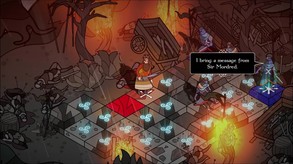
AD 673. Camelot has fallen. The Round Table must rally to save King Arthur. Narrative strategy game from the creators of 80 DAYS, with elegant tactics and a unique, dynamic story every time you replay.
Modeled estimate, not a reported figure. How we estimate →
About


Genres
Stats
All-time low is the lowest price we've recorded for this game since we started tracking it.
Languages: English**languages with full audio support
Engagement
Reviews
Themes across 41 recent reviews and how positive each mention is. A keyword signal, not full sentiment analysis.
Reviews
Maybe the game improves later and it's just an issue with the intro missions but this game is intensely annoying to play. It's like driving a car that is randomly automatically braking for you. Action, pause, text, action, pause, text, action, pause, prompt, action, pause text. Either let me play the game or let me immerse in the conversation/story, stop constantly breaking up one with the other.
This is a fun game for a little while, but I've beaten it three times in three hours and already started getting duplicate events multiple times per run. The combat system is unsatisfying due to the fact that the first creature to move into an adjacent square to an enemy will invariably be killed, which tends to create unsatisfying stalemates that, given the fact that the morale system effectively imposes a timer on every fight, often can't be broken before you run out of morale and have to flee. The dialogue and themes are well-handled if a little stilted in places, and if captures in some measure what I would hope a game based on Arthurian legend would feel like, but between the combat mechanics being what they are and the game being as short as it is, I really can't justify the $17 price point--I got it for $6.79 during the summer sale and I think that was too high a price for what I got. If it were in the $3-5 range my judgement might be different, but I don't think this game is worth it.
Media

Related
Related
Price dynamics, follower growth, revenue and sales trajectories with interactive tooltips
This and every other Pro feature is free until October 20, 2026. A free account is all it takes.
Hours played at review time, across 41 reviews with recorded playtime.
positive critical· bar length = how often the theme comes up
เป็นเกมเทิร์นเบสที่ให้ความสำคัญกับเนื้อเรื่องของแต่ละตัวละครมากกว่าระบบต่อสู้ การต่อสู้ในกระดาน ไม่ใช่การเอาพลังโจมตี เอาเลือดมาหักล้างกันอย่างเกมอื่นๆ แต่เป็นการเล่นเหลี่ยมเล่นมุม เหมาะสำหรับคนเหลี่ยมจัด แต่ไม่เหมาะสำหรับคนเล่นเอาสะใจ หรือต้องการที่จะเน้นทีมแท็คติก แบบเอาแท้งค์ออกหน้า เอาธนูหรอยยิง เพราะเกมนี้ไม่มีแทงค์ไม่คลาสอะไรทั้งนั้น ทุกคนตัวเพียวๆ ไม่สนว่าจะหญิงหรือชาย จะเด็กหรือจะแก่ จะหมีหรือจะหมา โดน one shot นอนทุกตัว เสียเหลี่ยมทีเดียว แตกเลย ถึงจะบอกว่าเป็นเกมที่ให้ความสำคัญกับเนื้อเรื่องของตัวละคร แต่ถ้าอยากต่อเนื้อเรื่องตัวละครอื่น ก็ต้องเลือกตัวละครเล่นใหม่ตั้งแต่ต้น ปัญหามันอยู่ตรงนี้แหละ เพราะระบบเกมมันธรรมดาสามัญ ไม่ตื่นเต้นเร้าใจแม้แจ่นิดเดียว ทำให้ถ้าจะเล่นต่อรอบใหม่ก็ต้องใจรักจริงๆ หรืออยากเก็บ achievement ให้ครบแค่นั้น แรงจูงใจในการเล่น new game + เรียกได้ว่าต่ำสุดๆ
As much as I would love to recommend the game, I cannot. I remember playing it at the lowest difficulty. The story ws nice, the presentation engaging... And then it was over. I came to rescue Arthur, barely a scratch to my name, and- Wow, Mordred is dead already. What a dunce. Then the difficulty is increased for unlocking purposes, and suddenly the enemies always put themselves perfectly to counter your classic strategies. You barely scramble by with your okay abilities you got given by the game, and suddenly Mordred, on the third easiest difficulty, is a complete menace, avoiding you with all his might and gaining power like he spends a month in a gym between each turn. Your cool ability is unable to surpass him and you die. And now you have to trod through the less and less engaging interactions yet a-pecking-gain. That was when I dropped the game. It hooked me in, but provided little sustenance.
"Aim for the moon and you'll land among the stars." ... if you reach escape velocity. Pendragon doesn't, unfortunately. And, for a TLDR: the game is very similar in concept to Wildermyth (which is very good), but is simpler to the point of lacking any interesting. So, if the idea sounds interesting, I'd heartily recommend playing Wildermyth instead (which has a procedural story where events are varied and character interactions are remembered and play crucial roles in how events develop in the future). Inkle are consistently interesting and I really respect their originality, but I can't say the execution always hits the mark. Pendragon is a fairly simple turn-based tactical game with a layer of procedural (combinatorial) narrative around the death of King Arthur. The writing is cool and the person and place names make it feel very authentic. Some of the other aspects of world-building feel a bit too anachronistic (how Mordred is portrayed as a populist who is gaining the disgruntled and disillusioned peasants' support despite lacking any constructive policies other than "shaking things up"... yeah). The biggest problem is that the runs are very short and lack any room for interesting events. Every run ends up playing like every other, especially narrative. In my short time, gameplay was still somewhat varied because I was starting with different characters. In later difficulties (which you unlock by completing runs, successfully or not), runs are longer, but I feel like the game is designed with the shorter length in mind, so they never really solved the interesting event issue. The only event I really found was that you could get Excalibur, which requires you to first meet a certain character who tells you how they got rid of the sword, followed-up by looking into that place. I didn't get to complete it because I "failed" the mission in that place (it involved cutting a bunch of bushes, not very interesting, but the game has a time-limit to missions tied to a "morale", but anyway). In Wildermyth, the procedural narrative works well because the game is centered around fairly long campaigns (5-8 hours, not 0.5-1 hour), which have many more events that can develop over multiple encounters and create relationships between characters (maybe X sacrificed his left arm for Y, which later leads into Y finding a spell that gives X a super powerful arm or whatever). I feel like this is what Pendragon wanted to achieve, but the short runs really prevented this. So you are left with just very superficial differences, essentially influencing only which characters you encounter, which more or a mechanical and flavor change. Another problem I had with the game is that the last battle is very quick and easy to make mistakes in, which results in a failed run, despite how strong you arrive to it. And repeating the whole thing is just not interesting, in my opinion. Even the achievements are somehow off the mark. For example, the game has like 8 difficulty levels, but only has achievements for 3 or 4. And if you beat the game in a higher difficulty, you don't get the achievement for the previous difficulties. It's not a very important part of the game, but it's yet another decision that just works against what game seems to want to do. The combat was mostly okay, but the game also had an annoying mechanic where battles drain your morale and eventually cause you to lose if you fail to defeat the enemies/reach the exit. But every hit is a kill (for both sides), so you need to play very safe - as do the enemies. So you can easily get stuck in a position where you really can't do anything other than move back and forth and wait for the enemy to make a mistake. Which sometimes just doesn't happen and then you "fail" (you don't lose the run, but flee into another mission in a more or less random direction). I think the intention is to let characters "take a hit" (characters have multiple lives, but a single hit removes them from the specific mission) to break the deadlock. It can be an interesting tactical puzzle, but not interesting enough to replay the otherwise very repetitive loop, for me. Cool concept, but the scope was too small to let the narrative breathe and be interesting, in my opinion. It's not terrible and unplayable, but I can't really recommend it. Especially when Wildermyth exists as a much deeper game tackling the similar problem of combinatorial/procedural narrative within a turn-based tactics/strategy game.
5/10 Многие рецензии начинаются со слов вида: "Я обожаю 80 Days и Heaven's Vault от inkle, но..." Вполне ожидаемая реакция, сформированная мощным кредитом доверия игроков к студии. Просто посмотрите процент получивших первую ачивку. Почти все! Почти все купившие запустили игру и сделали первые шаги. Поверьте, это большая редкость, это мотивированный игрок. А потом посмотрите на проценты остальных ачивок. Удивительное. Сильная сторона inkle - нарратив и тестовые механики. Но на одних диалогах и решениях историю о попытке спасти обреченный Камелот не простроишь. Нужен экшн, поэтому к игре прикрутили тактику. Прикрутили, но не докрутили. По механикам игра ближе к абстрактным тактикам в стиле шахмат, нежели к чему-то реалистичному. И именно здесь на сцену выходят лучшие механики: смерть от одного удара, захват территорий, борьба за стартовые клетки и танцы друг вокруг друга в ожидании ошибки противника. Но способности и численное превосходство врага делают игру практически непроходимой на высоких уровнях сложности. Да даже на средних. Бесконечно танцевать в поисках уязвимости не дадут - мораль ваших рыцарей уйдет в ноль (а мораль врага почти всегда - нет). В итоге в каждом бою нужно действовать быстро, в меньшинстве и более слабыми силами. Кульминации это сочетание достигает в стартовом бою после выбора персонажа. Он пока один, толком ничего не может, а против него могут сразу выкатить сложный рельеф и минимум двоих крутых врагов. Только начал - уже слил. И этот тот случай, когда дело не в моих кривых руках - в других рецензиях я частенько на них ссылаюсь, но не тут. Into the Breach не вышло от слова "совсем". Плюсы. - Витражная графика - мое почтение. Вообще цветовые решения и интерфейс в целом очень располагают к себе. - Персонажи. Смотришь на рисовку Артура, Гвиневеру и Ланцелота и понимаешь, что этот треугольник должен прославиться в веках. Герои вообще изображены в, мягко говоря, негероичной манере, а лицо у Ланцелота вообще отдает известным мемом. - У игры нет хорошей концовки: только плохая и очень плохая. Потому что победа в сражениях не означает автоматически победу в войне, а победа в войне не означает автоматически процветания. Очень атмосферно и соответствует Артурианскому циклу. Минусы. - Открытие новых персонажей особо ничего не добавляет к игре, особенно к тактике. Забеги за ачивками превращаются в скучную толкотню по однообразным локациям. - Местный рандом и перемещения по карте напоминают Faster Than Light. Почти никаких намеков. Приди туда, не знаю, куда, и огреби там. - Почти всегда нашими противниками будут крысы, кабаны, волки, змеи. Изредка - крестьяне и беглые рыцари. И только в самом конце - рыцари Мордреда. Я понимаю, что страна в упадке, но чтобы настолько? - Битва на Камланнском поле напоминает штурм Виндхельма в Skyrim. Полторы калеки на полторы калеки. Персонажи всю игру ноют, что Артур в одиночку отправился туда на смерть. Но посмотрите, сколько рыцарей привел на самую важную схватку своей жизни его сын! - Повторю, что в игре шахматная смерть от одного удара. Это делает максимально важными перемещение и взаимное положение, определяемые способностями бойцов. И у крысы или волка они круче, чем у рыцаря Круглого Стола. У крысы, Карл! Туда же идет численное преимущество - два крестьянина легко размотают ведьму Моргану или Гавейна в полном доспехе, особенно на высоких уровнях сложности. Я обожаю 80 Days и Heaven's Vault от inkle, но... Получать удовольствие можно только от половины Pendragon. На легких сложностях, начиная с самой первой, вполне можно зачитываться диалогами прямо во время боя, заслушиваться историями у костра... И самое обидное: у второй, тактической, половины был очень крутой потенциал.
Bem interessante, apesar de não muito bem sucedido no que quer ser. É uma mistura de ficção interativa, estratégia em turnos e roguelike. Eu sei nenhuma dessas palavras está na Bíblia. Na teoria, essa mistureba herética criaria uma experiência com alta rejogabilidade e variedade narrativa. Na prática, nenhuma dessas duas coisas. Pra ficar claro, Pendragon é legal! É bem escrito, bonito e com a princípio combate competente. Como uma experiência curtinha de no máximo um par de horas funciona muito bem. Só que claramente essa não é a intenção do jogo. Com nove personagens, sete níveis de dificuldade de um montão de eventos aleatórios e conteúdo gerado proceduralmente, Pendragon quer ser um simulador da queda de Camelot que pode ser jogado e rejogado várias e várias vezes. Mas depois da minha terceira partida já estava me sentindo mais do que satisfeito, e a quarta e quinta só me deixaram com gosto amargo na boca. O grande problema é que a variedade de eventos narrativos não é grande o suficiente para justificar jogar diversas vezes, e nem o combate engajante o suficiente para te manter entretido a despeito dos eventos e diálogos repetidos ou similares. Se qualquer coisa, o combate é um grande desmotivador. Simples demais para ser interessante e em dificuldades maiores imperdoável demais para não incomodar. Perder uma campanha por causa de um movimento errado - ou, pior, porque o RNG decidiu não agraciá-lo com uma habilidade útil - para então ter que rever os mesmos diálogos e eventos mais uma vez não é lá muito prazeroso. Pendragon acaba sendo um exemplo claro de rendimentos decrescentes. Cada nova partida foi reduzindo um pouco meu apreço pela obra. Felizmente parei a tempo de sair da experiência pensando "legal, valeu a pena, mas vamos pro próximo game".
My experience with this game has been the following: -Beat tutorial with vague explanation of everything -Enter next area -Enemies suddenly block your path and may or may not attack you -Try to go past said enemy and get 1 shot without inherent warning nor control over the situation I don't know if there is even combat in this game considering a peasant with a dagger somehow obliterates an armed knight. The utter walls of text also do not help for the roguelike...? setting this game seems to go for.
Pendragon is a party RPG turn based game where you play as a knight of the round table to save the King. Graphics- Okay Soundtrack- Alright Audience- Teenagers or Adults Difficulty- Not too hard but requires some tactical thinking to prevail Story- Okay story Game time- Descent length Price- Not that cheap 6/10
The combat and artsyle seemed like a match made i heaven, with ideas reminding me of Wildermyth, but sadly the gameplay itself is extremely lackluster. Combat felt way too simple up until the last encounter, where the game stopped warning me about a move being dangerous (which it had done the entire time), and instead just let me die. Campaigns are luckily very short, but its not worth full price, let alone a huge discount. This game is for VERY specially interested people, perhaps roleplayers who are playing for a stream, but that is the only fanbase I can see for this game.
Selling now
See how fast this game is selling right now — estimated copies and revenue per day from recent review growth.
Players by region
Where this game's players are, estimated from review languages.
Related
| Game | Estimated lifetime revenue | Reviews | Review score | Price |
|---|---|---|---|---|
| — | 23 | 72% | $6.79 | |
| $1.3M | 14.2K | 87% | $3.99 | |
| $325.8K | 2.9K | 74% | $4.99 | |
| $141.5K | 936 | 94% | $6.99 | |
| $5.3K | 24 | 50% | $5.59 | |
| $1K | 6 | 83% | $4.99 |
Related
| Game | Estimated lifetime revenue | Reviews | Review score | Price |
|---|---|---|---|---|
| $61.8K | 317 | 75% | $6.99 | |
| $61.8K | 528 | 93% | $7.99 | |
| $61.9K | 497 | 51% | $4.99 | |
| $61.9K | 437 | 79% | $3.99 | |
| $61.9K | 78 | 90% | $19.99 | |
| $61.9K | 326 | 86% | $7.99 |