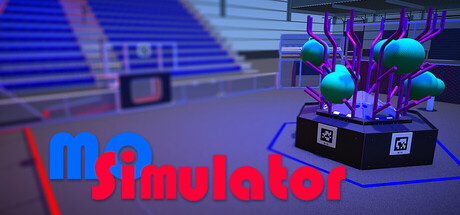
MoSimulator offers an unusual take on robotics simulation by concentrating on the excitement of controlling competition-style machines rather than burying the player beneath complicated engineering menus. Developed and published by Cascade Studios, it presents student robotics competition in a format that feels part simulator and part accessible arcade experience. The concept is specialized, but the straightforward approach makes it possible to enjoy even without extensive knowledge of robotics. Players can quickly understand the basic objective of driving a machine around an arena, collecting or manipulating objects, and converting efficient movement into a higher score.
Driving is the foundation of the experience, and the physics system gives that seemingly simple activity more depth than expected. Swerve-drive movement allows robots to maneuver with considerable freedom, while momentum, orientation, positioning, and interaction with objects all affect performance. Simply reaching a scoring location is rarely enough. The challenge comes from approaching it efficiently, lining up correctly, controlling the robot without wasting movement, and repeating the process as quickly as possible. The result is a satisfying learning curve where improvement becomes noticeable through better routes and increasingly precise control.
MoSimulator primarily concentrates on teleoperated competition, putting direct control in the player's hands. This makes each attempt feel like a combination of mechanical practice and score chasing. New players can initially concentrate on learning how their robot responds, while more experienced users can begin optimizing every movement. Shaving a few seconds from an approach or discovering a more effective path across the field can become surprisingly rewarding. The game therefore works well as both a casual robotics playground and a practice-oriented simulator for players interested in mastering its systems.
Community-created robots significantly expand the concept. Support for custom machines means the experience does not have to remain limited to a small selection of built-in designs. The modding framework allows enthusiasts to introduce additional robots and experiment with machines associated with different competition seasons. CAD-related support and the Unity-based creation process make this aspect especially attractive to players who already participate in robotics communities. While these tools may be more technical than casual players need, they give dedicated users considerable room to extend the simulation.
Multiplayer adds another layer of entertainment. Local split-screen modes allow players to compete directly in 1v1 matches or cooperate in 2v0 sessions. Competition naturally encourages players to become faster and more accurate, while cooperative play changes the emphasis toward communication and coordinated scoring. Remote Play Together support also makes these local multiplayer options more flexible. This social element fits the robotics theme particularly well because teamwork and strategic coordination are naturally connected to the type of competition being simulated.
The presentation is functional and appropriately focused. Arenas and important gameplay objects are visually distinct enough that players can concentrate on navigation and scoring without unnecessary graphical distractions. The emphasis remains firmly on robot movement and field awareness rather than cinematic presentation. Players expecting elaborate environments or highly detailed visual effects may find the appearance relatively modest, but clarity is arguably more valuable for this style of simulation.
Its Early Access nature should also shape expectations. MoSimulator has a strong foundation, but it is the kind of project that can benefit enormously from additional robots, competition formats, refinements, and community contributions. Some players may find the current focus relatively narrow, particularly if they expect a complete robotics engineering package covering construction, programming, autonomous routines, maintenance, and every stage of competition preparation. The emphasis here is much more strongly placed on actually controlling robots and experiencing field gameplay.
Being free to play makes that limited scope considerably easier to accept. Players interested in robotics can experiment with the simulator without needing to justify a purchase, while enthusiasts have access to systems that encourage deeper involvement through modding and repeated practice. Its appeal will naturally be strongest among robotics students, teams, hobbyists, and people fascinated by competition machines, but the approachable controls also give curious newcomers a reasonable entry point.
Steam Deck compatibility is officially categorized as Playable rather than fully Verified. Performance with the default graphics configuration is considered suitable, and the game can run successfully on SteamOS. However, handheld players should expect compromises. Some functionality is not fully accessible through the default controller configuration, touchscreen interaction or a community controller layout may occasionally be useful, and text entry can require manually opening the virtual keyboard. Some interface text may also appear small, while certain prompts can display keyboard, mouse, or non-Steam Deck controller icons. It is therefore functional on the Deck, but the experience is less seamless than a fully optimized handheld release.
Overall, MoSimulator is a focused and promising robotics experience that turns competition driving into an enjoyable skill-based challenge. Its physics, swerve-drive mechanics, community robot support, multiplayer options, and accessible free-to-play model give it an identity quite different from conventional simulation games. Its specialized subject and Early Access scope prevent it from being universally appealing, but players interested in competitive robotics can find a surprisingly engaging platform for practicing, experimenting, competing, and simply enjoying the experience of controlling unusual machines.
Rating: 8/10