Koral, developed and published by Carlos Coronado, is a serene and visually arresting underwater puzzle game that blends environmental storytelling with minimalist design. It places players in control of a sentient ocean current whose purpose is to restore life and color to coral reefs decimated by pollution and human interference. Unlike traditional puzzle games that rely on complex systems or explicit objectives, Koral takes a meditative approach, inviting players to drift through sunlit depths and barren seabeds as they slowly rekindle the beauty of marine ecosystems. Its world is not one of noise and tension but of quiet wonder—a deliberate space for reflection and rejuvenation, carried by an unspoken message about the fragility of nature and the importance of preservation.
At the heart of Koral lies a simple yet elegant concept. You move as a glowing current of energy, navigating intricate reef structures and transferring vitality to dormant corals scattered across each level. The puzzles revolve around gathering luminous energy, unblocking flow paths, and synchronizing coral activations in the correct sequence to bring life back to desolate regions. There are no enemies, timers, or overt failure states; instead, the game encourages patient exploration and experimentation. The gradual illumination of the ocean, as gray lifeless corals bloom into vibrant blues, purples, and reds, creates a sense of progression that is both mechanical and emotional. Each revitalized section feels like a small act of healing, and as more of the ocean awakens, the cumulative effect is deeply satisfying in its understated way.
The design philosophy behind Koral emphasizes accessibility and atmosphere over challenge. Its puzzles are never meant to overwhelm, but to maintain a rhythmic flow of discovery. Early stages introduce straightforward objectives—transferring light to nearby corals or opening blocked tunnels—while later areas expand into layered structures that require observation and spatial reasoning. The learning curve is gentle, yet there is enough variation in level design to sustain curiosity across its brief runtime. The most striking moments arise when mechanical interaction and environmental storytelling align: watching a lifeless expanse transform into a thriving marine ecosystem after solving a puzzle encapsulates the game’s essence better than any words could. While repetition in puzzle structure eventually sets in, the meditative pacing ensures that even familiar mechanics retain a certain tranquility rather than monotony.
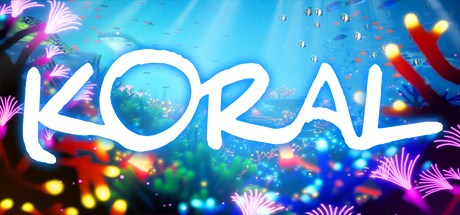
Visually, Koral is a triumph of simplicity. Coronado, known for his skill in creating atmospheric spaces, employs a painterly use of lighting and color to convey emotion. Rays of sunlight pierce through the water, casting golden beams on coral outcrops, while swaying seaweed and drifting particles lend depth and texture to the oceanic environment. The shift from dull, ashen hues to radiant color palettes mirrors the game’s thematic transformation from decay to renewal. The visual fidelity is enhanced by the sense of motion and fluidity—the player’s current moves gracefully through the water, and the gentle undulation of marine life reinforces the sensation of being part of a living world. There are moments where the repetition of environmental assets becomes noticeable, particularly in later levels, but the beauty of the underwater world and its dynamic lighting largely overshadow this limitation.
The audio design complements the visual atmosphere perfectly. The soundtrack is a blend of soft piano melodies and ambient tones that ebb and flow like waves, fostering a calm and contemplative mood. Each note seems to echo within the watery expanse, as if resonating through coral caverns and ocean floors. Sound effects—bubbles, currents, and the soft hum of energy—contribute to the game’s immersive quality without intruding on its meditative tone. There are no voices or dialogues; the ocean itself becomes the narrative voice, communicating through sound and motion. This minimalism enhances the emotional intimacy of the experience, allowing players to engage with the world on an intuitive and sensory level rather than through exposition.
The storytelling in Koral is subtle, conveyed through environmental cues and optional discoveries rather than traditional narrative structure. As you progress, you unlock informational tidbits about real-world marine biology and the threats facing coral ecosystems. These fragments serve as quiet reminders of the game’s purpose beyond entertainment—they educate and inspire awareness. The lack of characters or spoken narrative reinforces the sense of solitude, turning the player’s journey into a symbolic act of restoration. It’s an environmental allegory told through interaction, where healing the virtual ocean mirrors the responsibility we hold toward the real one. This understated narrative approach may not satisfy those seeking drama or dialogue, but it achieves poignancy through restraint.
While Koral’s core experience is polished, it is intentionally brief. Most players can complete it within two to three hours, making it feel more like a self-contained meditation than a sprawling adventure. Its brevity is both a strength and a limitation: it ensures that the game’s emotional impact remains concentrated, but it also leaves one wishing for deeper mechanical or thematic expansion. Some puzzles begin to repeat familiar patterns, and a few sections flirt with trial-and-error pacing, yet the game never loses its sense of purpose. Its focus on relaxation and reflection makes it an ideal experience for those looking to escape the frenetic pace of modern gaming and simply breathe underwater for a while.
Technically, the game runs smoothly on most systems, with minimal load times and crisp visuals. The control scheme is deliberately simple—just movement with directional input—which enhances accessibility but also restricts complexity. There are occasional moments when camera angles or environmental clutter obscure key elements, but these are minor inconveniences rather than major flaws. The interface is clean and unobtrusive, reinforcing the game’s commitment to immersion. It’s evident that Koral was designed as an art piece as much as a puzzle game, and its presentation reflects a creator deeply invested in mood, message, and meaning rather than spectacle.
Koral ultimately succeeds because it understands the power of stillness. It’s not a game about mastery or conquest but about harmony and restoration. Its slow pace, quiet soundtrack, and restrained design invite contemplation rather than adrenaline. In an industry often dominated by noise, violence, and excess, Koral stands as a gentle reminder of what games can be when guided by empathy and reverence for the natural world. Carlos Coronado’s vision results in a work that resonates beyond its mechanics—a poetic, visually luminous, and emotionally grounded experience that celebrates the beauty of life beneath the waves. For players open to its quiet rhythms, Koral offers not just a game but a moment of calm reflection in a world that desperately needs it.
Rating: 8/10