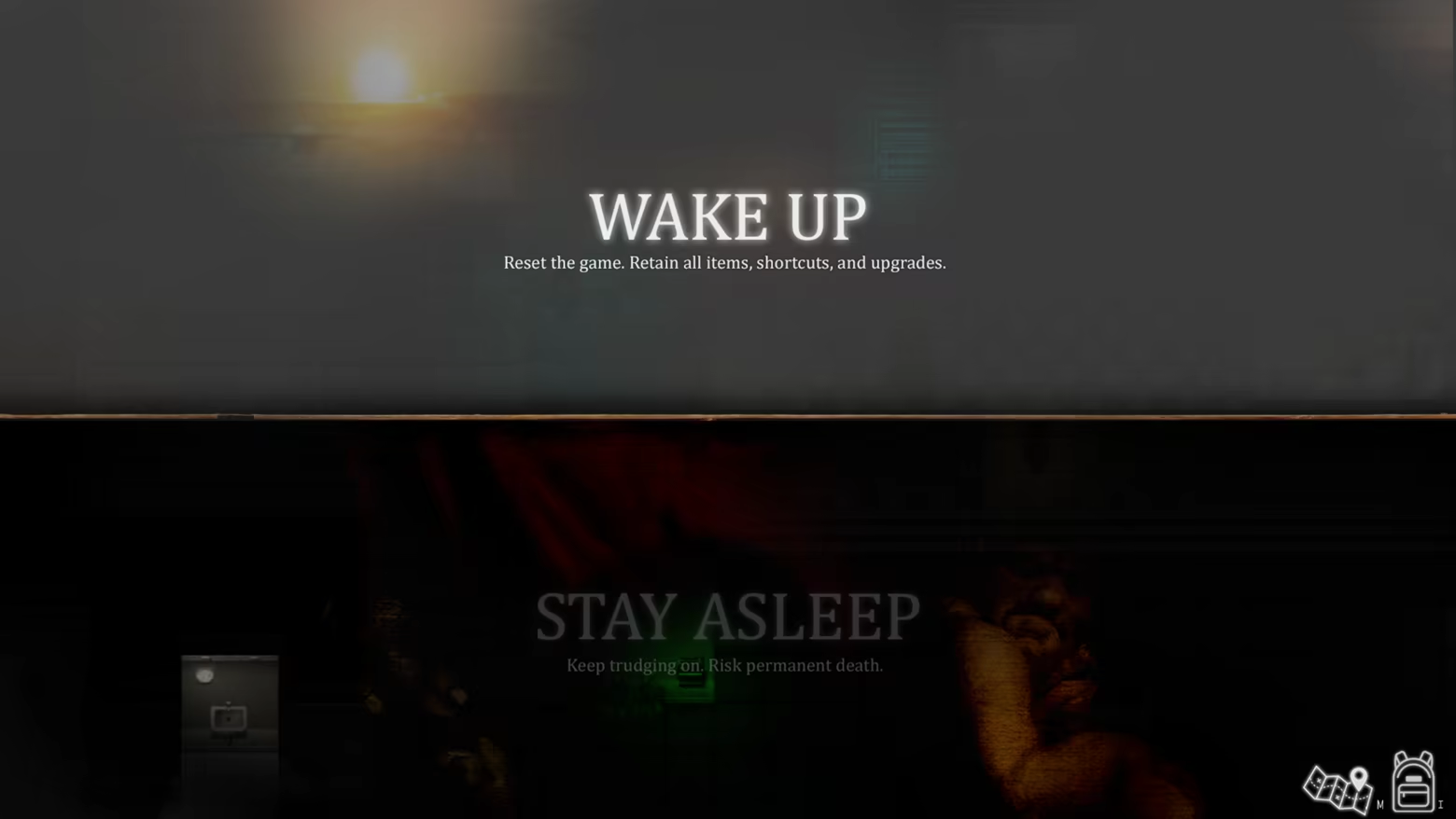
Just a Little Longer is a punishing top-down shooter with the staples of classic action horror games, with a brutal permadeath gambling twist: whenever you die in the recurring nightmare the game takes place in, your save file is instantly deleted.
Modeled estimate, not a reported figure. How we estimate →
Discounts
Every price cut of more than 20% we have observed, in each market that quoted one, with this game's chart position on either side of it. These are episodes, not a model: a sale is one event, and one event cannot tell you what the next one will do.
Reviews, worldwide (the counter carries no country): 0/day in the week to Aug 3 → 0.29/day in the week after.
For scale, across Steam · Top Sellers · Brazil over the last 30 days: the 26 chart moves that followed a price cut of more than 20% went a median of 7 places towards #1, and the 2,400 moves with no price cut behind them went 2 away. One store, one chart, one country — it is the only place we have enough observations to say even that.
Prices outside the United States have been collected since 6 August 2026 and chart positions since 19 July 2026, so a cut older than that has no market to compare and a market that joined later has no history yet. Nothing here is converted between currencies.
About
Just a Little Longer is a punishing top-down shooter with the staples of classic action horror games, with a brutal permadeath gambling twist: whenever you die in the recurring nightmare the game takes place in, your save file is instantly deleted. To combat this, you can choose to "wake up" at any point, instantly returning you to safety, but reverting the nightmare back to the beginning. However, inventory items, guns, upgrades, and shortcuts unlocked remain as they were before the awakening. The question is: do you play it safe and return to the safety of your bed, or do you keep going, trying to find the cause of the nightmare — and keep dreaming just a little longer?

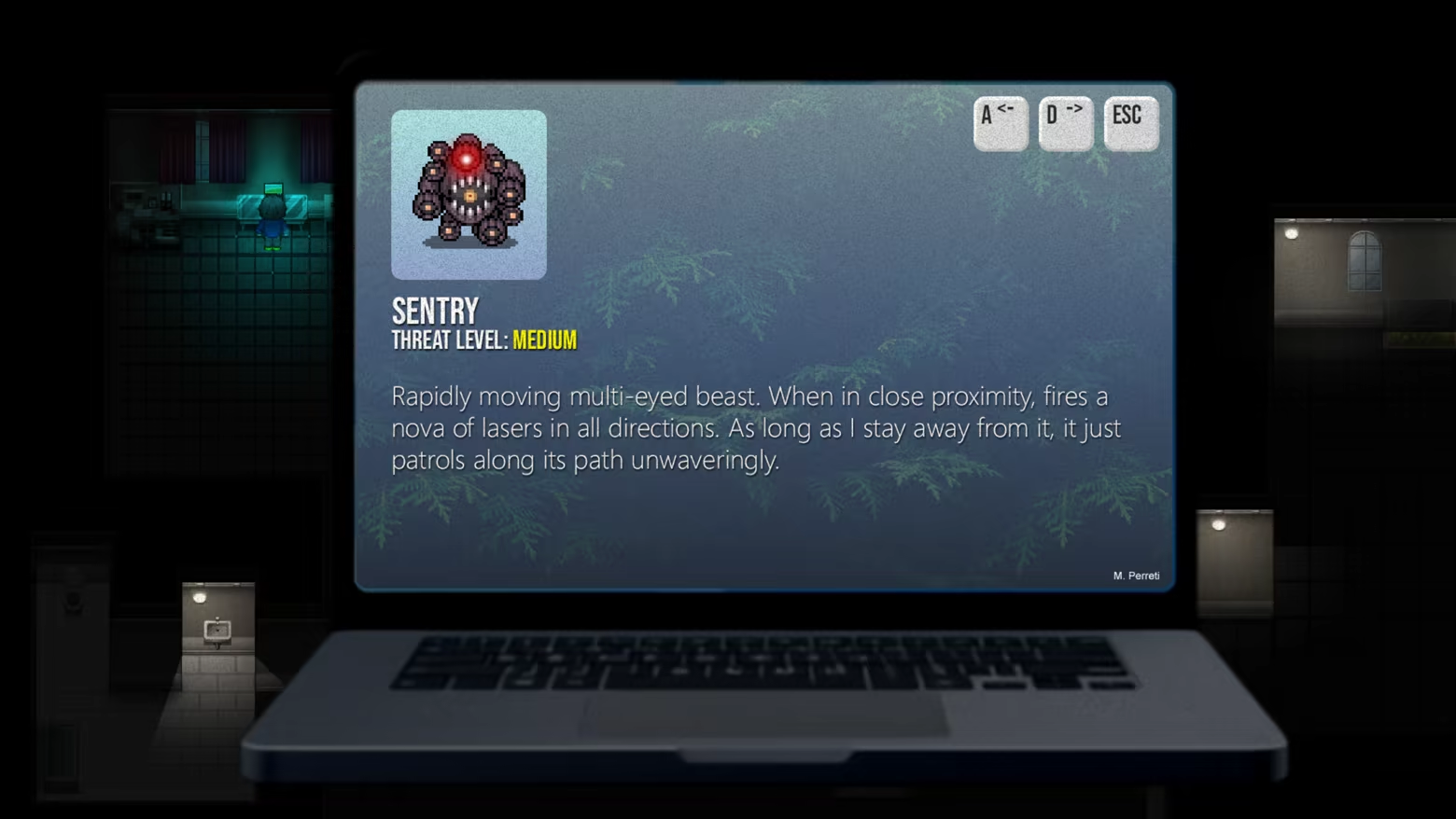
Transient shades and terrible unknown creatures stalk the depths of the nightmare, and ammo to defeat these foes are scarce and vital. Upgrades throughout the game will make defeating these foes easier, as long as you are able to retain them by not dying, and witnessing these foes allows them to be researched upon waking.

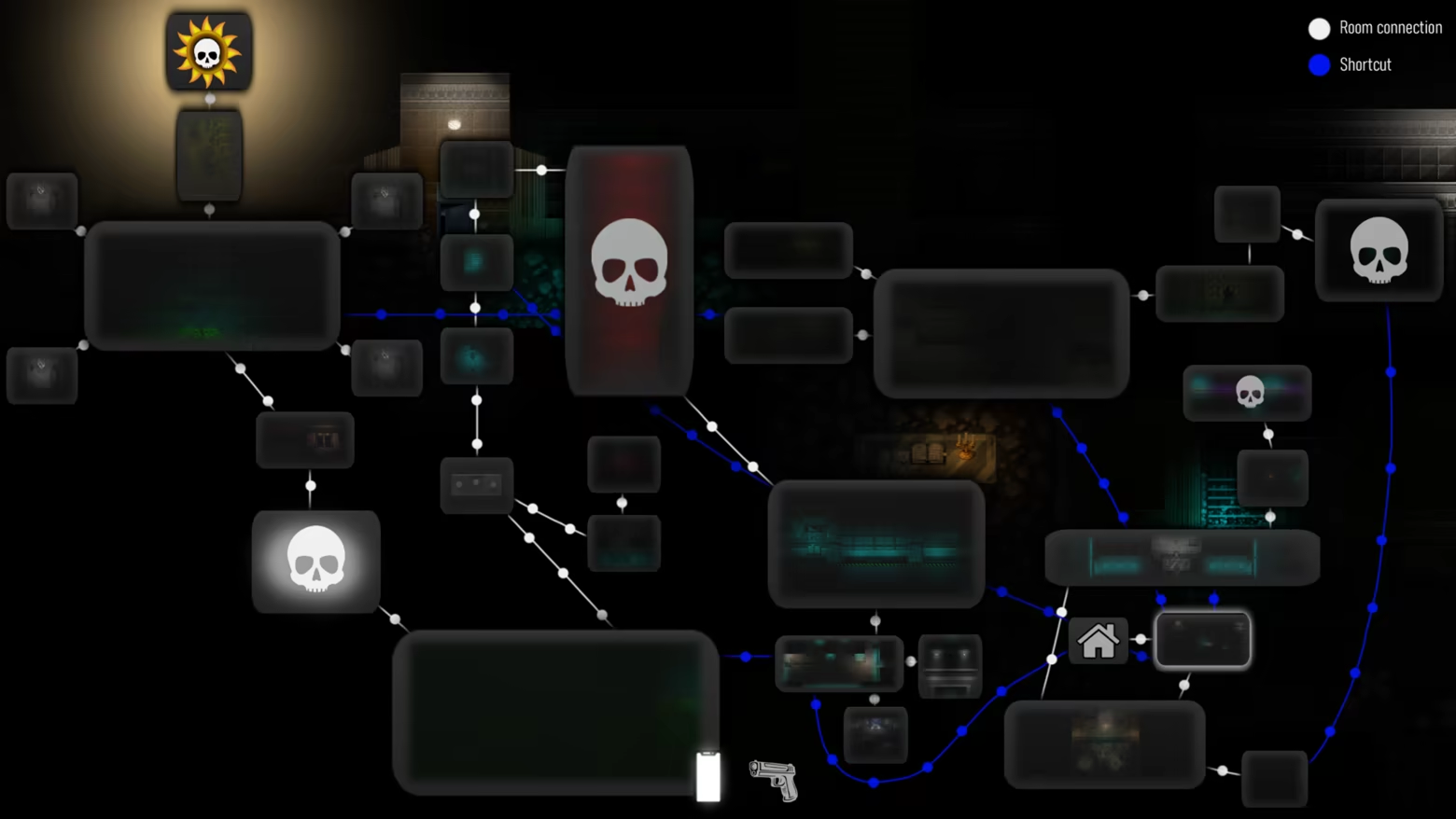
A large connected game world that wraps back on itself with numerous shortcuts and methods of transportation to unlock. Unlocking these shortcuts is crucial to soften the impact of choosing to wake up. As soon as shortcuts are opened, they are never closed, making repeat ventures into the nightmare more and more efficient.

Genres
Reviews
It's like a mix of Dead By Daylight and Friday the 13th (the game) and Texas Chainsaw Massacre, made by the same guy that made that This Is Interesting game I wanted to be cool by posting this early review, and for now, it's a really unique game! I can't wait to get to 1 hour and 56 minutes to refund it! My $$$ will go to my black tar heroin production assembly line! UPDATED: After playing more of the game, and surpassing the third boss, I can update this review a bit more. The game has 2 problems for me, which they kinda fix themselves later on, but make the early game pretty frustating: 1.- If you decide to use your phone's light, it will quickly run out, and while you can still pull out your phone when it has no battery for a quick look at your surroundings, it unequips itself after half a second. And the game is really dark, and it came to a point where I had to play the game only at night IRL because any sunlight would make it so I could not see the where I was or where enemy were when I had to pull out my gun to shoot them. Later on, you get access to a renewable source of phone chargers so you can use your phone more. And I kind of got used, and even liked the experience of spotting an enemy near me, using my phone light to get a feel for my surroundings, pull out my gun and shoot blindly towards the enemy while moving away. Creates a pretty cool visual with the muzzle flash. 2.- You die a bit too quickly on some enemies or bosses (I would have appreciated some more i-frames between hits), where when I realized I'm dying I try to hit ESC to wake up, screen to wake up pops up, try to hit SPACEBAR to select WAKE UP, but just a few milliseconds too late and I just lost my early game savefile. This happened to me a few times because some enemies do insane damage, like certain smiling enemy, and I have a special problem where my ESC key sometimes does not register input. There's a health upgrade but it's hidden behind a puzzle I glossed over my first two hours. I would have appreciated finding this health upgrade sooner because I feel it solves problem nº2 perfectly, and returns the WAKE UP from a panic button to a "I cannot win this fight, I need to reset" button. If you play this game, I recommend you figure out how to get this upgrade; some handsome guy posted a guide that HINTS you towards this upgrade without giving the solution so that's pretty cool. Lastly, I have a nitpick about how if you're standing next to a top wall, your bullets will collide with the wall and be wasted, and it's pretty hard to notice this the first few times so you will end up wasting a magazine before you realise this. Now for the good part: The story is pretty interesting, and every bit of normal information it gives does not feel cryptic, you can usually understand the normal event sequences and notes you find around, which explain the meaning of the dream segments. For now I quite like it!. I feel dread booting up the game because the threat of losing your save file is very real, and while if your save file is deleted you usually learn a lot and can double or triple the speed in which you complete that section, it still feels like you just lost forever those 30 minutes. I like this, by the way. Gives the horror game a horrific feel. The gameplay is pretty unique, I have not played a game with these shootings mechanics, unless my memory is betraying me, and the unreliable nature of your gun, with the spread, the unknown health of some enemies, and the janky control of RPGMaker engine, really makes you feel like shooting in a dream. I feel relieved when the enemy falls down, and feel the dread for wasting those missed bullets. The puzzles and their solutions sometimes can be a bit hard to find because problem nº1 disencouraging phone usage and thus, limiting your vision, but the solutions themselves I found to be within reason and interesting. I have not looked at gameplay online so I don't know how easy it is to find the solution outside of the game if you're stuck, but I have not gotten stuck on my end, and you can always create a discussion post to get help from other players. Overall, I think this game really captures what is like to play a TRUE indie game, made by a guy that clearly loves videogames, and you can feel the game design fight through the RPGmaker engine to deliver a really unique experience. Scott please brigthen the game just a smidge this review was dope cmooon mannnnn
Media

Related
Related
Price dynamics, follower growth, revenue and sales trajectories with interactive tooltips
This and every other Pro feature is free until October 20, 2026. A free account is all it takes.
Stats
All-time low is the lowest price we've recorded for this game since we started tracking it.
Languages: English**languages with full audio support
I'm bad. Play the game. I can't beat it because I cant figure out what the hell to do after one point, and I broke the game somehow. Good luck!
very cool very sexy
I haven't played that much yet but I love it so far, just cryptic enough to my taste. Since I suck at keyboard gaming, I don't have the reflex to hit ESC and WakeUp, this is what killed me on my first playthough. Don't know if it's intended that the controller is almost 100% supported or if it wasn't supposed to be at all, but the controller is detected and can do 95% of the controls. But that last 5% is important, it's printing, switching from light to gun and shooting lol Game is too much fun to not get over the hate I feel towards keyboard gaming tho. Good one mister Jund, good one.
I really want to like this game, but unfortunately I keep encountering bugs that make it difficult/impossible to play. The biggest issue I’ve run into is a bug where, when pushing a chair, my character will sometimes clip straight through it, which eventually makes the game pretty much unplayable since it softlocks me. On my first time waking up, I was hit with a flashbang. The entire screen went completely white. I’m not sure what caused it or what triggered it.
I tried to give this game a real shot but I just couldn't get into it. There's a lot of thoughtful design and some good ideas here, but I think it's heavily limited by the fact that it's an RPG Maker game. The movement is fixed to tiles and feels really clunky. Same thing with the guns / shooting which, to me is the main gameplay here, especially considering there are multiple bossfights. It doesn't help the story and characters are pretty limited either. It's basically just your milquetoast main character talking to himself and a few characters who only serve to setup a setpiece. Beyond that you're exploring this pretty bland world of pre-made RPG Maker assets. Not trying to discredit the time that likely went into designing this map, but it's hard to sense any particular identity to this game when it's all made with pre-done assets which clash in a pretty goofy way. You'll see a golden, medieval-era looking bowl of fruit next to a flat screen TV while using an early 90's computer to save and check the journal. It kind of feels like an RPG without the fun parts of an RPG. There's genuinely good stuff here, but it's being severely held back by the engine used and the lack of original assets
Just a Little Longer is a top-down action-horror experience built around a simple but intimidating rule: surviving matters far more than reaching the next room. Developed and published by Scott Jund, the game places the player inside a recurring nightmare where exploration, combat, resource conservation, and calculated retreat are tied together. Its pixel-art presentation may look modest at first, but underneath it is a deliberately unforgiving survival system in which death can erase the current save. That single consequence changes the meaning of nearly every decision, turning what might otherwise be straightforward exploration into a constant assessment of whether continuing is worth the danger. The nightmare functions as a large interconnected environment rather than a collection of completely isolated stages. Players venture farther into its unsettling locations while searching for equipment, weapons, upgrades, shortcuts, and clues about what is happening. Progress is therefore about more than defeating enemies. Understanding the layout becomes increasingly important because routes connect with one another and shortcuts can make future expeditions considerably more manageable. This structure gives the game a noticeable Metroidvania influence, although its emphasis remains firmly on survival and tension rather than simply collecting abilities to open new areas. Its most interesting mechanic is the ability to wake up voluntarily. Instead of being forced to continue until victory or death, the player can decide that an expedition has become too dangerous and leave the nightmare. Waking sends the journey back toward its beginning, but useful progress such as inventory items, firearms, upgrades, and unlocked shortcuts can be preserved. Death is another matter entirely, as dying carries the severe punishment of losing the save. Consequently, retreat becomes an important strategic tool. Knowing when to stop is arguably just as valuable as being skilled enough to continue. This creates an effective psychological battle between caution and curiosity. Finding a useful weapon or opening a new route provides a strong reason to wake up and secure that progress, yet there is always the possibility that something even more valuable waits nearby. Continuing for another encounter might result in a major discovery, but it could just as easily destroy everything accumulated so far. The game's title perfectly captures this temptation. The thought of staying inside the nightmare just a little longer becomes the player's greatest gamble, particularly after a successful stretch of exploration creates confidence that may not be justified. Combat supports this high-risk structure through limited resources. Ammunition is valuable, so blindly shooting every creature is unlikely to be an efficient strategy. The player must consider whether an enemy needs to be confronted, avoided, or approached with a different tactic. Upgrades can improve the chances of surviving later encounters, but the threat of permanent failure means becoming stronger never completely removes the tension. This scarcity also prevents weapons from turning the experience into a carefree shooting gallery. Firepower provides security, yet every shot represents a resource that may be desperately needed later. The creatures inhabiting the nightmare contribute another layer to progression. Encountering unfamiliar entities is not solely about surviving an immediate fight because discovered enemies can be researched after waking. Knowledge consequently becomes another reward for exploration. Even an expedition that ends with a deliberate retreat can still feel productive if it reveals new threats, useful pathways, or information that helps prepare for the next attempt. This makes the recurring structure feel more purposeful than a simple repetition of identical runs. Permanent shortcuts are especially important to keeping the concept functional. Since waking returns the player toward the start of the nightmare, repeatedly covering every previously explored section could easily become tedious. Unlocking alternative routes and transportation methods gradually reduces this problem. As the player learns the environment, later expeditions can become more efficient and focused. Areas that initially seem remote or dangerous may eventually become easier to reach, giving exploration a persistent sense of accomplishment even when the nightmare itself repeatedly resets. The psychological horror works particularly well because the mechanics provide genuine consequences rather than relying entirely on visual scares. Many horror games become less frightening once the player understands that death only means repeating a few minutes from a checkpoint. Here, even an ordinary encounter can become uncomfortable when a mistake threatens much more substantial progress. Scarce ammunition, unknown enemies, uncertain routes, and the possibility of save deletion combine to make seemingly routine decisions stressful. The recurring nightmare premise also fits naturally with the repeated cycle of entering, exploring, waking, preparing, and returning. The pixel-art graphics and overhead viewpoint give Just a Little Longer a distinctly independent character. Rather than depending on photorealistic environments, the presentation leaves room for atmosphere and player imagination. The relatively restrained visual approach also keeps attention on movement, enemy positioning, environmental navigation, and resource management. Its technical requirements are correspondingly modest, making the game approachable for systems that do not possess particularly powerful hardware. Its greatest strength can also become its biggest weakness. Save-deleting permadeath is capable of producing extraordinary tension, but losing extensive progress because of one mistake will inevitably frustrate some players. Anyone who dislikes severe punishment may find the experience exhausting rather than frightening. Fortunately, voluntary waking provides a degree of control over that risk. Players are rarely being asked simply to gamble blindly; they are instead expected to recognize when they have achieved enough during an expedition and secure those gains before ambition becomes recklessness. Just a Little Longer ultimately stands out because its mechanics consistently reinforce its central theme. Exploration encourages curiosity, scarce ammunition encourages restraint, upgrades encourage progression, shortcuts reward knowledge, and voluntary waking encourages discipline. Permadeath then places all of those systems under constant pressure. Developed and published by Scott Jund, it is a focused action-horror game that understands how meaningful consequences can transform relatively simple exploration and combat into something much more suspenseful. Its uncompromising design will not appeal to everyone, but players who enjoy demanding survival experiences, interconnected environments, persistent progression, and the thrill of deciding whether to risk everything for one more discovery should find its nightmare unusually compelling. Rating: 7/10
Selling now
See how fast this game is selling right now — estimated copies and revenue per day from recent review growth.
Related
| Game | Estimated lifetime revenue | Reviews | Review score | Price |
|---|---|---|---|---|
| — | 0 | — | — | |
| $190.3K | 2.5K | 89% | $4.99 | |
| $15.8K | 81 | 99% | $6.99 | |
| $2.7K | 24 | 100% | $4.99 | |
| $2.8K | 11 | 100% | $9.99 | |
| $931 | 10 | 80% | $4.99 |
Related
| Game | Estimated lifetime revenue | Reviews | Review score | Price |
|---|---|---|---|---|
| $1.5K | 59 | 68% | $1.99 | |
| $1.5K | 110 | 86% | $0.69 | |
| $1.5K | 68 | 41% | $0.99 | |
| $1.5K | 67 | 99% | $0.99 | |
| $1.5K | 73 | 99% | $1.99 | |
| $1.5K | 76 | 76% | $0.99 |