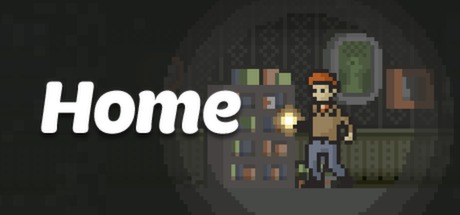
Home is a psychological horror adventure that relies almost entirely on atmosphere, uncertainty, and player interpretation rather than traditional scares or complex gameplay systems. Using minimalist pixel-art visuals and subtle storytelling, the game creates a deeply unsettling mystery that slowly unfolds through exploration and observation. Instead of overwhelming players with monsters or constant jump scares, Home builds tension through silence, isolation, and the disturbing possibility that the truth may never become completely clear. The result is a horror experience that feels intimate, personal, and psychologically uncomfortable long after it ends.
The story begins with the protagonist waking up inside a strange building during a heavy storm with no memory of how he arrived there. Injured and confused, he slowly explores the surrounding areas searching for answers while uncovering signs of violence, disappearances, and possible murder. As players move through abandoned houses, underground tunnels, forests, and isolated locations, they discover notes, bloodstains, and environmental clues that gradually form an incomplete picture of what may have happened. However, the game never provides a direct explanation, forcing players to piece together the mystery themselves.
One of the most interesting aspects of Home is how much it depends on player interpretation. Throughout the journey, players are asked simple questions regarding observations and actions. These decisions quietly influence later details and shape the overall interpretation of the narrative. The game never openly explains the consequences of these choices, which creates a constant sense of uncertainty. Players are never fully sure whether they are uncovering objective truth or constructing their own version of events based on assumptions and incomplete evidence.
This ambiguity becomes the game’s defining strength. Unlike many horror titles that eventually explain everything through exposition or dramatic revelations, Home intentionally avoids clear answers. Different players often leave the experience with completely different interpretations about the murders, the missing individuals, and even the protagonist’s own involvement in the events. The story constantly encourages doubt, making every discovered clue feel suspicious rather than definitive.
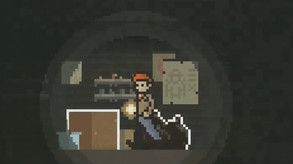
Atmosphere is where the game truly excels. Despite the simplistic visuals, the environments feel cold, lonely, and emotionally oppressive. Dark forests illuminated by flashes of lightning, empty rural homes, silent underground corridors, and abandoned buildings create a persistent feeling of vulnerability. The pixel-art style actually strengthens the horror because the lack of visual detail forces players to imagine much of the disturbing imagery themselves. This approach allows the game to create tension through suggestion rather than explicit violence.
The audio design is equally important in maintaining this atmosphere. Ambient environmental sounds, distant thunder, subtle musical cues, and long stretches of silence all work together to create constant unease. The game understands how effective restraint can be in psychological horror. Instead of relying on loud scares, it allows players’ imaginations to become the primary source of fear. Even simple environmental noises often feel threatening because of the uncertainty surrounding the story.
The pacing is intentionally slow and deliberate. Exploration involves carefully examining environments, reading notes, and observing subtle visual details rather than solving difficult puzzles or engaging in combat. Movement is simple, and the gameplay systems remain minimal from beginning to end. While some players may find this simplicity limiting, it helps focus attention entirely on the mystery and atmosphere without unnecessary distractions.
One of the most impressive achievements of Home is how effectively it creates emotional discomfort within such a short runtime. Most playthroughs last only one or two hours, yet the experience often lingers in players’ minds because of its unresolved narrative and psychological ambiguity. Certain scenes and clues gain completely different meanings after reflection, encouraging players to replay the game and reconsider earlier assumptions.
The retro-inspired presentation also gives the experience a timeless quality. Instead of attempting realism, the game embraces abstraction through pixel visuals and minimalist environments. This artistic approach allows the horror to feel more psychological and symbolic rather than grounded entirely in physical reality. The world often feels dreamlike in the worst possible way, where nothing is fully explained and every clue raises new questions.
However, the same ambiguity that makes Home memorable may also frustrate some players. Those looking for direct storytelling or definitive answers may find the ending unsatisfying because the game intentionally refuses to confirm many important details. The narrative often feels more interested in emotional uncertainty than traditional resolution, which can either enhance or weaken the experience depending on player expectations.
The gameplay itself is also extremely minimal. Outside of exploration and occasional interaction choices, there are very few mechanics to engage with directly. Players expecting puzzles, action, or survival horror systems may find the experience too simplistic mechanically. The slow pacing can occasionally feel tedious as well, particularly during repeat playthroughs once the initial mystery becomes more familiar.
Despite these limitations, Home succeeds because it fully commits to psychological storytelling and emotional ambiguity. It trusts players to interpret events themselves and never undermines its atmosphere with unnecessary exposition or spectacle. The horror comes not from monsters or violence but from uncertainty, memory, and the uncomfortable possibility that the protagonist may not fully understand the truth himself.
What ultimately makes Home so memorable is how personal the experience feels. The story changes subtly based on player decisions and interpretations, making every playthrough feel slightly different emotionally. The game transforms simple exploration into a psychological exercise where players become active participants in constructing the narrative rather than passive observers.
Home is a haunting and intelligently designed psychological horror experience that proves minimalism can often be more disturbing than excessive complexity. Its oppressive atmosphere, subtle storytelling, and emotionally ambiguous narrative create a deeply unsettling mystery that stays memorable precisely because it refuses to provide easy answers. While its slow pacing and abstract storytelling will not appeal to everyone, players willing to embrace uncertainty will discover one of the most effective indie psychological horror games of its generation.
Rating: 7/10