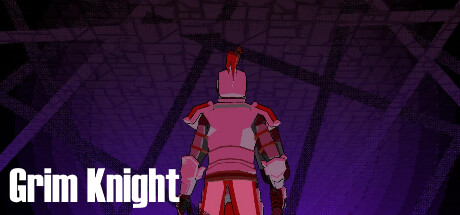
Grim Knight is a compact action roguelike that combines third-person dungeon exploration with straightforward combat, randomized encounters, equipment collection, and the constant threat of losing a run. Developed and published by SUPERita, the game favors immediate action over lengthy storytelling or complicated role-playing systems. Its premise is simple: enter dangerous dungeons, fight through groups of monsters, gather weapons and relics, improve your combat potential, and survive for as long as possible. This uncomplicated structure makes the game approachable, particularly for players who enjoy roguelikes but do not want to spend considerable time learning elaborate mechanics before getting into combat.
A major part of Grim Knight's appeal comes from the tension created by its single-life structure. Survival matters because death can bring a promising attempt to an abrupt end. Even relatively ordinary battles therefore have some importance, especially after acquiring useful equipment that would be frustrating to lose. This encourages a more careful approach than the game's simple combat might initially suggest. Charging recklessly into every encounter can quickly become costly, while learning enemy behavior, maintaining good positioning, and deciding when to play aggressively can significantly improve the chances of progressing farther.
The dungeon structure introduces randomness to prevent every attempt from unfolding in exactly the same way. Different environments, encounters, weapons, and relics can influence how a run develops, giving players reasons to adapt rather than rely completely on a predetermined strategy. This unpredictability is important because Grim Knight is fundamentally built around repetition. Starting again after death becomes much more interesting when the next attempt has the possibility of producing a different collection of equipment or presenting threats in a different order.
Weapons and relics provide the primary means of strengthening the knight. Discovering useful items gradually transforms the player from a relatively vulnerable fighter into someone capable of handling increasingly dangerous opposition. The most satisfying moments occur when several beneficial effects work together and a run begins developing its own identity. This progression provides a strong incentive to continue exploring because the next discovery could substantially improve the character's effectiveness. It also reinforces the risk-and-reward design, since becoming more powerful simultaneously means having more progress to lose.
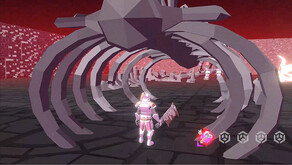
Enemy encounters complement this system by introducing monsters with different abilities and combat behaviors. Rather than simply filling rooms with identical targets, the game attempts to make players react to different threats while continuing deeper into the dungeon. Boss battles act as larger tests of accumulated equipment and combat knowledge. These encounters are particularly important because they provide milestones during a run and give players opportunities to determine whether their current combination of weapons and relics is genuinely effective.
Grim Knight's third-person perspective gives its action a different character from traditional top-down roguelikes. Exploring spaces directly behind the knight creates a stronger sense of physical movement through the dungeon, while attacks and enemy confrontations feel immediate. The visual design uses a relatively simple 3D dark-fantasy aesthetic centered around medieval environments, monsters, weapons, and an armored protagonist. It is not a game designed around cutting-edge graphical spectacle, but its restrained presentation fits the modest scale of the project and keeps attention focused on combat and exploration.
The simplicity that makes Grim Knight accessible can also limit its longevity. Its central loop becomes easy to understand, and players seeking extensive character customization, elaborate skill trees, detailed narrative development, complicated crafting, or a large collection of interconnected progression systems may find the experience comparatively lightweight. Randomization helps produce variation, but procedural elements cannot completely eliminate repetition when the underlying combat and content pool remain relatively straightforward. More weapons, relic interactions, enemies, environments, bosses, and persistent progression options would give the concept greater long-term depth.
This distinction is important when evaluating the game. Grim Knight works better when approached as a focused roguelike built around short-term survival and repeated dungeon attempts rather than as a massive action RPG. Its enjoyment comes from entering a dungeon quickly, fighting monsters, discovering equipment, assembling a stronger character, and seeing how long that particular attempt can survive. Players who appreciate that loop can find considerable satisfaction in gradually understanding which items and combat approaches work best.
Its free-to-play availability also makes its modest scope considerably easier to accept. There is little barrier to simply trying the game and discovering whether its combat rhythm is appealing. The relatively modest system requirements and small storage demands further contribute to its accessibility, allowing it to run on hardware that would struggle with more technically demanding modern action games. This makes Grim Knight particularly suitable as a lightweight roguelike that can be played without a significant commitment of money, storage space, or time.
There remains a sense that Grim Knight represents a foundation that could support a much larger experience. The core concepts of randomized dungeon exploration, one-life survival, equipment combinations, increasingly dangerous enemies, and boss encounters are appropriate for the genre, but greater variety would make repeated attempts more compelling over extended play. Expanding the number of meaningful build combinations and giving players additional strategic decisions could transform its straightforward framework into something substantially deeper.
Taken on its own terms, however, Grim Knight delivers an enjoyable and accessible interpretation of third-person roguelike dungeon crawling. It understands the appeal of becoming progressively stronger during a successful run while knowing that one serious mistake can erase that momentum. Its combat is easy to grasp, its randomized structure provides replay value, and its weapons and relics give players a reason to keep searching beyond the next encounter. The limited depth and potential repetition prevent it from becoming an exceptional example of the genre, but its focused design and free entry make it easy to recommend to players interested in smaller independent roguelikes.
Rating: 7/10