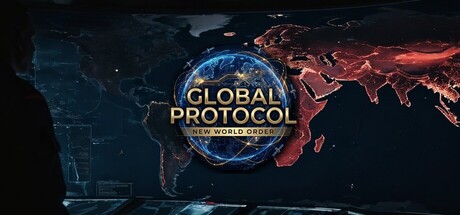
Global Protocol: New World Order
Command any of 261 real-world countries in this 2026 grand strategy game. Build your economy, lead armies, and navigate deep diplomacy. Features built-in modding support and 12 supported languages. Shape the global order through espionage, nuclear deterrence, and AI-driven geopolitics.
Estimated lifetime revenueMedium confidence
$66.1Kgross
$29.7Klow → high range$145.4K
Net to developer$44K
Modeled estimate, not a reported figure. How we estimate →
Est. copies sold
3.6K
mid estimate
About
About the game
Take Command of the Modern World
Available Now in Early Access
Global Protocol: New World Order is a data-driven grand strategy game set in the real world of 2026. Play as any of 261 playable countries — from global superpowers to developing states — and navigate the complex web of modern geopolitics, economics, warfare, and diplomacy.
Every country starts with real-world data: GDP, population, military strength, alliances, resources, and political systems. What happens next is up to you.
Every Nation, Your Way
Choose from 261 playable countries, each rated on a 5-star difficulty scale. Lead the United States and maintain global hegemony, guide Brazil through economic transformation, or take on the ultimate challenge with a fragile state fighting for survival. Over 4,600 provinces cover the entire world — every region matters.
Deep Strategic Systems
- Economy — Manage GDP growth, inflation, trade agreements, resource extraction, budgets, and construction. Build 69 different building types across economic, military, infrastructure, research, social, defense, and intelligence categories.
- Military — Command 17 unit types across land, sea, and air. Assemble armies, deploy fleets, launch air missions, manage logistics, and fight wars of attrition or lightning strikes.
- Technology — Research 53 technologies across Military, Civilian, and Space branches. Unlock new capabilities, improve your economy, and gain strategic advantages.
- Espionage — Build intelligence agencies, run covert operations, steal technology, sabotage rivals, and protect your own secrets. Real-world agencies like the CIA, MI6, FSB, and Mossad each bring unique advantages.
Shape the Global Order
Diplomacy goes far beyond simple alliances. Negotiate trade deals, impose multilateral sanctions through the UN Security Council, form and break military pacts like NATO or the Shanghai Pact, join economic blocs, and compete for prestige on the world stage. The G7, G20, and UNSC are active bodies whose decisions reshape the global balance of power.
A Living World
Each country is governed by its own AI personality — aggressive, cautious, opportunistic, or isolationist. 68 scripted events draw from real-world 2026 flashpoints, while procedural events react to your decisions. Alliance betrayals, economic crises, border disputes, and regime changes unfold dynamically. Every action has consequences that ripple across the globe.
Command Your Forces
Deploy infantry, armor, artillery, fighters, bombers, helicopters, destroyers, submarines, and carriers across a detailed world map. Establish air superiority, blockade enemy ports, transport armies across oceans, and manage the fuel and manpower that keep your war machine running. Fog of war ensures that intelligence is as valuable as firepower.
Nuclear Deterrence
The DEFCON system tracks global nuclear tension across 5 escalation levels. Nine nuclear-armed nations possess ICBMs, SLBMs, cruise missiles, tactical warheads, and hypersonic weapons. Launch a first strike — or hold your arsenal as the ultimate deterrent. Mutual Assured Destruction is not just a theory; it is a game mechanic.
Victory on Your Terms
Pursue one of 5 victory conditions:
- Military Hegemony — Dominate through territorial control and unchallenged military power
- Economic Dominance — Build the world's largest economy with unrivaled trade networks
- Diplomatic Victory — Win global support through prestige, alliances, and UN influence
- Tech Supremacy — Lead the world in research and technological advancement
- UN Mandate — Shape international law through decades of diplomatic leadership
Built for Modding
Global Protocol was built from the ground up to be modular. Customize your experience or create entirely new scenarios with built-in modding support. Modify country data, tech trees, units, and events to shape your own version of the New World Order.
Global Accessibility
Strategize in your native tongue with full interface support for 12 languages, including English, German, French, Spanish, Portuguese, Turkish, Russian, Japanese, Korean, and Chinese.
Key Features
- 261 playable countries with real-world 2026 data
- 4,600+ provinces covering every region on Earth
- 17 military unit types across land, sea, and air forces
- 69 building types in 7 categories
- 53 technologies across 3 research branches
- 22 major alliances and treaties including NATO, EU, ASEAN, African Union, BRICS+, G7, G20, and more
- Built-in Modding Support for custom scenarios and data
- 12 Supported Languages for a truly global experience
- DEFCON nuclear system with 5 missile types and MAD mechanics
- Real intelligence agencies and covert espionage operations
- 68 scripted events based on 2026 geopolitical flashpoints
- 5 victory conditions plus unlimited sandbox play
- AI-driven nations with distinct personalities and strategic goals
- UN Security Council, G7, G20, and international organizations
- Save/Load system with quick save support
- 7 map modes — Political, Terrain, Economic, Military, Diplomatic, Nuclear
- High performance — Built on Unity DOTS/ECS for smooth gameplay
Development Roadmap
We are committed to long-term development and transparency. Follow our progress, see what we're currently building, and track upcoming features on our live public roadmap:
Check our website for the full development roadmap.Our roadmap includes upcoming overhauls for the UN Security Council, Global Supply Chain simulations, Naval Carrier Groups, and much more.
