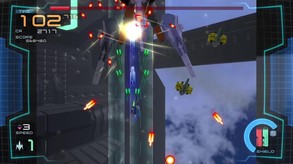
Fight over the Earth-like planet of Seventia and its scarce resources of Septonium. A vertical shoot ’em up at its core with an added focus towards immersive storytelling. Follow the story of Alex and Margaret, two exceptional pilots, for the first time on Steam.
Modeled estimate, not a reported figure. How we estimate →
Prices
The United States storefront in every case, so this compares stores and not countries.
Discounts
Every price cut of more than 20% we have observed, in each market that quoted one, with this game's chart position on either side of it. These are episodes, not a model: a sale is one event, and one event cannot tell you what the next one will do.
Reviews, worldwide (the counter carries no country): 0.14/day in the week to Sep 12 → 0/day in the week after.
For scale, across Steam · Top Sellers · Brazil over the last 30 days: the 25 chart moves that followed a price cut of more than 20% went a median of 10 places towards #1, and the 2,413 moves with no price cut behind them went 2 away. One store, one chart, one country — it is the only place we have enough observations to say even that.
Prices outside the United States have been collected since 6 August 2026 and chart positions since 19 July 2026, so a cut older than that has no market to compare and a market that joined later has no history yet. Nothing here is converted between currencies.
About

Stats
All-time low is the lowest price we've recorded for this game since we started tracking it.
Sums Steam only; PlayStation publishes no volume signal, so the true total is higher by an unknown amount.
| Store | Price | Audience | Score | Chart | Est. revenue |
|---|---|---|---|---|---|
SteamYou are here | $2.99−85% | 227reviews | 81% | — | $10.7K |
| $19.99 | 238ratings | 90% | — | not modelled |
Matched by title — a reused name can pair the wrong games. * is a critic aggregate. Prices and positions are each store's United States storefront; Epic charts worldwide. Audience and Score too, except Steam's, which is worldwide.
Engagement
Reviews
Themes across 45 recent reviews and how positive each mention is. A keyword signal, not full sentiment analysis.
Reviews
最初のミッションをプレイしました。3Dのアートや音楽、ミッションがすごく楽しいです。戦闘機のカスタマイズパーツも豊富で、集めて強化するのが楽しみです。
[h1] 3D shoot'em up with plenty of customization and parts to unlock. Use shield to absorb incoming bullets. Main weapon and sub can be equipped but beware that shooting takes energy for each weapon, sometimes more firepower means more energy drainage. 3 levels of difficulty to choose from which can be played anytime. Not that easy to be honest. Story mode where you gain credits for each successful mission and buy new equipment afterwards. Each stage ends with some badass boss. Music is great including some nice anime cutscenes. Overall decent shooter. [/h1]
Media

Related
Related
Price dynamics, follower growth, revenue and sales trajectories with interactive tooltips
This and every other Pro feature is free until October 20, 2026. A free account is all it takes.
Languages: English, Japanese*, French, German*languages with full audio support
Hours played at review time, across 45 reviews with recorded playtime.
positive critical· bar length = how often the theme comes up
[h1]主人公の声がきつい[/h1] <昔買ってレビューを書いていなかった作品。通常のレビューより簡素> 2020年発売にしてはSTGとしての古さが半端ないが調べてみたらもともとは2013年に発売されていたものらしい。 STGとしては爽快感がなく、道中が無駄に長くて退屈。 ストーリーモードではここにフルボイスの会話が挟まれるが、主人公の声がアマチュア感たっぷりで聴いていて辛い。ヒロインも「うまいアマチュア」レベルで低予算作品なのが色んな角度からうかがえる。 一応ゲームとしては普通にプレイできるレベルだが、本作より安くて質のいいインディー縦STGがあるのに、あえて本作を遊ぶ理由は残念ながらない。
There's both plenty of good and bad with Ginga Force, but I'll give it an overall positive review. Pros: +The music is fantastic, as always. This developer has a great set of composers on tap to suit the needs for every level and theme. +Score Attack mode is my favorite way to play the game, as you don't have to worry about grinding currency to make your ship better in Story Mode. You choose between a selection of pre-built ships and get to just play the game straight with no menus inbetween, do your best. It's a blast. +Defeat in story mode is a minor slap on the wrist since you can upgrade your ship and attempt levels individually instead of getting sent back to the beginning of the game when you game over. This is more forgiving than a lot of other SHMUPs in the genre and great for beginners. Cons: -The story is generic, characters are boring, and you're gonna feel weak at the start of your playthrough no matter what. The need for a customized ship with upgrades means you're not going to feel powerful, especially if you play on Normal first. Easy is the way to go. -Bullet visibility issues. This is a major problem with games in this art style where some rendered objects are actually bullets, and it's very hard to see all of what's approaching you in a filled screen, especially on Normal and Hard difficulty. I think this game is easier overall than some bullet hell CAVE shooters, but dying to this issue feels particularly unfair. -Since you're always slowly upgrading your ship, the progression feels less like you're getting more skillful, and more that enemies just die faster. This is a weird feeling to have, and is counter-intuitive to learning an STG, in my opinion. Eschatos did this much better by just giving you extra lives and options the more you played without changing your strength.. Ginga Force isn't the best shooter out there, but it's perfectly servicable, and often goes on sale for cheap. If you can get it for less than $10, I think it's pretty good. 7/10.
O Dark Souls dos jogos de navinha! Dificil pra krl e no precinho, vale demais 🚀
Ginga Force, developed by Qute and published by Rising Star Games, is a vertical-scrolling shoot-’em-up that combines classic arcade mechanics with modern sensibilities and a surprising amount of narrative ambition. Originally released on Xbox 360 in Japan before eventually reaching a wider audience via Steam and PS4, the game showcases Qute’s distinctive style, blending flashy visuals, intense bullet-dodging action, and a robust customization system that gives the player more agency than is typical for the genre. While not without flaws, Ginga Force is a layered and challenging experience that successfully balances old-school gameplay with more contemporary structure and storytelling. At the heart of the game is its fast-paced, mission-based structure. Rather than a linear arcade run from start to finish, Ginga Force organizes its ten stages into a story-driven campaign. Players follow pilots Alex and Margaret as they battle through politically charged conflicts on the planet Seventia, where control of a valuable resource called Septonium drives most of the tension. While the narrative isn’t revolutionary, it’s more substantial than what most shoot-’em-ups attempt. Dialogue exchanges, voice acting, and mission briefings attempt to build a world and provide context to the action, though for many players the story may still feel secondary to the moment-to-moment gameplay. Some cutscenes can drag slightly, especially for those who just want to dive into the next barrage of bullets, but their inclusion adds flavor and a sense of purpose to your progression. Where Ginga Force shines most is in its customization and strategic depth. Before each mission, players can outfit their ship with a combination of main weapons, sub-weapons, and special attacks. These aren’t just cosmetic or minor tweaks—they fundamentally change how you approach each level. Some weapons excel at crowd control, others are better for bosses, and still others offer defensive advantages. The ability to experiment with loadouts allows players to tailor their playstyle, offering both flexibility and replayability. Certain stages benefit from specific configurations, encouraging thoughtful preparation rather than simple reflexes alone. Over time, more weapons and enhancements become available, either through progression or repeated success, adding a rewarding sense of growth. Gameplay itself is kinetic and demanding, offering a well-paced increase in difficulty as you progress through the stages. Each level introduces new enemy patterns, environmental hazards, and increasingly intricate bullet formations. Boss encounters in particular are highlights—multi-phase fights that challenge players to master dodging, positioning, and pattern recognition. The game manages to remain fair in its difficulty, though late-game stages can be punishing without a carefully chosen loadout. One of Ginga Force’s strengths is its ability to appeal to both genre veterans and newcomers. Lower difficulties allow for a more accessible experience, while higher settings and the Score Attack mode push skilled players to optimize their performance and chase leaderboard rankings. Visually, Ginga Force offers a bright, clean art style with a good balance between spectacle and clarity. Environments are diverse, colorful, and dynamic without ever overwhelming the screen. Enemy designs are sharp, and bullets are well contrasted against backgrounds, which is crucial for a game that demands split-second reactions. The game doesn’t lean into visual chaos the way some modern bullet hell titles do, opting instead for a more readable, structured approach. This makes it easier to learn patterns and improves the overall experience, especially during intense boss segments. Sound design complements the visuals with a high-energy electronic soundtrack that fits the game’s tone well, while the voice acting—mostly in Japanese with subtitles—adds a layer of personality to the story sequences. Despite its many strengths, Ginga Force does have some shortcomings. The structure of unlocking weapons and upgrades can feel a bit grindy at times. Certain powerful tools are locked behind tougher missions or repeated plays, which might frustrate players looking for quicker access to the full range of loadouts. While the game offers a decent challenge curve, the balance can sometimes feel off—some stages spike in difficulty abruptly, depending on the weapon setup, making trial and error more necessary than it needs to be. Additionally, while the story is appreciated for its ambition, it may not resonate with players who prefer a more minimalist or arcade-style approach. The pacing between story and action can occasionally feel uneven, especially when narrative segments slow down the momentum between fights. From a technical standpoint, the PC version is solid, with smooth performance and consistent framerate. Load times are minimal, and the interface is clean and easy to navigate. While the visuals don’t push the boundaries of modern hardware, the game doesn’t need to. Its presentation is effective and well-executed, focusing on clarity and polish over raw spectacle. That said, it would have been nice to see more robust options for high-refresh-rate displays or expanded resolution scaling, as these are increasingly standard features in modern PC releases. In summary, Ginga Force is a highly enjoyable and thoughtfully designed shoot-’em-up that offers more than just reflex-based gameplay. With its engaging customization system, varied mission structure, and stylized presentation, it stands out as one of the more accessible and content-rich shmups available on Steam. While its attempts at storytelling might not connect with every player, and some difficulty and progression spikes can frustrate, the overall package is compelling. It manages to blend arcade intensity with strategic planning, making it appealing to both genre purists and those looking for something more modern. For players willing to dive into its layered systems and embrace the challenge, Ginga Force delivers a rewarding and memorable ride through the skies of Seventia. Rating: 7/10
This game is BRUTAL. I respect it. I'm a beginner shmup player, I've 1CC'd a good number of shmups at this point on the easier end of things - probably the hardest I've done is Mushihimesama on normal difficulty, so that's my level. I'm not a complete newbie, but I'm not great, either. I died on the first mission of this game, initially. After clearing the first mission, you can choose from four missions, and they are MEAN. Playing mission 2, I thought "oh, they deliberately placed a hard mission here to show me that I can challenge them in any order! That's cool!" They did not. Each mission is exacting. This is less of an arcade shmup and more of a level-based shmup, where the primary challenge is just to beat the levels individually. It's clearly danmaku inspired, but it isn't exactly that. You have a shield mechanic, where you can negate bullets in exchange for the shield meter, so it isn't always about dodging the dense bullet patterns. I think the player hitbox is larger than a danmaku game, necessitating the shield (though there is a cool effect when you are grazing!). The power of the main and sub weapons are both tied to separate meters, which you recoup by picking up drops from enemies, so you are required to calculate when you are shooting. This is also memorisation heavy at times, where you will be snowballed if you don't anticipate enemy waves. Big fan of the way the game integrates the characters. There are constant radio communications, with characters speaking as the mission goes on. There's a major issue with this, in that the speech is only voiced in Japanese and you will never be able to read the subtitles while playing - it reminds me a little of Gunvolt's story mode, though mercifully the textboxes don't fill half the screen or anything like that! Each level also focuses on chasing & apprehending a suspect, and that suspect's personality is represented in the level design, and you constantly have contact with them, which is really neat! Shmups often have difficulty integrating the story and characters into the actual game, but this does a good job at it. It really feels like a 90s or early 00s anime in game form. Biggest issue? Visibility. The game has a fast scrolling background that doesn't seem to have any kind of dimming, and there are no options with regards to altering the background brightness or any other parameters, nor are the bullets rendered in a deliberately contrasting way. It's also often difficult to discern what is in the background and what is in the foreground, so you'll get mixed up on what is a hitbox and what isn't. This issue is most exposed with the flashlights in stage 2, which interact with the background in a way that makes them very hard to discern, but there are also parts where enemies will be in the foreground and appear to be in the background, and vice-versa. They would do well to add some sort of effect for one or the other to make it more apparent. I also really do not like the system by which you gain extra lives by grinding the levels. It undermines the feeling that you're learning the level. I kind of get it in a Dark Souls kind of way, where you can just grind if you're bad at games (shame on you if you've ever grinded on a Dark Souls game, jfc), but it feels like it misunderstands the audience for these games in the first place. Another issue is that the levels are sometimes repetitive. They repeat enemy & bullet patterns a touch too much. I'd have probably shortened the levels just a touch. Overall? This is a great game. I'd recommend playing Natsuki Chronicles first, then step up to this. If you can do the last three levels of NC, this game's difficulty will feel like a continuation. I think Natsuki Chronicles is a better game, but this is more kino and memorable, to the point where I want to say this is a better experience.
PUROS TEMAZOS Y APARTE TIENE DIFICULTAD, JUEGAZO!!!!!!!!!!!!
I love this kind of games however... first mission and even on normal mode, it literally throw you into combat that was LONG and HARD. I can barely take hits before blowing up. I failed couple of time before getting refund. Shouldn't you like I don't know, warm players up first instead of this?
its SO anime i love it but im never beating hard mode
Selling now
See how fast this game is selling right now — estimated copies and revenue per day from recent review growth.
Players by region
Where this game's players are, estimated from review languages.
Related
| Game | Estimated lifetime revenue | Reviews | Review score | Price |
|---|---|---|---|---|
| $1.4M | 4.5K | 98% | $14.99 | |
| $1.1M | 820 | 82% | $49.99 | |
| $679.7K | 1.8K | 98% | $14.99 | |
| $485.7K | 1.7K | 98% | $14.99 | |
| $470.9K | 1.6K | 98% | $14.99 | |
| $427.4K | 1.2K | 93% | $14.99 |
Related
| Game | Estimated lifetime revenue | Reviews | Review score | Price |
|---|---|---|---|---|
| $10.7K | 155 | 97% | $2.99 | |
| $10.8K | 71 | 52% | $7.99 | |
| $10.7K | 126 | 71% | $3.99 | |
| $10.8K | 123 | 39% | $2.99 | |
| $10.8K | 53 | 60% | $5.99 | |
| $10.8K | 51 | 82% | $9.99 |