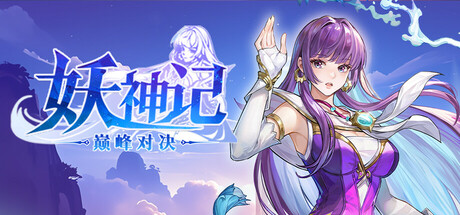
妖神记之巅峰对决 is a free-to-play strategy RPG that blends collectible characters, automated battles, team formation, idle progression, and light exploration within a fantasy setting influenced by Chinese mythology and cultivation fiction. Developed and published by 妖神记项目组, it is built around the world and characters of Tales of Demons and Gods, making familiarity with the source material a definite advantage. Even without that background, its combination of card-based progression and tactical transformation mechanics gives it enough individuality to stand apart from a completely conventional character collector.
The narrative centers on Nie Li, who suffers defeat in his previous life after confronting the Sage Emperor and overwhelmingly powerful demon beasts. Through the mysterious Temporal Demon Spirit Book, his soul returns to his thirteen-year-old body during his time at the Holy Orchid Institute. Unlike everyone around him, Nie Li retains the knowledge and experience accumulated during his previous life. This gives the story its central motivation: he now has an opportunity to prevent past tragedies, protect the people important to him, develop his abilities differently, and eventually overcome enemies that once seemed unbeatable.
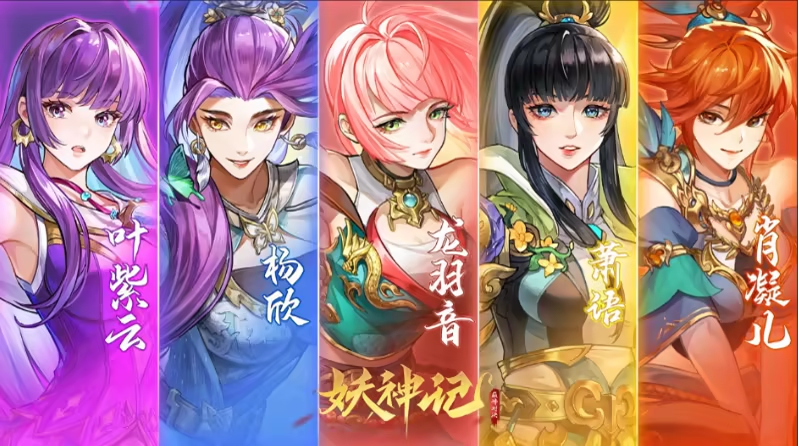
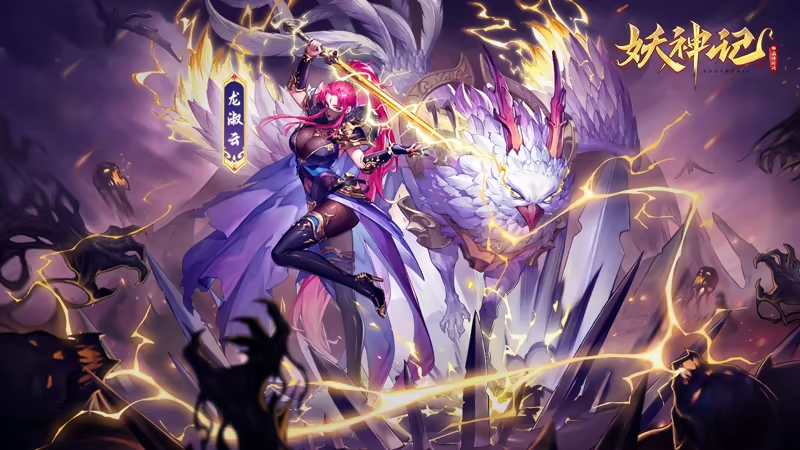
Combat operates primarily through automated encounters, but preparation matters considerably. Players assemble teams of Demon Spiritualists with different rarities, abilities, and battlefield purposes. The more interesting element is temporal energy, which can be distributed among characters and used to trigger transformations. Timing and resource allocation therefore influence how efficiently a formation performs. Rather than simply watching characters exchange attacks, players are encouraged to consider which units should receive priority and how quickly their most important transformations can become available.
Character rarity adds another strategic consideration. High-level UR units naturally possess desirable power, but constructing a formation exclusively around the highest rarity is not always the ideal solution. SSR characters can contribute to more efficient temporal energy recovery, creating situations where a carefully balanced formation can activate transformations earlier than a team focused purely on raw rarity. This makes experimentation worthwhile and gives players reasons to maintain a broader collection instead of immediately discarding everything below the top tier.
Progression is extensive and strongly resembles the structure of mobile-oriented collectible RPGs. Characters can be developed through talents, relationships and bonds, Demon Spirit fusion, equipment and other advancement mechanics. Main and secondary missions provide direction, while randomized activities introduce roguelike elements into the broader progression loop. There are also competitive and cooperative online components for players who want their carefully constructed teams to serve a purpose beyond completing the main campaign.
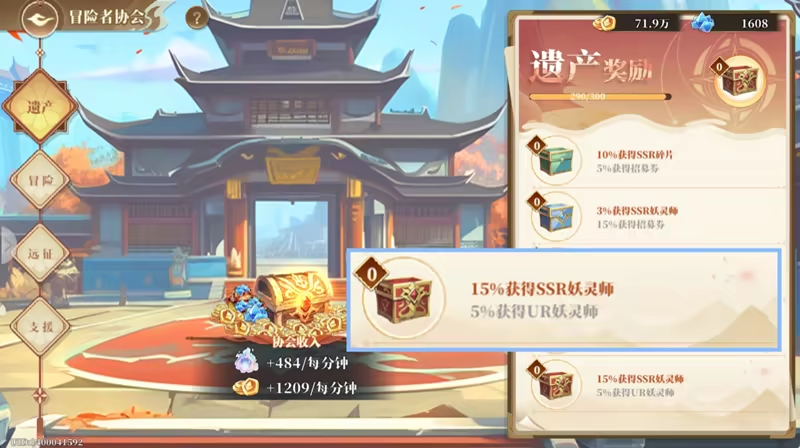
Idle progression plays an important role in maintaining forward momentum. Advancing farther through the campaign improves the resources that can be accumulated passively, and those materials can then be invested back into characters to overcome tougher encounters. Treasure chests and exploration activities provide additional opportunities to acquire useful rewards and potentially powerful Demon Spiritualists. It is an effective loop for players who enjoy frequent upgrades and incremental improvement, although anyone tired of resource-heavy mobile RPG systems may find the sheer number of progression layers excessive.
Exploration provides a visual and mechanical break from the battle interface. The game uses pixel-style characters and environments for sections in which players can roam, fight monsters, discover treasures, and obtain items useful for strengthening their roster. This contrasts with the more elaborate character illustrations used elsewhere. The mixture of polished character artwork and deliberately simplified pixel environments is unusual, but it gives the presentation some personality and prevents every part of the experience from feeling like another menu-driven card game.
Monetization is an important consideration. The game is free to play and offers various rewards that can help new players establish a usable roster, but it also includes in-game purchases and randomized purchasing mechanics. Players comfortable with gacha-style progression will recognize the structure immediately. Those who prefer games where every character and upgrade is obtained through straightforward gameplay may find this aspect considerably less attractive.
Accessibility is arguably the largest obstacle for players outside its intended audience. Simplified Chinese is the primary supported language, while official English localization is absent. That matters significantly because this is not merely an action game that can be understood through visual cues. Character skills, menus, progression mechanics, tactical descriptions, narrative sequences, and numerous interconnected systems benefit from being properly understood. Players unable to read Chinese could miss much of both the storyline and the strategic detail.
The Early Access status introduces another concern. The game's concept leaves considerable room for additional characters, chapters, modes, balance adjustments, and improvements, but its development activity should be considered before committing substantial time or money. The existing systems can still demonstrate what the project is trying to accomplish, yet players expecting a rapidly evolving Early Access experience should temper their expectations.
Steam Deck compatibility is uncertain rather than officially confirmed as fully supported. There is no strong basis for treating it as Steam Deck Verified or Playable, and the game's Windows-focused requirements, interface design, online components, and lack of established Deck-specific support mean handheld users should expect possible compatibility or control issues. It may be possible to experiment with Proton and custom controls, but this should not be considered a dependable Steam Deck experience. For anyone purchasing or investing time specifically for Deck play, a Windows desktop remains the safer platform.
Ultimately, 妖神记之巅峰对决 has an appealing foundation for fans of collectible strategy RPGs. Its temporal energy mechanic, transformations, rarity balancing, character development, pixel exploration, idle rewards, competitive play, and cooperative elements provide more variety than its straightforward card-RPG appearance initially suggests. However, the language barrier, monetization model, uncertain development state, and lack of confirmed Steam Deck support substantially restrict its broader appeal. Players already interested in its fictional universe and comfortable with Chinese-language gacha RPGs are positioned to enjoy it most.
It offers a surprisingly layered approach to team building and transformation-based combat, but its accessibility and uncertain long-term development keep an interesting concept from becoming an easy recommendation for a wider PC audience.
Rating: 5/10