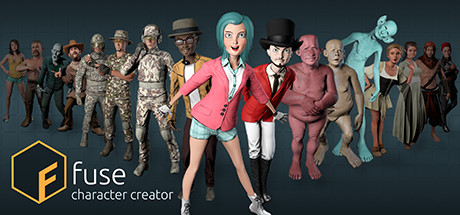
Fuse is a character creation tool that stands out not because of technical ambition, but because of how effectively it lowers the barrier to entry for 3D modeling. Developed by Mixamo and later integrated into Adobe’s ecosystem, it was clearly designed with accessibility in mind, offering a way for beginners, hobbyists, and indie developers to build fully realized 3D characters without needing to understand the complexities of traditional modeling software. Instead of sculpting from scratch, users assemble characters from modular parts, making the process feel more like creative construction than technical labor.
The workflow is built around a drag-and-drop system where users can combine body segments, adjust proportions, and layer clothing and materials in real time. This immediacy is one of Fuse’s strongest qualities. It allows users to see results instantly, encouraging experimentation without the frustration that often comes with more advanced tools. Sliders control everything from body shape to facial structure, making it easy to iterate quickly and refine a character’s look without needing precise technical input. For someone unfamiliar with 3D pipelines, the experience feels intuitive and even playful, which is a rare achievement in this category of software.
Where Fuse becomes particularly valuable is in how it connects to the larger Mixamo animation ecosystem. Once a character is completed, it can be exported and automatically rigged through Mixamo’s online system, which generates a usable skeleton and applies animations with minimal effort. This feature dramatically simplifies what is traditionally one of the most complex parts of character creation. The ability to go from a static model to a fully animated figure in a short amount of time makes Fuse especially appealing for rapid prototyping, game development, or educational purposes, where speed and accessibility often matter more than absolute precision.
Customization options are solid within the boundaries of the system. The included asset library provides a variety of body types, outfits, and textures, and the material editor allows for adjustments that help differentiate characters visually. More advanced users can import their own assets to expand the system’s capabilities, which adds a layer of flexibility beyond the default offerings. However, the modular approach also introduces limitations. Because all creations are built from a shared pool of components, it can be difficult to achieve truly unique or highly stylized results without significant external input. Over time, many characters begin to share a recognizable visual identity, which may not be ideal for projects requiring distinct artistic direction.
From a visual standpoint, the models produced by Fuse are clean and functional, suitable for a wide range of applications, particularly in indie development or prototyping. The texturing system adds a reasonable level of polish, but it does not reach the level of detail or realism found in more advanced tools. This balance reflects the software’s overall philosophy: it prioritizes usability and speed over high-end output, which works well for its intended audience but limits its appeal for professional artists seeking deeper control.
One of the more noticeable drawbacks of Fuse is its lack of ongoing development. As a discontinued tool, it no longer receives updates or improvements, which makes it feel dated compared to newer character creation solutions. Compatibility issues, missing modern features, and the absence of continued support can create friction, especially for users working within current production pipelines. While it remains functional and useful in many contexts, it no longer evolves alongside the industry, which inevitably affects its long-term relevance.
Even with these shortcomings, Fuse retains a distinct place in the landscape of creative tools. It excels as an entry point, offering a way for users to engage with 3D character creation without being overwhelmed by technical complexity. For students, hobbyists, and developers who need quick, usable assets, it can still be an effective solution. It also serves as a stepping stone, helping users understand the basics of character design and animation before transitioning to more advanced software.
In the end, Fuse is best appreciated for what it set out to do rather than what it lacks. It simplifies a traditionally complex process and makes it accessible to a much wider audience, even if that simplicity comes at the cost of depth and longevity. While it may no longer be at the forefront of 3D creation tools, its ease of use and integration with automated animation workflows ensure that it still holds value for certain users.
Rating: 7/10