
Factory Planner: First Sparks is a card-based simulation and strategy game. In this Prologue version, build your own factory using strategic card combinations and enjoy a unique sandbox experience.
Revenue comes from in-game items and microtransactions, which our price-based model doesn't estimate. The player count below is how many people own it, not what they spent.
About
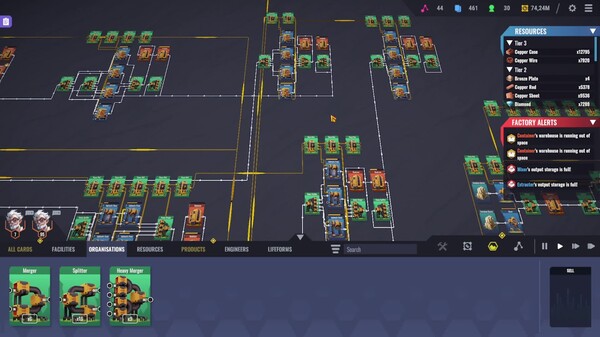
Factory Planner is a strategy and simulation card-based game. Players combine various cards to build their factories from the ground up, efficiently manage resources, and optimize production processes. Each card plays a different role in factory management: collecting resources, producing goods, managing electricity, or speeding up processes. With careful planning and strategic card combinations, you can overcome challenges with your engineers and build an industrial empire!
The game isn't limited to production; it also offers a vast sandbox structure that allows players to progress in unique ways. Whether you focus on building an efficient automation system or experiment with different production chains, you will discover new paths in the game world. Every choice you make shapes the future of your factory and creates new strategic opportunities.
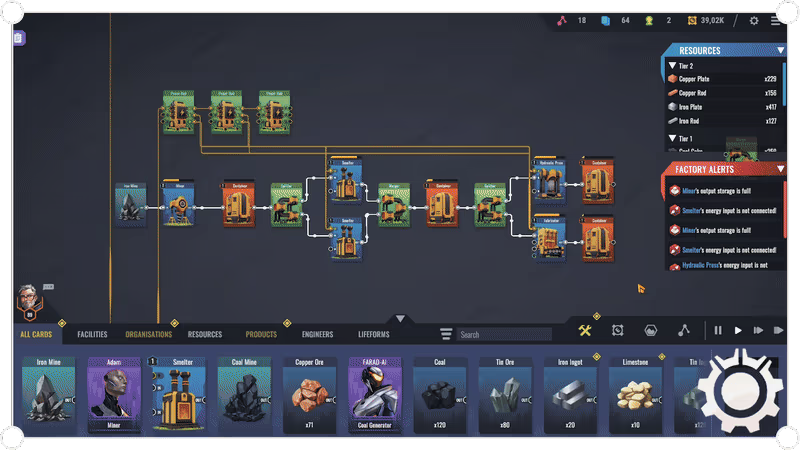

In a system powered by Facility, Organization, Engineer, and Resource cards, you connect cards to create functional production lines. Each card has different functions and connection points, allowing for strategic decision-making.
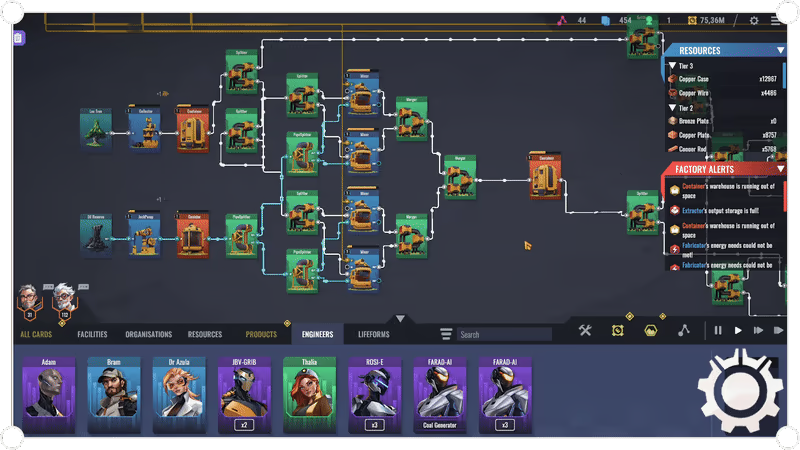
Managing the connections between solid and liquid materials, as well as electricity, plays a critical role in maintaining the correct flow. Incorrect connections can halt your entire production line. Connections are drawn at 90-degree angles, can be broken, rearranged, and dynamically integrated into your system.

Assigning Engineer cards to production and storage units can increase efficiency, unlock new recipes, or reduce energy consumption. Each assignment directly impacts your factory's operations, and undoing an assignment will change the system as well.
Energy is at the heart of your factory. Electricity generated from thermal generators is distributed to machines. If production units lack enough power, production stops, and the system goes into a red alert. Use Splitter and Merger cards to manage and direct the flow of energy more efficiently.
Warehouses have a specific capacity. If material transfer isn't managed properly, the system may lock up. Correct transfer speeds are crucial for efficient production.

Develop and upgrade your existing cards to create more complex and powerful systems. Through the Craft system, you can produce new cards at every level to grow your factory's capabilities.
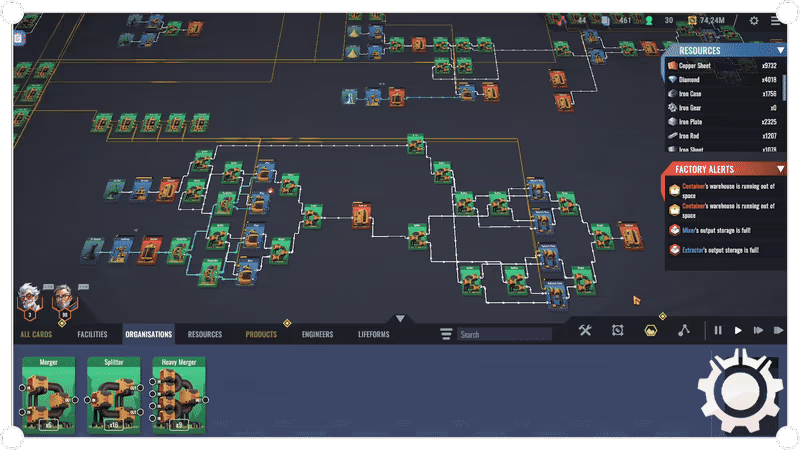

Get real-time information on the status of your factory: active cards, engineers, production speed, and energy levels. Also, issues like warehouse capacity, material shortages, or electrical failures are quickly reported and guide you toward solutions.

You start with basic resources like wood and iron. Over time, you’ll work with more advanced materials like sulfur and uranium, eventually building more complex factories in the nuclear era.
Factory Planner is a game that challenges you to think strategically, plan carefully, and manage your systems effectively. Combine cards strategically to build your factories, manage resources efficiently, and transform a small workshop into a massive industrial complex. Let production flow, and let the system run smoothly!
Card-Based Building System
Facility, Organization, Engineer and Resource Cards
Solid and Liquid Material Flow with Power Management
Engineer Assignments to Boost Efficiency
Energy Management and Distribution
Storage Capacity and Material Flow Control
Card Upgrades and Crafting System
Real-Time Factory Status Monitoring
Resource Variety: From Wood and Iron to Uranium
No Enemies – Purely Production-Focused Experience
Genres
Stats
Languages: English, French, Italian, German, Spanish - Spain, Simplified Chinese, Japanese, Korean, Russian, Turkish, Ukrainian, Arabic +1 more
Engagement
Reviews
Themes across 42 recent reviews and how positive each mention is. A keyword signal, not full sentiment analysis.
Reviews
Very polished demo. Simple game, fair mechanics but it is a demo with not many features and content in it. 7/10
+1 免费序章 有中文 没成就 ⣀⣤⡸⣽⣀⠀⠀⣐⡽⣷⣄⣠⣴⣛⡉⠀⡁⣸⣇ ⠀⣞⢉⡻⠤⣤⣙⢿⠿⠏⠛⠛⠻⠛⠟⠿⣿⣗⡋⣻⣍⠑⠢⠄ ⢰⡀⣾⣼⣿⠟⠋⠀⣤⡄⠀⠀⠀⠀⢀⣀⠈⠘⢿⣿⣮⣷⡂⣼ ⠈⢷⣼⡟⠃⠀⢀⣤⣟⠃⣀⣾⣇⡀⠸⠿⡀⠀⠀⠹⣿⠟⢀⡮ ⠀⠀⣽⡇⠀⠀⠈⣙⡭⠤⠼⢯⡭⣅⣀⡓⠞⠃⠀⠀⠀⣾⡟⠁ ⠀⠀⣿⠁⢀⡴⠋⠁⠀⠀⠀⠈⠳⠶⠿⣏⣷⣦⠀⠀⠀⣟⠁ ⠀⠀⢻⡀⣼⠃⢠⣤⡄⠀⠀⠀⠀⠀⢀⣀⢿⣭⣧⠀⢀⡎ ⠀⠀⠈⣷⣿⣥⡈⠋⠁⠀⢴⣶⠄⠀⠸⠿⠀⠐⣟⣀⣼ ⠀⠀⡼⠇⣄⢭⠻⠦⠖⠒⠲⣤⡀⠀⠀⢀⣨⡿⠟⠉⠀ ⠀⢀⣇⠘⢟⣿⣿⣦⣤⣄⣀⣸⡿⠟⠛⠛⢇ ⣸⡞⢻⣤⠈⠉⡋⣿⣿⣿⠂⠀⠀⠀⠀⢀⣼ ⡏⠃⢸⣭⢣⣀⣾⠿⣯⡯⣥⣀⣀⢠⠖⠚⣷⣶⠶⡾⡄⠀⠀⠀ ⢧⣤⣼⡟⠀⠙⣿⠃⠀⢣⡀⠀⠀⠀⠀⢀⣹⡿⡠⢠⣗⠀⠀⠀ ⠈⠛⠛⠢⠤⠤⣿⣦⠀⢀⡇⠀⣀⢠⣠⣼⠇⠉⠁⠉⠀⠀⠀⠀ ⠀⠀⠀⠀⠀⠀⠈⠛⠿⠾⢯⠵⠞⠋⠁
好
Media

Related
Related
Price dynamics, follower growth, revenue and sales trajectories with interactive tooltips
This and every other Pro feature is free until October 20, 2026. A free account is all it takes.
Hours played at review time, across 42 reviews with recorded playtime.
positive critical· bar length = how often the theme comes up
The demo is really great! However, the full version (official and early access) differs from this demo version in many ways, and I personally don't like it as much.
Карточный симулятор строительства фабрики. Комбинируйте карты (добыча ресурсов, производство, энергообеспечение и т. д.), соединяйте их трубами, конвейерами и проводами под углом 90°. Управляйте инженерами для повышения эффективности, следите за потоками ресурсов и энергии. Развивайтесь от простых производств (дерево, железо) до высокотехнологичных фабрик (сера, уран). Плюсы Оригинальная механика. Уникальный сплав карточной стратегии и симулятора фабрики. Творческая свобода. Песочница без врагов — фокус на созидании и оптимизации. Прогрессия. От простых цепочек к сложным производствам с ядерной энергией. Управление персоналом. Инженеры улучшают процессы, снижают энергопотребление, открывают рецепты. Визуальная ясность. Чёткие связи (трубы, конвейеры, провода) упрощают планирование. Бесплатность и локализация. Доступна бесплатно, с поддержкой русского языка. Минусы Сложность освоения. Много параметров для контроля (энергия, склады, потоки материалов). Ошибки парализуют процесс. Неправильное соединение может остановить всю линию. Отсутствие динамичных событий. Нет внешних угроз или неожиданностей — игра медитативна, но может показаться монотонной. Ограниченная реиграбельность. После освоения оптимальных схем интерес может снизиться. Технические риски. Как ранний доступ, возможны баги и недоработки. Итог Factory Planner: First Sparks — нестандартный симулятор для любителей стратегий и головоломок. Привлекает оригинальной карточной механикой, глубокой логистикой и свободой творчества. Подойдёт тем, кто ценит оптимизацию, любит строить сложные системы и готов потратить время на освоение тонкостей. Отличный выбор для фанатов Factorio и Satisfactory, ищущих менее масштабную, но не менее увлекательную альтернативу.
Obviously, this game design hasn't considered that players will use a 4K display to run this game. It has an UI scale function but limited to 100%, which is pretty weird because usually if you don't customize the UI scale for its resolution, it will allow you to go up to 250% or 300%. This makes the game pretty much unplayable on my 15.6 inch display.
Не хватает настройки фпс. хотя бы в 60. А так игра очень понравилась!
good fun game
Factory Planner: First Sparks is a strategic factory simulation developed by Lebleby Games and published by Red Axe Games that offers an unusual take on the automation and industrial management genre. Instead of building sprawling factories with conveyor belts and physical machinery layouts like many well-known factory games, this title approaches production management through a card-based planning system. Released on Steam as a free introductory experience to the broader Factory Planner project, First Sparks focuses on the conceptual side of factory design, challenging players to organize production chains and energy networks through logical connections between cards representing machines, resources, infrastructure, and personnel. The result is a simulation that feels closer to a strategic puzzle than a traditional construction sandbox. The game begins with a modest industrial operation and a limited collection of cards representing basic resource extraction and production tools. Players must gather raw materials such as wood, ore, or other foundational resources and convert them into more advanced components. Each step of the manufacturing process is represented by specific cards that must be linked together in the correct order to create functioning production lines. Rather than constructing a physical building or placing conveyor belts on a map, the player connects these cards to form a network that channels resources from one process to the next. This abstraction shifts the gameplay toward careful planning and system management, where efficiency depends on understanding how different production elements interact. Progression in Factory Planner: First Sparks unfolds gradually as players unlock new cards and production possibilities. Early gameplay focuses on simple resource chains, but as the factory grows, the number of available materials and manufacturing processes expands. New cards introduce more complex mechanics such as advanced materials, energy generation systems, and specialized equipment that improve productivity. Eventually, players can experiment with higher-tier production involving complex substances like chemical compounds or rare resources. Each new card expands the player’s ability to build intricate industrial systems, encouraging experimentation with different configurations and strategies. A key part of the gameplay involves managing the flow of resources between different stages of production. Each card has connection points that determine how materials, liquids, or energy move through the network. If a connection is missing or misconfigured, the production chain may stall or fail entirely. This creates a constant need to monitor how resources travel through the system and adjust the layout whenever inefficiencies appear. Players must consider factors such as resource consumption rates, production speeds, and storage limits in order to maintain a balanced factory network that runs smoothly without bottlenecks. Energy management plays an especially important role in keeping production lines operational. Most machines require electricity to function, which must be generated by specific energy cards and distributed across the network. Players must carefully plan how energy flows through the system, ensuring that every machine receives the power it needs while avoiding overloads or shortages. Power generation often becomes a limiting factor in factory expansion, forcing players to rethink their infrastructure when production chains grow larger and demand more electricity. Managing this balance between energy supply and industrial output adds an extra layer of strategy to the overall gameplay. Another notable element of the game is the inclusion of engineer cards, which represent specialists who can enhance different parts of the factory. Engineers can improve efficiency, reduce energy consumption, or unlock additional production capabilities when assigned to specific machines. However, the number of available engineers is limited, meaning players must decide carefully where their skills will have the greatest impact. Assigning engineers to the right production chains can significantly improve output, making workforce management an important aspect of long-term planning. Storage and logistics also play a crucial role in maintaining a stable production network. Warehouses and containers can only hold a limited amount of resources, so players must ensure that materials continue moving through the system rather than accumulating in one place. When production outpaces storage capacity, factories can become clogged with excess resources, forcing players to redesign sections of their network. Solving these logistical issues becomes part of the core gameplay loop, as players continuously refine their factory design to improve efficiency and prevent bottlenecks. Visually, Factory Planner: First Sparks uses a clean and minimalist interface that emphasizes readability. The cards themselves are clearly illustrated and color-coded, making it easy to identify their functions at a glance. Lines connecting the cards show how resources and energy flow between production units, allowing players to quickly understand the structure of their industrial network. This simplified visual approach helps keep the focus on strategic planning rather than graphical spectacle, which suits the game’s puzzle-like gameplay style. The pacing of the experience is deliberately methodical, encouraging players to think through each expansion carefully rather than rushing to build the largest factory possible. There are no strict time pressures or intense action sequences; instead, players are free to experiment with different configurations at their own pace. This relaxed structure makes the game feel more like a thoughtful strategy exercise than a competitive management simulation. Players can take time to observe how their systems behave and gradually refine their designs to achieve optimal efficiency. Because Factory Planner: First Sparks serves as an introduction to a larger project, the amount of available content is relatively modest. Some players may find that the game ends just as the production systems start to become truly complex. Certain interface elements and tutorials could also benefit from further development to make the mechanics clearer to new players. Nevertheless, the core idea behind the game—treating factory construction as a strategic network of interconnected systems—offers a refreshing perspective on the automation genre. Ultimately, Factory Planner: First Sparks stands out as an experimental and thoughtful interpretation of industrial simulation. By removing physical construction and focusing instead on the relationships between production processes, the game turns factory management into a strategic puzzle of efficiency and resource flow. While the experience is smaller in scope compared to major factory-building titles, its card-based mechanics and emphasis on planning create a distinctive gameplay loop that rewards careful thinking and experimentation. For players who enjoy automation games but are interested in a more abstract and strategic approach to factory design, Factory Planner: First Sparks offers a creative and intriguing alternative. Rating: 7/10
데모기준 1시간정도 인대 이겜만의 장점을 모르겠음 그리고 ㅈ같은 전원 라인 어떻게 안해주면 안할듯
Selling now
See how fast this game is selling right now — estimated copies and revenue per day from recent review growth.
Players by region
Where this game's players are, estimated from review languages.
Related
| Game | Estimated lifetime revenue | Reviews | Review score | Price |
|---|---|---|---|---|
| $91K | 398 | 71% | $7.99 | |
| $0 | 2.4K | 94% | Free | |
| — | 0 | — | — | |
| — | 0 | — | — | |
| — | 0 | — | — | |
| $724K | 1.3K | 90% | $14.99 |