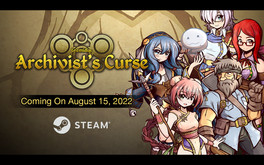
Archivist's Curse brings you into an otherworldly harbor of knowledge: The Great Library, although unfortunately, you ended up in the dangerous section of the complex called Hall of Pawnsmoor.
Revenue comes from in-game items and microtransactions, which our price-based model doesn't estimate. The player count below is how many people own it, not what they spent.
About
Genres
Stats
Languages: English, Japanese
Engagement
Reviews
Themes across 45 recent reviews and how positive each mention is. A keyword signal, not full sentiment analysis.
Reviews
This game seems to be made with RPG Maker, but it is well made.
fun fun fun
Eremidia — Archivist’s Curse — бесплатная тактическая RPG, действие которой разворачивается в Великой библиотеке: вы оказываетесь в опасной зоне под названием Зал Ломбардов и должны пройти испытание Шахматного мастера, чтобы вырваться на свободу. В основе геймплея — бои на сетке в духе шахмат, сбор и прокачка компаньонов, исследование тёмных переулков библиотеки и создание снаряжения. Игра сочетает мрачную атмосферу, стратегические сражения и систему коллекционирования десятков уникальных спутников с разными ролями и способностями. Плюсы: глубокая тактическая система — бои построены на позиционировании и грамотном использовании способностей компаньонов; динамика поля и влияние окружения заставляют продумывать каждый ход, а не полагаться на случайные атаки; богатый ростер компаньонов и вариативность сборок — более 70 уникальных спутников, разделённых на классы (атакующие, заклинатели, поддержка, стражи), дают простор для экспериментов и позволяют собирать команды под разные стили игры. Минусы: перегруженность механиками и высокий порог входа — одновременно нужно следить за позициями, ролями компаньонов, рецептами крафта и ресурсами, из‑за чего новичкам легко запутаться, а первые бои ощущаются хаотичными; монотонность поздних этапов — повторяющиеся задачи и схожие по структуре схватки со временем снижают вовлечённость, а нехватка свежих типов испытаний делает прогресс менее увлекательным. Итог: интересная тактическая RPG с сильной идеей «шахматной» боевой системы и богатой коллекцией компаньонов — особенно для любителей вдумчивых пошаговых сражений. Подойдёт тем, кто готов разбираться в деталях и собирать оптимальные команды, но из‑за обилия механик и некоторой однообразности контента игра может быстро наскучить тем, кто ищет более простой и динамичный опыт.
Media

Related
Related
Price dynamics, follower growth, revenue and sales trajectories with interactive tooltips
This and every other Pro feature is free until October 20, 2026. A free account is all it takes.
Hours played at review time, across 45 reviews with recorded playtime.
positive critical· bar length = how often the theme comes up
Eremidia - Archivist's Curse is a free tactical role-playing game that combines traditional fantasy adventuring with a chess-inspired approach to combat and party management. Developed by Crescent Sun and published by YSY Softworks, it takes place within the mysterious Great Library, where the player becomes involved in the dangerous Hall of Pawnsmoor and the unusual games of its Chessmaster. Rather than presenting chess merely as a visual theme, the game incorporates ideas of pieces, positioning, tactical movement, and carefully constructed teams into its progression. This gives the adventure a recognizable identity despite its deliberately traditional 2D RPG presentation. The central objective revolves around surviving the Great Library's challenges while gathering companions capable of helping the player escape. Exploration is therefore closely connected to character progression. Venturing through areas such as the Dark Alley can lead to new allies, equipment, resources, encounters, and information concerning Pawnsmoor itself. This makes exploration more rewarding than simply walking between mandatory battles. Searching thoroughly can improve the player's tactical possibilities while gradually revealing more of the setting and the personalities inhabiting it. Combat is where the chess influence becomes particularly important. Encounters take place on grid-based battlefields, making positioning a fundamental part of success. Players need to consider movement ranges, character abilities, enemy placement, and the potential consequences of each action. Powerful characters cannot always compensate for careless positioning, especially when enemies can exploit openings in the formation. The resulting battles encourage patience and planning rather than rapid command selection. Anyone who enjoys tactical RPGs in which a successful turn can depend on where every party member stands should find considerable appeal here. The large collection of recruitable characters strengthens this tactical foundation. Dozens of companions can become available, each offering different characteristics, abilities, and background information. Recruiting new characters is consequently useful both mechanically and narratively. Party construction becomes an ongoing process of deciding which combination of abilities works best for a particular situation. A promotion system further develops these characters, giving the roster longer-term value and encouraging experimentation instead of treating newly acquired companions as disposable collectibles. Two primary modes provide different ways to interact with the underlying systems. Dark Alley places greater emphasis on exploration, encounters, resource collection, and discovery, while Chessmaster Match focuses more directly on structured tactical challenges. These components complement one another because progress made while exploring can provide additional options when facing more demanding matches. Dedicated tutorial content also helps explain important mechanics before players are expected to understand every tactical possibility on their own. Progression extends beyond recruiting characters. Equipment and crafting provide additional ways to prepare for difficult encounters, with recipes and useful materials encouraging players to investigate the environment and overcome significant challenges. Hidden bosses add another incentive to explore thoroughly, while the assortment of regular enemies requires players to adapt their approach instead of using precisely the same strategy in every fight. The game benefits from tying these systems together: exploration supplies resources and companions, those discoveries strengthen the party, and the improved party can tackle tougher tactical encounters. The visual presentation is rooted firmly in classic 2D role-playing design. Pixel-based environments are accompanied by anime-influenced character artwork and straightforward menus. It is not technically extravagant, but the restrained presentation is appropriate for an independent tactical RPG. More importantly, the battlefield remains readable, which matters considerably when movement and positioning form such important parts of combat. The library setting also gives the adventure an intriguing atmosphere, mixing conventional fantasy imagery with a sense that something strange and potentially dangerous is hidden behind its seemingly scholarly surroundings. There are limitations worth considering. The traditional RPG Maker-style presentation can feel dated to players accustomed to modern tactical games with elaborate animations, fully voiced dialogue, or highly dynamic environments. Combat can also become methodical enough to feel slow, especially for anyone who prefers action-oriented RPGs. Managing a sizeable roster, learning different abilities, gathering resources, and working through tactical encounters demands patience. These characteristics make the game better suited to players who appreciate deliberate strategy than those seeking immediate spectacle. Its free-to-play availability makes the overall amount of content especially noteworthy. Recruitable characters, promotions, crafting, exploration, hidden bosses, multiple enemy types, Chessmaster challenges, lore, and achievement hunting provide several reasons to continue beyond the introductory sections. There is enough mechanical variety to make experimenting with different parties worthwhile, and the chess concept gives the tactical systems a stronger thematic foundation than a generic grid-based battle system would have provided. Steam Deck compatibility should be considered unverified rather than officially supported. There is no official Steam Deck Verified or Playable classification associated with the game, and Windows is its primary supported platform. Partial controller support is available, and the game's relatively lightweight technology may allow it to function through Proton, but that should not be interpreted as guaranteed compatibility. Steam Deck users may encounter situations requiring configuration, alternate control inputs, or compatibility adjustments. Players wanting a completely verified handheld experience should keep that uncertainty in mind. Eremidia - Archivist's Curse ultimately succeeds by offering more tactical substance than its modest presentation initially suggests. Its combination of grid-based battles, chess-inspired ideas, character recruitment, promotions, crafting, exploration, hidden encounters, and party experimentation produces an engaging structure for fans of old-school tactical RPGs. It lacks the polish and spectacle of larger productions, but its strategic mechanics and unusual setting give it personality. For players willing to embrace its slower pace and traditional presentation, the Great Library contains a surprisingly involved adventure that is easy to try and rewarding to explore. Rating: 8/10
☀️
Selling now
See how fast this game is selling right now — estimated copies and revenue per day from recent review growth.
Players by region
Where this game's players are, estimated from review languages.
Related
| Game | Estimated lifetime revenue | Reviews | Review score | Price |
|---|---|---|---|---|
| $2K | 46 | 80% | $2.49 | |
| $62 | 1 | 100% | $2.69 | |
| $23 | 1 | 100% | $0.99 | |
| — | 0 | — | — | |
| — | 0 | — | — | |
| $0 | 0 | — | $6.99 |