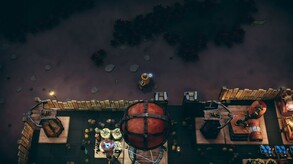
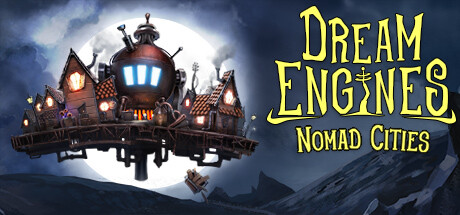
A survival city-building game with flying cities. Build, automate, and defend a flying city that travels between procedurally generated maps to survive in a wacky, nightmare-infested, post-apocalyptic world full of strange science and dreams.
Modeled estimate, not a reported figure. How we estimate →
Discounts
Every price cut of more than 20% we have observed, in each market that quoted one, with this game's chart position on either side of it. These are episodes, not a model: a sale is one event, and one event cannot tell you what the next one will do.
Reviews, worldwide (the counter carries no country): 0/day in the week to Aug 22 → 0.14/day in the week after.
For scale, across Steam · Top Sellers · Brazil over the last 30 days: the 25 chart moves that followed a price cut of more than 20% went a median of 10 places towards #1, and the 2,413 moves with no price cut behind them went 2 away. One store, one chart, one country — it is the only place we have enough observations to say even that.
Prices outside the United States have been collected since 6 August 2026 and chart positions since 19 July 2026, so a cut older than that has no market to compare and a market that joined later has no history yet. Nothing here is converted between currencies.
About
Sums Steam only; GOG, Epic publish no volume signal, so the true total is higher by an unknown amount.
| Store | Price | Audience | Score | Chart | Est. revenue |
|---|---|---|---|---|---|
SteamYou are here | $29.99 | 624reviews | 73% | — | $579.3K |
| $14.99−50% | 5ratings | 96% | — | not modelled | |
Engagement
Reviews
Themes across 42 recent reviews and how positive each mention is. A keyword signal, not full sentiment analysis.
Reviews
This game is almost something special, but fails to scale the difficulty properly. I disagree with most of the negative reviews, I think many of them are looking for a copy/paste of other games, while this game has a unique blend to makes it different from other games, which is why I enjoyed it for the first 20 hours. However, the real problem is that enemy strength scales faster than yoiur ability to defend your settlement does, meaning the longer you play, the harder it gets to defend yourself. At first, this feels like a nice challenge so you don't hit a point where you can rebuild the same basic defensive lines over and over and then breeze through the game, but eventually it gets to a point where it just feels frustrating because your defences are being destroyed faster than you can get the resources to rebuild them, on top of needing to build extra defences to prevent them being destroyed next time. The difficulty just scales at an unfair rate that feels frustrating rather than challenging. My personal experience was that despite being a very experienced gamer who doesn't typically have difficulty with games that people label as being difficult, I still frequently hit walls of feeling overwhelmed and shortly after finding a way to break through those walls, would soon hit another. I ended up just constantly trying to catch up, never able to advance. It's a real shame because I really enjoyed the game for a while.
Media

Related
Related
Price dynamics, follower growth, revenue and sales trajectories with interactive tooltips
This and every other Pro feature is free until October 20, 2026. A free account is all it takes.
Genres
Stats
All-time low is the lowest price we've recorded for this game since we started tracking it.
Languages: English*, French, German, Simplified Chinese, Russian, Japanese, Traditional Chinese*languages with full audio support
| $29.99 |
| — |
| — |
| — |
| not modelled |
Matched by title — a reused name can pair the wrong games. * is a critic aggregate. Prices and positions are each store's United States storefront; Epic charts worldwide. Audience and Score too, except Steam's, which is worldwide.
Hours played at review time, across 42 reviews with recorded playtime.
positive critical· bar length = how often the theme comes up
This game is good, and for some weird reason there is a lot of reviews complaining that its not like other games? Like yes, that's the whole point of it being a different game. There is 2 problems with this game, only 1 being permanent, other being a challenge. - Map exploration/clearing is extremely tedious and repetitive/boring/slow. There is practically no way to speed this up at any point in the game. - The learning curve is extremely steep and it does NOT ease you into it. You will find yourself having to start anew multiple times to get the optimal snowball required for how fast difficulty scales. The balance of this game is extremely poor in that respect. Seems most players have been expecting more passive/casual gameplay like factorio and Riftbreaker or like Against the Storm where theres 0 consequence for failing/taking too long on 1 Map to have consequences. Yeah not in this game. However once you get past that learning curve. You can have fun in this game.
City builder, colony sim, RPG-lite, tower defense, factory sim... all rolled into one. If you like tedium and multitasking, it's great. If you're looking for another factory sim as an alternative to building a mega factory like Factorio or Satisfactory, move on. The game will challenge and push you to constantly min-max, micromanage resources, redo your layout between each landing. Then force you off the map before you reach whatever milestone you're hoping for. I enjoyed it. This game is definitely in a niche of its own.
I love everything about this game. Difficulty levels, tech tree and general progression mechanic, restart system (flying from location to location starting "new"), CONVEYORS!, expeditions, all kind of upgrades and pleasant graphic design.
I don't know what it is about this game, but it feels very much like AI slop. The portraits are straight out of an AI image generator, and the combat is extremely basic along with the enemies.
игра заброшена, баланс защиты сломан. Как будто тестили до 20 уровня. Нет реиграбельности, не хватает какой то прокачки между миссиями. фармить одно и тоже на каждой мапе без цели нет спасибо. ресурсов просто не хватает постоянно, по сути на каждой планете ты должен менять схему города, так как условия сильно меняются. не такое не нужно
I recommend the game — it’s probably fun for at least 40 hours. After that, it starts to get a bit boring because it’s a pain to start a new map and have to explore everything and kill all the enemies again. There should be some way to build scouts or allied troops to help with exploration. I get lazy to move to a new map just because I have to explore everything from scratch. But overall, the game is very well made. I didn’t encounter any bugs, so I do recommend it.
這遊戲不錯玩 玩法創新自動化加塔防 內容也很多 但是這遊戲還是比較難的 要管理很好及燒腦 整個遊戲都趕的 但是這款遊戲跟其他的自動化遊戲不同 這遊戲比較注重塔防 很容易被怪打爛資源 如果你是喜歡玩塔防遊戲及管理十分推薦 但是他不會像其他自動化遊戲一樣輕鬆
Dream Engines: Nomad Cities is a city-building survival strategy game developed by Suncrash and published by Suncrash alongside Gamera Games, blending automation management, exploration, combat, and resource logistics into a distinctive experience centered around mobility. While many city builders focus on constructing massive settlements designed to stand permanently against hardship, this game approaches survival from an entirely different angle. Your city is not meant to remain in one place forever. Instead, it exists as a massive flying fortress capable of lifting off and traveling to safer territory when danger becomes too great. Set within a ruined world consumed by strange corruption and nightmarish threats, the game places players in control of one of humanity’s last hopes for survival. Civilization no longer thrives through expansion alone. Adaptation becomes the most important skill. The hostile landscape constantly pressures players to gather resources, establish production systems, defend citizens, and eventually relocate before overwhelming dangers arrive. That simple idea changes the entire rhythm of city building and creates a strategic identity that feels remarkably different from many competitors in the genre. The city management systems offer familiar foundations while introducing fresh complications. Food production, housing, workforce allocation, and industrial development all require careful attention. Building an efficient settlement involves creating resource chains that support long-term sustainability while maintaining enough flexibility to respond to emergencies. Factories convert raw materials into advanced products, infrastructure expands production capabilities, and workers must remain supplied if growth is going to continue. Automation becomes increasingly important as settlements expand. Early progression focuses heavily on survival and stability, but later stages demand efficient production networks capable of supporting larger populations and more demanding industries. Watching previously chaotic systems evolve into streamlined production lines creates the kind of satisfaction that management game enthusiasts often seek. Optimizing transportation routes, balancing supply demands, and refining industrial layouts become rewarding challenges that continually encourage improvement. The flying city mechanic elevates everything. Traditional city builders often revolve around maximizing a single location, but Dream Engines constantly asks players to think about movement and adaptation. Remaining too long in one region invites escalating danger. Resources eventually become limited. Hostile creatures grow more aggressive. Players must decide when to stay and strengthen defenses or when to abandon established territory entirely in pursuit of survival elsewhere. That constant pressure creates meaningful decisions throughout the entire experience. Expanding rapidly can accelerate progress but increase vulnerability. Overcommitting to one region may leave infrastructure exposed to threats that eventually become impossible to manage. The need to relocate turns city planning into a balancing act between efficiency and mobility, forcing players to think beyond immediate goals. Exploration introduces another valuable layer to progression. Outside the city itself, players can venture into dangerous environments to gather materials and uncover opportunities hidden throughout the world. A customizable Steam-Bot acts as an exploration tool and combat unit, allowing players to engage directly with hostile environments instead of managing everything entirely from a strategic overhead perspective. Combat systems create additional tension by ensuring survival never feels guaranteed. Nightmarish enemies regularly threaten settlements, forcing players to establish defenses and prepare for escalating attacks. Defensive planning becomes a necessity rather than an optional feature. Walls, fortifications, and intelligent layouts contribute heavily to long-term success. Even strong defenses eventually face limits, reinforcing the core philosophy that survival often depends on knowing when to escape rather than simply standing your ground. Progression systems continuously reward experimentation and specialization. New technologies improve infrastructure, strengthen defenses, and unlock increasingly advanced capabilities. Steam-Bot upgrades further expand player options by supporting different combat and exploration styles. These systems create satisfying long-term goals while allowing players to gradually shape strategies around personal preferences. Visually, Dream Engines succeeds in creating a memorable atmosphere. The combination of industrial machinery, floating settlements, ruined landscapes, and supernatural corruption gives the world a distinctive identity. The visual design supports the gameplay effectively by reinforcing the feeling of surviving within an unstable world where danger constantly exists beyond city walls. The game does ask players to invest time into understanding its systems. Newcomers to automation-heavy management titles may initially feel overwhelmed by balancing resource production, infrastructure planning, defense preparation, and exploration simultaneously. The number of moving parts increases substantially during later stages, creating complexity that rewards patience but may intimidate less experienced players. Despite those challenges, Dream Engines: Nomad Cities stands out because it fully embraces its central concept and builds meaningful mechanics around it. The flying city idea could have easily become a simple gimmick, but instead it influences nearly every aspect of gameplay. Resource planning, expansion decisions, defense strategies, and exploration priorities all revolve around mobility and survival. The result is a city-building experience that feels ambitious, creative, and consistently engaging. By combining automation systems with survival pressure and mobile settlement management, Dream Engines offers something refreshingly different within a crowded strategy genre. Players who enjoy logistics management, survival mechanics, and city builders that encourage adaptability will likely find considerable value in its unique design philosophy. Rating: 7/10
No
Selling now
See how fast this game is selling right now — estimated copies and revenue per day from recent review growth.
Players by region
Where this game's players are, estimated from review languages.
Related
| Game | Estimated lifetime revenue | Reviews | Review score | Price |
|---|---|---|---|---|
| — | 5 | 96% | $14.99 | |
| $1.3M | 2.1K | 80% | $19.99 | |
| $10.3M | 10.3K | 86% | $24.99 | |
| $1.4M | 1.4K | 78% | $22.49 | |
| $166.9K | 318 | 71% | $14.99 | |
| $71.6K | 911 | 71% | $2.99 |
Related
| Game | Estimated lifetime revenue | Reviews | Review score | Price |
|---|---|---|---|---|
| $579.4K | 610 | 66% | $29.99 | |
| $579.1K | 1.3K | 76% | $17.99 | |
| $580K | 916 | 85% | $19.99 | |
| $580.2K | 1.3K | 82% | $14.99 | |
| $580.3K | 1.5K | 98% | $19.99 | |
| $580.4K | 983 | 81% | $19.99 |