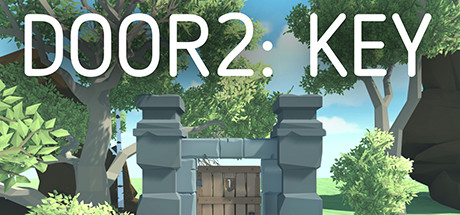
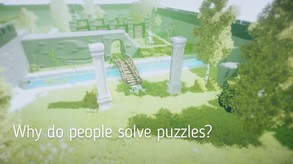
Door2:Key is an atmospheric and deliberately enigmatic puzzle adventure that places curiosity and observation at the very center of its design. Developed and published by SVGames, the game invites players into a strange world built around doors, keys, and abstract logic, where progress is less about reflexes or speed and more about patience, perception, and willingness to experiment. Rather than guiding the player through a tightly scripted narrative, Door2:Key encourages exploration and interpretation, allowing its puzzles and environments to quietly communicate meaning through structure and symbolism.
From the outset, the game establishes a calm yet unsettling tone. Environments appear simple at first glance, often resembling ordinary rooms or corridors, but they quickly reveal themselves as layered spaces full of hidden relationships and subtle clues. Doors are everywhere, and each one represents both a literal barrier and a conceptual challenge, asking players to determine not just which key fits, but what “key” even means in a given context. This approach gives the game a dreamlike quality, where familiar objects may serve unexpected purposes and where logic often emerges from patterns rather than explicit instructions.
The puzzle design in Door2:Key is intentionally open-ended and frequently abstract. Some challenges rely on numerical logic or symbol matching, while others ask players to observe environmental details, experiment with interactions, or rethink assumptions about cause and effect. Solutions are rarely handed to the player directly, and progress often comes through trial, error, and sudden moments of realization when disparate elements click together. This structure can feel deeply rewarding for players who enjoy pure problem-solving, as each solved puzzle feels earned through observation and reasoning rather than brute force.
Exploration plays an equally important role in the experience. Moving through the game’s spaces often feels like navigating a conceptual maze, where backtracking and revisiting earlier areas with new understanding is part of the intended flow. The game does not rush the player, and there is little external pressure to move quickly or optimize performance. Instead, it encourages a thoughtful pace, allowing players to stop, reflect, and test ideas freely. This slow rhythm reinforces the meditative aspect of the game, making it as much about thinking as it is about moving forward.
Narratively, Door2:Key remains deliberately ambiguous. There is no traditional story delivered through dialogue or cutscenes, but a sense of mystery gradually forms through environmental cues and the structure of the puzzles themselves. Players are left to infer meaning and context, piecing together their own interpretations of the world and its purpose. This lack of explicit exposition may feel disorienting to some, but for others it adds depth, transforming the game into a kind of interactive riddle that extends beyond individual puzzles into the experience as a whole.
Visually, the game opts for a restrained presentation that prioritizes clarity and mood over visual complexity. Environments are clean and readable, ensuring that puzzle elements stand out without unnecessary distraction. The understated art direction supports the game’s cerebral focus, while subtle audio design enhances immersion without drawing attention away from problem-solving. Together, these elements create a cohesive atmosphere that feels calm, introspective, and quietly mysterious.
Despite its strengths, Door2:Key is not universally accessible. Some puzzles can feel opaque, and the lack of guidance or hint systems may lead to frustration for players who prefer clearer direction or more structured progression. The game demands patience and a tolerance for ambiguity, and those unwilling to experiment or think abstractly may find progress slow or uneven. However, for players who enjoy being challenged intellectually and who appreciate games that trust them to find their own way, these qualities are part of the appeal rather than drawbacks.
Overall, Door2:Key stands as a thoughtful and unconventional puzzle adventure that values insight over instruction and curiosity over comfort. It does not aim to please everyone, but instead offers a focused experience for players who enjoy deep thinking, environmental puzzles, and interpretive exploration. By turning simple concepts like doors and keys into layered metaphors for problem-solving, it delivers a quietly memorable journey that lingers not through spectacle, but through the satisfaction of understanding something that initially seemed unknowable.
Rating: 5/10