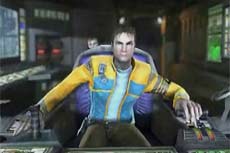
Darkstar One offers a fantastic amount of freedom of choice. The story-based missions gradually lead you deeper into the galaxy to new races, new technologies and ever stronger opponents. Explore a vast array of solar systems in search of hidden artifacts of ancient races, essential objects for upgrading your ship--the Darkstar One.
Modeled estimate, not a reported figure. How we estimate →
Discounts
Every price cut of more than 20% we have observed, in each market that quoted one, with this game's chart position on either side of it. These are episodes, not a model: a sale is one event, and one event cannot tell you what the next one will do.
Reviews, worldwide (the counter carries no country): 0/day in the week to Sep 7 → 0.14/day in the week after.
For scale, across Steam · Top Sellers · Brazil over the last 30 days: the 25 chart moves that followed a price cut of more than 20% went a median of 10 places towards #1, and the 2,413 moves with no price cut behind them went 2 away. One store, one chart, one country — it is the only place we have enough observations to say even that.
Prices outside the United States have been collected since 6 August 2026 and chart positions since 19 July 2026, so a cut older than that has no market to compare and a market that joined later has no history yet. Nothing here is converted between currencies.
About
Genres
Engagement
Reviews
Themes across 47 recent reviews and how positive each mention is. A keyword signal, not full sentiment analysis.
Reviews
If you are patient it is worth at least one playthrough. Explanation below. Oh boy, this one did not age well. The story is basically a 80% Freelancer rip off, there were some good fresh ideas and some awful ones to change things up. The main problem with it was that it dragged on for so long with so much filler. Nonetheless there are some good moments. Gameplay wise you have all these cool races and ships but you are stuck in the Darkstar One, its evolving mechanic is cool at least. There are too many systems, way too many, the worst thing is that they are not unique, all of them are copy pastes of each other with some random recolor, the planetscapes and colors are really nice but they were used in such a mundane way. The only unique systems are the ones with mega sized planets and I think I only saw 4 of those in total... Mission variety is ok and there are a lot of unique side missions tied to each star cluster. The main story even had two planetary segments and the last mission also has a surprise. Biggest flaw of the game is that you can brick progression by being too high level, meaning those extremely infamous Flak missions. I kept my ship at level 7 and I was able to pass them but they still felt awful, not to mention you have to play literally half the game like that if you do not want to cheat. On the other hand it felt glorious to use all my upgrades and curb stomp everything after they were out of the way. Soundtrack is ok but there are not many tracks. Graphics wise it held up, sadly the game is extremely unstable on 4k and sometimes even on 1080p. For example when I unlocked the lower portion of the map I kept getting crashes when I opened the map, there were also totally random crashes, cursor bugging out. MSAA setting completely breaks graphics with everything becoming black and only UI visible. Little annoyances. Combat is ok once you get the hang of it but individually controlling the ship while individually aiming with the mouse was so weird. I say this because your guns shoot where you point, there is no centered crosshair. Overall it is an interesting time capsule and since the space genre is so dead today it might interest you. Often goes on 80-90% off sale.
Media

Related
Related
Price dynamics, follower growth, revenue and sales trajectories with interactive tooltips
This and every other Pro feature is free until October 20, 2026. A free account is all it takes.
Stats
All-time low is the lowest price we've recorded for this game since we started tracking it.
Languages: English
Hours played at review time, across 47 reviews with recorded playtime.
positive critical· bar length = how often the theme comes up
Нудный сюжетный аркадный космосим, к которому для объёма прилепили пустой и неактивный открытый мир. Очень напомнила Фрилансер, но тот, кажется, получше, надо будет проверить. Геймплейная петля такая: -> Проходим сюжетную миссию -> открывается вид двигателя помощнее -> прыгаем в новый кластер космоса -> собираем артефакты (количество фиксировано разработчиками) -> качаем на единичку нос\крылья\корму Даркстар (корабль менять нельзя), в зависимости от прокачки, (1) если нос\крылья - то фармим с логова пиратов и остовов кораблей и аномалий (там тоже пираты) новые турели\основные орудия (только там выпадают лучшие по спекам пушки, покупать оружие не нужно), ставим дополнительные, если при прокачке (линейной) стали доступны новые слоты, (2) если корму - то просто покупаем оборудование на уровень выше -> проходим сюжетную миссию -> ... повторить ... Если сравнивать с собратьями по жанру, геймплей которых я помню: - получше второго Паркана, потому что быстрее и в Паркане ещё меньше разнообразия. - более нудная, чем Элитка: Опасная, в последней шикарная околореалистичная модель полёта, можно менять спек кораблей по своему усмотрению, есть миссии на планетах (пешком\на транспорте), но отсутствует нормальный сюжет и цель странствий, помимо фарма. - примерно такой же глупенький бой, как и в X4, но по остальным возможностям (торговля, майнинг, создание собственного флота) Иксы на сотню световых лет обогнали Даркстар. Резюмируя, не худшая но и не лучшая трата сорока часов жизни. Оукейно. p.s. Понравилось, что у каждого инопланетного вида свой внешний облик станций, а ещё для скайбокса некоторых звёздных систем использовали снимки настоящих туманностей, например Конской Головы.
Wieso ist DarkStar One auf Steam nicht in DEUTSCH???
Das Spiel ist sehr gut aber nur von einer DVD den da gibt es das Spiel auch auf Deutsch bei Steam nur Englisch und Französisch bitte an STEAM das zu endern !!!!!!
DarkStar One is a space action RPG developed by Ascaron Entertainment and published by Strategy First that places players in command of a unique starship on a galaxy-spanning journey of exploration, combat, and personal discovery. Originally released in the mid-2000s, it occupies an interesting space between arcade-style space shooters and more complex simulation-heavy titles. Rather than overwhelming players with intricate flight physics or economic micromanagement, it focuses on accessible dogfighting, open-ended progression, and a central narrative built around mystery and revenge. You assume the role of Kayron Jarvis, a young pilot seeking answers about his father’s death. This personal quest serves as the backbone of the main storyline, gradually unraveling a larger conspiracy involving alien races and ancient technologies scattered throughout the galaxy. The narrative is structured through mission-based progression, but it never fully restricts player freedom. Between story missions, you are free to roam hundreds of star systems, accept side contracts, engage in bounty hunting, transport goods, or simply explore for profit and artifacts. This balance between directed storytelling and sandbox exploration is one of the game’s defining strengths. The heart of DarkStar One lies in its ship progression system. Unlike many space games that allow players to purchase entirely new vessels, here you pilot a single, evolving craft: the DarkStar One. Its growth is tied to the discovery of ancient artifacts, which can be invested into different structural components such as the hull, wings, engines, and its signature plasma cannon. These upgrades are not purely statistical; they alter the ship’s capabilities in tangible ways, gradually transforming it from a modest fighter into a formidable, high-tech warship. This singular-ship progression creates a strong sense of identity and continuity, making upgrades feel personal rather than disposable. Combat is fast-paced and designed for accessibility. Dogfights emphasize maneuverability and reflexes rather than strict simulation realism. Players can equip missiles, mines, and specialized alien weapons to diversify encounters, and the evolving plasma cannon adds a layer of tactical depth as it unlocks new offensive and defensive modes. Battles are frequent and often intense, especially during story missions or high-level bounty hunts. However, because combat relies heavily on similar engagement patterns, extended play sessions can sometimes feel repetitive once a powerful build is established. The economic system supports multiple playstyles. Trading between stations, transporting cargo, and completing escort missions provide alternatives to constant combat. While the trading mechanics are straightforward compared to more complex space simulators, they offer enough structure to reward players who prefer profit-driven progression. Earning credits allows for equipment upgrades and weapon purchases, though money tends to accumulate at a steady pace, preventing economic grinding from becoming a central challenge. Visually, DarkStar One reflects the ambitions of its era. Space environments feature vibrant nebulae, planetary backdrops, and varied station designs that evoke classic space opera aesthetics. Ship models are distinct, and the evolving appearance of the DarkStar One gives a satisfying visual representation of progress. Although modern standards may reveal dated textures or repetitive environmental elements, the presentation retains a certain nostalgic charm. The soundtrack complements the atmosphere with sweeping sci-fi tones that reinforce the sense of traveling across a vast galaxy. The game’s pacing benefits from its open structure. Players can choose to advance the narrative steadily or spend hours exploring side content. This flexibility helps maintain engagement, though the mission variety does not expand dramatically over time. Many side quests share similar objectives, and exploration, while broad in scale, does not always introduce radically new mechanics. As a result, the sense of discovery gradually shifts from environmental novelty to incremental ship improvement. DarkStar One ultimately succeeds as a balanced hybrid between arcade shooter and light space RPG. It does not reach the depth of hardcore simulators, nor does it offer the narrative complexity of story-driven epics, but it finds a comfortable middle ground. Its combination of accessible combat, meaningful ship progression, and expansive exploration delivers a satisfying loop for players who enjoy gradual empowerment and galactic freedom. For fans of mid-2000s space adventures, DarkStar One remains a compelling experience that captures the spirit of open-world space exploration without overwhelming complexity. While its age is evident in certain mechanics and presentation choices, its core design—centered on a single evolving ship and a wide-open galaxy—continues to offer an engaging and approachable journey among the stars. Rating: 8/10
Better than Freelancer, and works better on modern systems.
A true classic of the action adventure RPG space game as they were back in their early days. Great story, great gameplay loop.
DarkStar One... isn't a good game, let's be honest. It took me 18 hours to beat on normal difficulty (finishing the plot + all side missions + all artifacts), and it doesn't really have half as much hours worth of unique content. That being said, it isn't offensively bad either, and I did derive some enjoyment out of it, so if you want a numbingly-simple spacesim to play for an hour or two during a slow evening, this game might be just about right. I say the biggest entertainment value is the main plotline and the sidequests. The main plot is super simple, you can see most of the plot beats from miles away (though one plot reveal between the two leads did amusingly blindside me); it is also quite a bit scattered and full of digressions, the way I've been playing it - two hours an evening - I return to the game next evening and I wouldn't necessarily remember what I was doing yesterday (though the game gives you more than enough information to continue from where you left off). Nevertheless, it was mildly entertaining, occasionally somewhat funny. Voice acting is passable, sometimes good, in a few occasions really great, though the voicelines during the generic non-plot encounters, and during the occasional plot instances, will eventually get really grating. Sidequests provide some more of that mild entertainment value, and some extra worldbuilding. Yeah, worldbuilding, it is as simplistic as its plot, all races are one trick ponys, not something you'd build a DarkStar franchise upon (though Egosoft did manage to build a great franchise upon a similarly-simplistic foundation somehow). The gameplay is equally as simplistic. In a lot of regards, the game plays like Elite, yes, the one from the year of 1984: the trading is the same shuttle runs between a producer and a consumer systems, and is barelly worth your effort; the inter-system travel works really similar, and even the part where there's one trading station per system at a fixed distance from the system entrypoint is practically the same. And you fly the same ship for the entire game, also like in Elite, though besides letting you buy and install several kinds of equipment and weapons, also works like an RPG character whom you occasionally level up to upgrade and unlock special abilities, which really isn't all that an entertaining addition to the genre to be frank. You can't upgrade everything in one playthrough, but the level-up paths themselves are not all that distinct so you wouldn't conceivably want to give this game a second playthrough. The sandbox content of the game is so repetitive it gets old really fast. Besides the already-mentioned trading, you've got generic terminal missions - deliver cargo, retrieve cargo from an enemy, destroy the enemy, take a couple photos, listen in on a conversation - and every mission type plays out exactly the same scenario with no variation. There are pirate hideouts, which also play out exactly the same scenario and rewarding you with a slightly better version of a locally-produced gun. There's mining, which is about shooting at generic asteroids and occasionally getting them to drop a sellable ware. And there are artifacts, which are essentially experience points for you to upgrade your ship with, and they are sourced in two places: either in systems occupied by pirates, which always involve you shooting at three waves of pirate ships; or in big asteroids, and this involves either flying to the asteroid and into its tunnels until you reach the big inner chamber where you'll find the artifact in exactly the same place, or just paying a smuggler on the trading station to get it for you instantly. Most of the sandbox content rewards you with money, but just by getting every artifact, and fighting off every pirate who'd attack me, I had many times more money than I needed to buy everything that I need, so you don't even need to engage with most of the side content. The game looks dated - by 2006's standards. Like seriously, my two points of reference from 2003 - X2 and Freelancer - technically and stylistically look better than this game. The ship and station designs are alright, but they are let down by the low resolution textures; technically, this game uses bump and specular mapping plus detail textures, plus occasional animated texture, but their resolution is so low that it all just looks like blurry mess. And the "nebulas" in this game is just a colored tint with blur applied to it, not even Z-buffer fog. The music is somewhat generic but quite alright, though the dramatic horns that blow whenever you encounter pirates are ridiculous. Otherwise, there's nothing memorable about the soundscape of the game.
4 oder 5 Mal durchgespielt, ist etwas für Nerds, ich liebe es noch immer, daher nun endlich eine Rezension, DANKE <3
The game tries to pretend to be an open-world space-sim, but in all honesty it's more of a linear space shooter. There's only 1 ship (it can be upgraded), and the new star sectors open up in a pre-determined sequence. You technically can return to previous locations, but there's no point in doing so. Fun enough for a playthrough.
Players by region
Where this game's players are, estimated from review languages.
Related
| Game | Estimated lifetime revenue | Reviews | Review score | Price |
|---|---|---|---|---|
| $914.1K | 878 | 50% | $29.99 | |
| $261 | 10 | 50% | $0.99 | |
| — | 0 | — | — | |
| $47.1M | 82.4K | 77% | $19.99 | |
| $6M | 8.4K | 85% | $19.99 | |
| $5.1M | 4.1K | 70% | $34.99 |
Related
| Game | Estimated lifetime revenue | Reviews | Review score | Price |
|---|---|---|---|---|
| $26.6K | 78 | 79% | $14.99 | |
| $26.6K | 74 | 7% | $13.99 | |
| $26.6K | 1.6K | 76% | $0.99 | |
| $26.6K | 187 | 72% | $7.99 | |
| $26.6K | 297 | 73% | $3.99 | |
| $26.6K | 2.7K | 90% | $0.74 |