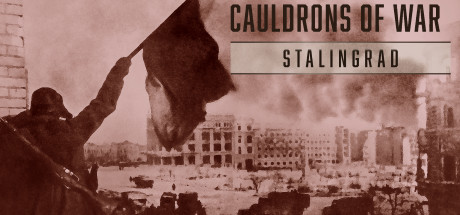
Cauldrons of War: Stalingrad is a highly detailed operational strategy game that recreates one of World War II’s most devastating campaigns through large-scale military planning, logistics management, and historically grounded warfare. Rather than focusing on cinematic battles or fast-paced tactical action, the game places players in the role of a high-level commander responsible for managing entire fronts, coordinating offensives, protecting supply lines, and making difficult long-term strategic decisions. The result is a deeply thoughtful and demanding wargame that prioritizes realism and operational depth above accessibility.
Set during the brutal conflict surrounding Stalingrad, the game allows players to command either German or Soviet forces across massive operational maps representing one of the most important turning points of the Eastern Front. Every decision carries enormous weight because success depends not only on battlefield victories but also on maintaining logistics, preserving troop strength, and understanding terrain advantages. Unlike more simplified strategy games where armies can endlessly attack without consequence, Cauldrons of War: Stalingrad constantly reminds players that warfare is often decided by preparation, positioning, and supply management rather than raw firepower alone.
One of the strongest elements of the game is its commitment to operational realism. Players do not control individual soldiers or small tactical squads. Instead, they oversee entire formations moving across wide territories while managing offensives, defensive lines, reinforcements, and encirclement strategies. This large-scale perspective creates a constant feeling of pressure because every movement affects the stability of the entire front. Advancing too aggressively may leave flanks exposed or supply routes vulnerable, while overly cautious play can allow the enemy to regroup and launch devastating counterattacks.
Logistics play a massive role throughout the experience and become one of the most important mechanics in the game. Supply lines determine whether offensives remain sustainable, and maintaining access to resources often becomes more critical than winning individual engagements. Units cut off from supplies rapidly lose effectiveness, reinforcing the historical reality that operational success during the Eastern Front depended heavily on transportation, infrastructure, and resource distribution. The game does an excellent job showing how even powerful armies can collapse when logistics fail.
Combat itself is handled through strategic planning rather than direct battlefield micromanagement. Terrain, morale, unit strength, weather conditions, and positioning all influence battle outcomes, forcing players to think carefully before committing troops to major offensives. Rivers, urban zones, and defensive fortifications become major strategic obstacles that require careful preparation to overcome. The game encourages long-term thinking rather than reckless aggression, rewarding players who carefully plan several turns ahead.
The atmosphere created by the campaign is one of the game’s greatest achievements. Cauldrons of War: Stalingrad successfully captures the exhausting scale and overwhelming tension of the Eastern Front. Front lines shift constantly, reinforcements arrive unpredictably, and offensives that initially appear successful can quickly turn into disasters due to overstretched supply networks or enemy counterattacks. This creates a constant feeling of uncertainty that makes victories feel genuinely earned.
The artificial intelligence also provides a respectable challenge. Enemy forces frequently exploit weaknesses in defensive lines and punish poorly planned offensives. Players cannot simply rely on numerical superiority because positioning and logistics matter just as much as troop strength. The AI often behaves aggressively enough to maintain tension throughout long campaigns, especially when managing vulnerable fronts or attempting risky operations.
Visually, the game adopts a clean operational map style inspired by traditional military board games and classic wargames. The presentation focuses almost entirely on readability and information management rather than cinematic spectacle. Unit markers, terrain overlays, supply indicators, and front-line visuals are designed to communicate strategic information clearly, which becomes extremely important given the complexity of the mechanics. While some players may initially find the visuals simplistic, the interface serves the gameplay effectively.
The audio presentation remains subtle and restrained throughout most of the experience. Instead of dramatic orchestral music or constant battlefield explosions, the soundtrack supports the slow and methodical pacing with quieter military-inspired themes. This understated approach fits the game’s operational focus and helps maintain concentration during lengthy planning sessions.
Another admirable quality of the game is its strong historical foundation. The campaign structure, operational limitations, and strategic challenges all feel deeply connected to the realities of World War II warfare. Historical terrain conditions, logistical struggles, and large-scale military objectives are integrated naturally into gameplay without making the experience feel overly scripted. Military history enthusiasts will likely appreciate how carefully the game recreates the strategic difficulties faced by both sides during the Stalingrad campaign.
However, the game’s complexity will likely intimidate newcomers to the wargaming genre. Cauldrons of War: Stalingrad is clearly designed for players who enjoy serious military simulations rather than casual strategy experiences. The numerous systems involving logistics, front management, operational movement, and supply coordination create a steep learning curve that may overwhelm inexperienced players. Tutorials and explanations occasionally feel limited considering the depth of the mechanics.
The pacing can also feel extremely slow compared to more modern mainstream strategy games. Much of the experience involves analyzing maps, reorganizing forces, securing supply lines, and carefully planning operations instead of engaging in constant dramatic battles. Players expecting rapid action or cinematic presentation may struggle with the deliberate and methodical structure.
The visual presentation, while functional, may also appear dry to players accustomed to modern graphical spectacle. Since the game prioritizes strategic information over visual flair, extended sessions can sometimes feel visually repetitive despite the underlying strategic complexity.
Despite these limitations, Cauldrons of War: Stalingrad succeeds remarkably well as a hardcore operational wargame focused on realism, planning, and historical authenticity. Its detailed logistical systems, large-scale military operations, and thoughtful strategic gameplay create an intellectually rewarding experience for players willing to invest the time necessary to master its mechanics.
For fans of historical warfare simulations, operational strategy games, and serious World War II wargaming, Cauldrons of War: Stalingrad offers a challenging and deeply immersive experience that captures the scale and brutality of the Eastern Front with impressive authenticity. While its steep learning curve and slow pacing limit its broader appeal, it remains a highly rewarding strategy title for dedicated military history and wargaming enthusiasts.
Rating: 8/10