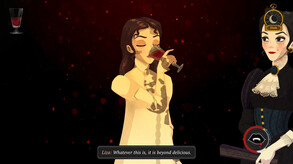
Cabernet is a 2D narrative RPG set in a 19th century Eastern European inspired world, with a modern twist. Guide Liza, a young vampire in her new unlife among the unsuspecting townsfolk. Will you retain your humanity or descend further into the horror you have become?
Modeled estimate, not a reported figure. How we estimate →
Prices
Each in the currency that store quoted — not converted: the gap between two rows is the publisher's pricing, not an exchange rate.
Discounts
Every price cut of more than 20% we have observed, in each market that quoted one, with this game's chart position on either side of it. These are episodes, not a model: a sale is one event, and one event cannot tell you what the next one will do.
Reviews, worldwide (the counter carries no country): 1.71/day in the week to Sep 4 → 2.43/day in the week after.
About
Cabernet is a 2D narrative RPG set in a 19th century Eastern European inspired world, with a modern twist. Guide Liza, a young vampire struggling with her morality and the supernatural world she has been pulled into. Will you retain your humanity or descend further into the horror you have become? Prepare to explore a hidden world of political intrigue, class conflict, and decadent corruption.
Use the moonlit sky to plan your next feast and explore. Mingle among vampiric society and the humans who feed them. Uncover who can aid your new kin and whose only purpose is to be drained.
Vampirism isn't just an unholy transformation of your body-- it also threatens to transform your mind. Will you choose to indulge your empathetic humanity or embrace your newfound nihilism?
But to lure your next meal somewhere safe and secluded, you'll need to understand who they are and what they desire. A kind-hearted, alcoholic coachman? A fraying newlywed couple? A greedy, yet charming charlatan? Their lives are yours to aid or unravel.
Art, literature, history, science, these are the skills you'll require to succeed. Your knowledge will be your greatest weapon in a world where the cunning drain the brutal of life.

Genres
Sums Steam only; PlayStation, Xbox, GOG, Epic, Nintendo publish no volume signal, so the true total is higher by an unknown amount.
| Store | Price | Audience | Score | Chart | Est. revenue |
|---|---|---|---|---|---|
SteamYou are here | $11.99−40% | 2.4Kreviews | 95% | — | $1.6M |
| $19.99 | 221ratings | 91% | — | not modelled | |
Updates
Build ids and update times come straight from Steam's PICS — the same source SteamDB reads. Patch history grows as we record new builds.
Engagement
Reviews
Themes across 225 recent reviews and how positive each mention is. A keyword signal, not full sentiment analysis.
Reviews
I feel misled by the “Slavic” setting I bought Cabernet expecting a game set in a broadly Slavic environment. When a game deliberately describes its setting as “Slavic” rather than Russian, I naturally expect at least some mixture of Slavic cultures, references and perspectives. That is absolutely not what I experienced. This game is overwhelmingly Russian. Russian history, Russian literature, Russian cultural references and ultimately a Russian song dominate the game. I genuinely cannot think of anything in the game that meaningfully represents another Slavic country. And that is a serious problem for me, because I would not knowingly spend my money on a game marketed as Russian. If this is a Russian game about Russia, then say so. I can make my own decision about whether I want to financially support it. What I find unacceptable is presenting the setting as vaguely “Slavic” while delivering what is, in practice, an overwhelmingly Russian cultural and historical experience. The historical framing makes this even worse. The game touches on inequality, the elite, workers and political oppression, but the beginning of the red revolution is treated with an astonishing amount of softness. The Soviet Union was responsible for mass repression, executions, deportations, the Gulag system, collectivization and the Holodomor, among countless other atrocities. These aren't just examples of a country being “imperfect.” And then the story ends in Russia in 1999, with a message that essentially amounts to “the country isn't perfect, but there is still hope.” No. After everything that has happened historically, that conclusion feels deeply inappropriate to me. And ending the game with a Russian song, after specifically establishing the setting as “Slavic” rather than Russian, only reinforces the impression that “Slavic” was being used as a vague label for what is actually a distinctly Russian perspective. I don't want my money supporting Russian institutions or the Russian state, directly or indirectly. That is a personal ethical decision, and I should be able to make that decision before purchasing a game, not after discovering that its supposedly “Slavic” setting is essentially Russian from beginning to end. To be clear: my problem is not that Russia appears in the game. My problem is that Russia appears to be the entire game while the marketing presents it as something broader. I think the developers should be completely transparent about the game's cultural and political perspective, its Russian focus, and where the money from purchases ultimately goes. For me, this completely changed how I view the game. I regret buying it, and I would not have bought it had the game been presented honestly as what it actually is.
Media

Related
Related
Price dynamics, follower growth, revenue and sales trajectories with interactive tooltips
This and every other Pro feature is free until October 20, 2026. A free account is all it takes.
Every market we collect.
For scale, across Steam · Top Sellers · Brazil over the last 30 days: the 25 chart moves that followed a price cut of more than 20% went a median of 10 places towards #1, and the 2,413 moves with no price cut behind them went 2 away. One store, one chart, one country — it is the only place we have enough observations to say even that.
Prices outside the United States have been collected since 6 August 2026 and chart positions since 19 July 2026, so a cut older than that has no market to compare and a market that joined later has no history yet. Nothing here is converted between currencies.
Stats
All-time low is the lowest price we've recorded for this game since we started tracking it.
Languages: English*, German, Spanish - Spain, Simplified Chinese, Japanese*languages with full audio support
| $12.99−35% |
| 137ratings |
| 90% |
| — |
| not modelled |
| $11.99−40% | 35ratings | 86% | — | not modelled |
| $19.99 | — | — | — | not modelled |
| $10.99−45% | — | — | — | not modelled |
Matched by title — a reused name can pair the wrong games. * is a critic aggregate. Prices and positions are each store's United States storefront; Epic charts worldwide. Audience and Score too, except Steam's, which is worldwide.
Hours played at review time, across 225 reviews with recorded playtime.
positive critical· bar length = how often the theme comes up
I once again find myself in this recurring biennial struggle: I just finished watching the latest season of Interview with the Vampire and now have to spend the next two years finding ways to satisfy the craving. IT'S AN ADDICTION. HELP ME. And there are weirdly few vampire games in existence, and even fewer vampiric stories that reflect the incredibly introspective, overly romantic nature of IWTV or any of Anne Rice’s novels! But now? Cabernet. FANTASTIC. A gothic story about dark desire, the trials of hanging onto your humanity as a monster, the existential nightmare of immortality - yadda yadda, you know it, you love it. Vampires are in. Vampires are hot. I want some vampires. Vampires it's gonna be. The story itself is nothing particularly new, surprising, or thrilling, but the little mysteries, the wonderfully oppressive atmosphere, and the absolutely fantastic characters, writing, and voice acting kept me SO engaged. The cast is really what makes the game. Everyone has their own desires, secrets, and complicated relationship with mortality, and I genuinely wanted to know what would happen to all of them. The game also gives you plenty of opportunities to just exist as a vampire: wandering around at night, feeding, transforming into a bat, enchanting people, pursuing romances (thank you game for the gay options, in true vampire fashion), and becoming involved in the messy lives of both humans and immortals. I could not put this stinkin game down. There are knowledge based skills that unlock additional dialogue options, but the RPG elements focus mostly on morality - whether you use Humanity or Nihilism in conversations and quest decisions, and what kind of vampire you ultimately choose to become. Thankfully, you can max out both Humanity and Nihilism in a single playthrough. Only ever choosing Humanity in a game about vampires would be wholly unrealistic, so I appreciated being able to act compassionately while occasionally doing something selfish, manipulative, or completely deranged. Unfortunately, the game doesn’t reward those approaches equally. If you commit more fully to the “evil” route, you can apparently lock yourself out of a lot of content, including the epilogue, and end up with an abrupt/unsatisfying ending. I dislike when games give you a choice but clearly only have one correct choice in mind. I typically choose the “good” route anyway, but my god, in a game like this, you should be equally rewarded for being interested in what a more monstrous route has to offer. We’re talking about vampires, for god’s sake. Nihilism is their whole thing. Still, Cabernet hit nearly every beat I wanted it to hit. It’s romantic, melancholy, introspective, theatrical, and deeply preoccupied with what newfound immortality looks like. Even when the central story was predictable, I remained completely invested in the people inhabiting it. For me, genuinely a 10/10. Exactly the kind of vampire game I’ve been craving. Oh okay an 11/10 for having Bryan David Gilbert as a VA; absolutely delightful surprise
Its a fun game, and should be a recommend... but it has so many bugs and issues. I had to roll back to a prior saved well over a dozen times because loading into an event or dialogue would just make everything impossible to interact with. I became frozen on screens multiple times and had all sort of game breaking bugs, If you decide to play save it every day on a new slot and try to minimize overwriting.
This is one of the best vampire games I have ever played. And I want to be precise about why, because it is not for the reasons you might expect. Yes, there are the usual decisions. You can be a vampire vegetarian, subsisting on the bare minimum and preserving your conscience along with it. You can be a predator: cold, controlled, bending mortals to your will with a glance and feeling very smug about it. You can be the kind of vampire that manipulates entire social situations from across a dinner table like a chess grandmaster. The game accommodates all of this and lets you feel powerful and clever and occasionally monstrous about it. But what Cabernet actually understands, what it is quietly, insistently about, is that the real horror isn't the fangs. The horror is being invited into rooms that have existed for centuries and slowly realizing that the power structures inside them are older and far crueler than anything supernatural. Your immortality doesn't make you free. It mostly means you get to watch humanity grind itself down across an infinite loop of the same mistakes, the same hierarchies, the same willingness of the powerful to consume the vulnerable and call it order. You have forever. You get to see how little changes and how often it doesn't. And then the game asks you what you're going to do about it. That's where it becomes something special. It takes seriously the weight of the power you hold, the sacrifices it demands, the responsibility it carries, the question of whether you use it to protect the people below you or simply add yourself to the architecture of their exploitation. It is a game about whether an immortal being, having seen everything, chooses to be better than the monsters she came from. Not in a grand dramatic way. In the everyday way. In the way of listening, of choosing community over convenience, of daring to believe that change is possible when enough people decide together to be their best selves, to iron out their differences, to cherish what they have, to forgive, to dream. The ending undid me. You return to the city you spent the entire game in: the same streets, the same buildings, but decades later, and changed in every way that matters. You can see the fingerprints of your choices in the shape of the place. People you knew have lived full lives and died, and the game asks you to visit the graveyard and stand at their graves and it gives you a moment with each of them. Their kindness. Their stubbornness. Their ambitions, fulfilled or abandoned or transformed into something neither of you expected. You place flowers and you remember them and the game is completely quiet and it is devastating in the gentlest possible way, the way that only comes when a story has made you genuinely love people who do not exist. It is nostalgic in the truest sense of the word. A longing for a place you have spent time in, for people you have known, filtered through the bittersweet knowledge that time moved forward and you are still here and they are not.
When I first tried this game, I didn't expect how profound (in a very "down-to-earth" kind of way) it would turn out to be. It was funny, it was emotional, it was charming, it was horrifying, it was inspiring. But most importantly for me, it was thought-provoking. It provided me with a new perspective regarding the world, humanity, and the cyclical nature of history. And one of the most important take-aways of mine from this was: even if nothing matters, everyone is ultimately quite stupid and everybody makes the same mistakes over and over, that doesn't mean you're excused to be a heartless sadist. It felt like a "rage against the dying of the light", but in a moral sense. Nothing matters? Cool. I'll go ahead and be a good person anyways. Social and political movements keep arising, just to ultimately tear down everything they were meant to build and everyone they were meant to serve? Here, let me serve you some tea, it's my treat! The rich and powerful keep tearing each other apart with the unwilling hands of the common folk? Come on, let's go on a nocturnal stroll and watch the stars together. This story has taught me the value of appreciating the here and now, and above all: the people you meet. Actual individuals you stumble upon on this long journey called life, and to cherish their company while you can. Because, mortal or not, at the end of the day, that's all that matters.
This is one of those games that I mostly enjoyed but just can't recommend until it goes through some serious bug fixes. That extremely short list of beta testers REALLY shows. I constantly ran into situations where the game straight up forgot I had done things. For example, during Alisa's quest, [spoiler] I hadn't spoken to her before Kupala Night, when she resurrected Petya. Then later, Petya wanted to speak to her. I found her at the island, talked to her about the hideout, then told her Petya wanted to talk and so we both got teleported there for that scene. Later, I went back to the island, and the whole scene played out like I had never discovered the hideout, exactly like it did when I first spoke to Alisa. But the game still showed I'd been there and that Alisa and Petya had their talk. [/spoiler] This wasn't the only instance of this happening but it was one of the more obvious ones. It feels like the game has a very specific order it wants you to complete all the quest goals in, and if you break that order even slightly, the game gets really confused. By the time I was on Chapter 6 and had suddenly wound up [spoiler] getting the Puppeteer achievement even though I never spoke with Anastasia about divorcing Evgeny and hadn't even really flirted with her previously since I didn't want to do that while she was married [/spoiler], I decided to not even bother with any more character quests as I was afraid they'd break the game even more and it would ruin whatever ending I would get, so I just hurried to get to the final chapter. Which is disappointing, because I liked a lot of the characters and still wished I could've seen how their stories developed. Maybe you'll have a different experience than I did, but just be aware of these bugs going into the game. A lot of other people seem to have really enjoyed it and mentioned no issues so maybe it's a me problem, but I'm not sure how that happened so... yeah.
A beautifully drawn and hugely underrated time management + puzzle game. It felt lovingly crafted and had a surprising amount of content and small details to discover that lasted me around 16 hours while taking my time. The time management and vampire powers are simple but well implemented to make good use of them, with some clever interactions I didn't expect. The overall tone is pretty tame, however it does work up to some pretty confronting scenes and topics toward the end. There's a huge amount of choices and narrative branches with decently adaptive writing. Characters especially have well developed personalities, and there's a good variety of voices and music. Puzzles are on the easier side but I was mainly hooked on discovering all the consequences and learning the traditional folklore that I haven't seen elswhere before. Ran great on the Deck, especially because using the touch screen for the piano is way better than with a controller.
[quote][i]• Zaobserwuj mojego [url=http://store.steampowered.com/curator/27231431/]kuratora Steam[/url], jeśli lubisz takie gry. • Każda reakcja daje mi energię do pisania kolejnych recenzji.[/i][/quote] [h1]Jakim wampirem się staniesz w [i]Cabernet[/i]?[/h1] [b]Za każdym razem, kiedy wkraczam do świata wykreowanego wokół wampirów, na początku najbardziej interesuje mnie, na jakich zasadach on działa. W jaki sposób powstają nowe wampiry, jakie mają słabości i jaką rolę pełnią w społeczeństwie. Ukrywają się przed ludźmi, a może chodzą pośród nich? Cabernet czerpie z klasyków, uznając wampira za istotę czułą na światło słoneczne i przemieniającego się w nietoperza. Dodatkowo należy go najpierw zaprosić do domu, nim będzie mógł przekroczyć próg ludzkiej siedziby, co jest znakomitym wyborem narracyjnym - Elizaveta, główna bohaterka, najpierw musi postarać się o czyjeś względy. Co ciekawe, zdolności hipnozy także działają na ludzi, którzy darzą ją sympatią.[/b] Przed odkryciem wszystkich nowo nabytych talentów Elizaveta Morozova przechodzi trudną inicjację. Budzi się samotna w lochu, w brudnej koszuli nocnej, głodna i nieszczęśliwa. Nie pamięta, co się stało i nie jest świadoma, że umarła, a rodzina opłakuje tę stratę. W ucieczce z piwnicy pomaga jej pewien tajemniczy byt, który zapowiada, iż kiedyś upomni się o przysługę. Prosto z podziemi Liza trafia do sali bankietowej wypełnionej wampirami i ludźmi. [b]W pałacyku należącym do hrabiny Orlovej[/b] trwa spotkanie towarzyskie, a Liza wygląda, jakby wypełzła z grobu o własnych siłach, przez co natychmiast zwraca na siebie uwagę. Szczególną troskę okazuje jej Petya - sympatyczny młodzieniec, twórca lalek. Szczęśliwie Liza otrzymuje czyste ubranie i kogoś, kto tłumaczy jej, kim teraz jest, jakich zasad musi przestrzegać i co potrafi jako wampirzyca. To Hussar, będący jednym z najbardziej oddanych sług hrabiny, wdraża Lizę w [i]życie[/i] po życiu. Dwie z czterech umiejętności Lizy są związane z przekształcaniem formy cielesnej. Bohaterka uczy się przemiany w nietoperza, co później znacznie ułatwia szybkie podróżowanie po mieście, oraz tymczasowej niewidzialności ułatwiającej zdobywanie informacji. Pozostałe dwa talenty dotyczą wpływania na ludzi hipnozą i pożywiania się krwią. Gdy jej oczy stają się czerwone, skóra blednie i w ustach pojawiają się kły, Liza może posilić się zamroczonym człowiekiem bez zdradzania swojej prawdziwej natury. [b]Nic ponad to, jeśli chodzi o wampiryzm, nie odkryjemy,[/b] za to jesteśmy w stanie poszerzać wiedzę protagonistki w czterech dziedzinach nauki i sztuki, a także [b]odkrywać człowieczeństwo lub podążać ścieżką nihilizmu.[/b] Wieczór w posiadłości hrabiny, pierwszy dzień nocnej egzystencji Lizy, kończy się tragicznie dla jednego z uczestników kolacji. Nasza postać przekonuje się na własne oczy o brutalności wampirzych pobratymców i zostaje odesłana do miasteczka inspirowanego XIX-wieczną Europą Wschodnią. Schronienie już na nią czeka i jest nim mieszkanie doktora Volkova, który w Lizie widzi kogoś, kto pod jego okiem będzie zgłębiać tajniki medycyny i pomagać mu w opiece nad pacjentami. Młodej wampirzycy odpowiada ten układ, poza tym [b]za życia właśnie tym pragnęła się zajmować - leczeniem.[/b] [h2]Już nigdy nie ujrzysz odbicia w lustrze. Zatęsknisz za swą twarzą?[/h2] Egzystencja Lizy mogłaby upływać spokojnie i w poczuciu misji, jednak ciągle dzieje się coś, co nie pozwala jej w pełni skupić się na medycynie. Pojawia się wiele nowych postaci i stale dochodzą nowe wątki związane zarówno z wampirami, jak i ludźmi. Hrabina Orlova żąda czegoś od Lizy. Wysepkę na jeziorze nawiedza nieszczęśliwa rusałka. Zbliża się mistyczna Noc Kupały. Uroczy właściciel księgarni proponuje bohaterce nocne oprowadzanie po zabytkach. Alisa, Arban i Hussar, wampiry z drugiego planu, mierzą się z własnymi demonami. Nawet profesjonalna relacja z doktorem Volkovem okazuje się głębsza, niż wydaje się na początku, a jego przeszłość odsłaniana jest stopniowo, podobnie jak przeszłość głównej bohaterki. Te wszystkie małe i duże historie bywają fascynujące, [b]ale mają jedną doskwierającą wadę: rola Lizy jako medyczki pozostawia ogromny niedosyt.[/b] Przed rzuceniem się w wir misji powstrzymują twarde ograniczenia czasowe. Co noc, przez okres kilku tygodni, [b]mamy do wykorzystania trzy punkty akcji,[/b] z których każda pozwala posunąć do przodu wybrany wątek - czy to poprzez odwiedzenie konkretnej osoby, dłuższą rozmowę, wspólną wyprawę, czy eksplorację określonego miejsca. Niektóre wydarzenia, pomimo iż są zapisane w kalendarzu, niechcący można przegapić i nie zaliczyć przez to któregoś z zadań pobocznych. Jest to jak najbardziej możliwe, ponieważ gracz posiada dużą dowolność, [b]jeśli chodzi o kolejność eksplorowania większości wątków.[/b] Planowanie nocnych działań z czasem wchodzi w krew, tak samo jak pośpieszne powroty przed wschodem słońca i pożywianie się - człowiekiem, zającem lub krwawym winem przyrządzanym przez Arban. Najistotniejsze jest to, że [b]wybory rzeczywiście mają wpływ na przebieg historii[/b] i kilkukrotnie stajemy przed szansą ocalenia kogoś od śmierci albo innego parszywego losu. [h2]Przed tobą nieskończone lata wieczności. Z kim się sprzymierzysz?[/h2] Dwuwymiarowe miasteczko jest małe, niezwykle klimatyczne i oferuje kilka atrakcji takich jak bar, elegancki klub, księgarnia czy sklep spożywczy. Czytając książki, Liza rozwinie wiedzę pozwalającą na wybór ciekawszych - bądź całkowicie zmieniających przebieg zdarzeń - kwestii dialogowych. [b]Liza może też romansować z jedną lub paroma postaciami,[/b] co przynajmniej w moim uznaniu jest ważną częścią gotyckiej opowieści o istotach mroku. Relacje między bohaterami, nie tylko te romantyczne, wypadają dojrzale i naturalnie, niestety poznajemy ich, nie licząc Lizy, tylko w ramach zadań, co oznacza, że podczas późniejszych odwiedzin otrzymamy jedynie miałkie powitanie. Charakterologicznie bohaterowie są dopracowani, posiadają własne historie i szereg dobrych oraz słabszych stron, dzięki czemu nie sprawiają wrażenia papierowych. I jest coś jeszcze, co dodaje im prawdziwości. [b]Ujmujący za serce dubbing.[/b] To dzięki starannie dobranym aktorom nostalgia bohaterów wybrzmiewa tak doskonale. Łatwo im kibicować, łatwo wczuć się w czyjeś położenie, ale też łatwo kogoś znielubić. Sięgając po Cabernet, można oczekiwać dojrzałych i moralnych dylematów, zaintrygowania rozwojem fabuły i przynajmniej kilku trudniejszych momentów podczas podejmowania decyzji. Chociaż mamy do czynienia ze światem fikcyjnym, [b]osadzonym gdzieś między fantastyką a ludowymi wierzeniami,[/b] emocje i przemyślenia postaci są zdecydowanie aktualne, co stanowi mocną stronę produkcji. Natomiast nie można oczekiwać od tego tytułu brutalności, kąsania przypadkowych przechodniów, odkrywania większego wachlarza nadnaturalnych zdolności, dynamicznej akcji czy nawet większego nacisku na medyczną ścieżkę, nad czym osobiście ubolewam. [i]Jednak...[/i] [b]Jeśli odpowiada wam spokojniejsze tempo, mroczny, ale przytulny klimat i przede wszystkim chcecie spędzić czas w towarzystwie ciekawych bohaterów, Cabernet zdecydowanie zasługuje na waszą uwagę.[/b]
This game is meant to be enjoyed by people who love story games. I am hoping that more people will give this title a try. The game is fully voice acted, and has a great replay value as I doubt anyone can do 100% of the game on their first blind playthrough. I will say that the elements of horror come in mainly at the end of the game, so if you have an aversion to specific imagery regarding the human body, then you might be better to look at a playthrough to see if you can handle it. All in all a fun game. The protagonist is very much a well written character while leaving enough space for the player to take their own spin on how she interacts with the world around her. Every ending seems entirely possible/equally the true ending.
loved almost everything about this. anything vampire + 1800s i will love. def plan on playing over and over
Active players
Estimated daily and monthly active players (DAU/MAU) modeled from peak concurrency.
Players by region
Where this game's players are, estimated from review languages.
Players also reviewed
The games this title's players most often review too — audience affinity.
Related
| Game | Estimated lifetime revenue | Reviews | Review score | Price |
|---|---|---|---|---|
| $15.8K | 128 | 95% | $7.99 | |
| $7.8M | 31.8K | 97% | $8.99 | |
| $24.3K | 133 | 90% | $11.99 | |
| $14K | 28 | 100% | $12.99 | |
| $9.2K | 28 | 79% | $14.99 | |
| — | 0 | — | — |
Related
| Game | Estimated lifetime revenue | Reviews | Review score | Price |
|---|---|---|---|---|
| $1.6M | 4.1K | 96% | $14.99 | |
| $1.6M | 1.6K | 87% | $29.99 | |
| $1.6M | 2.3K | 81% | $14.99 | |
| $1.6M | 4.8K | 93% | $19.99 | |
| $1.6M | 2.7K | 96% | $29.99 | |
| $1.6M | 1.5K | 87% | $19.99 |